
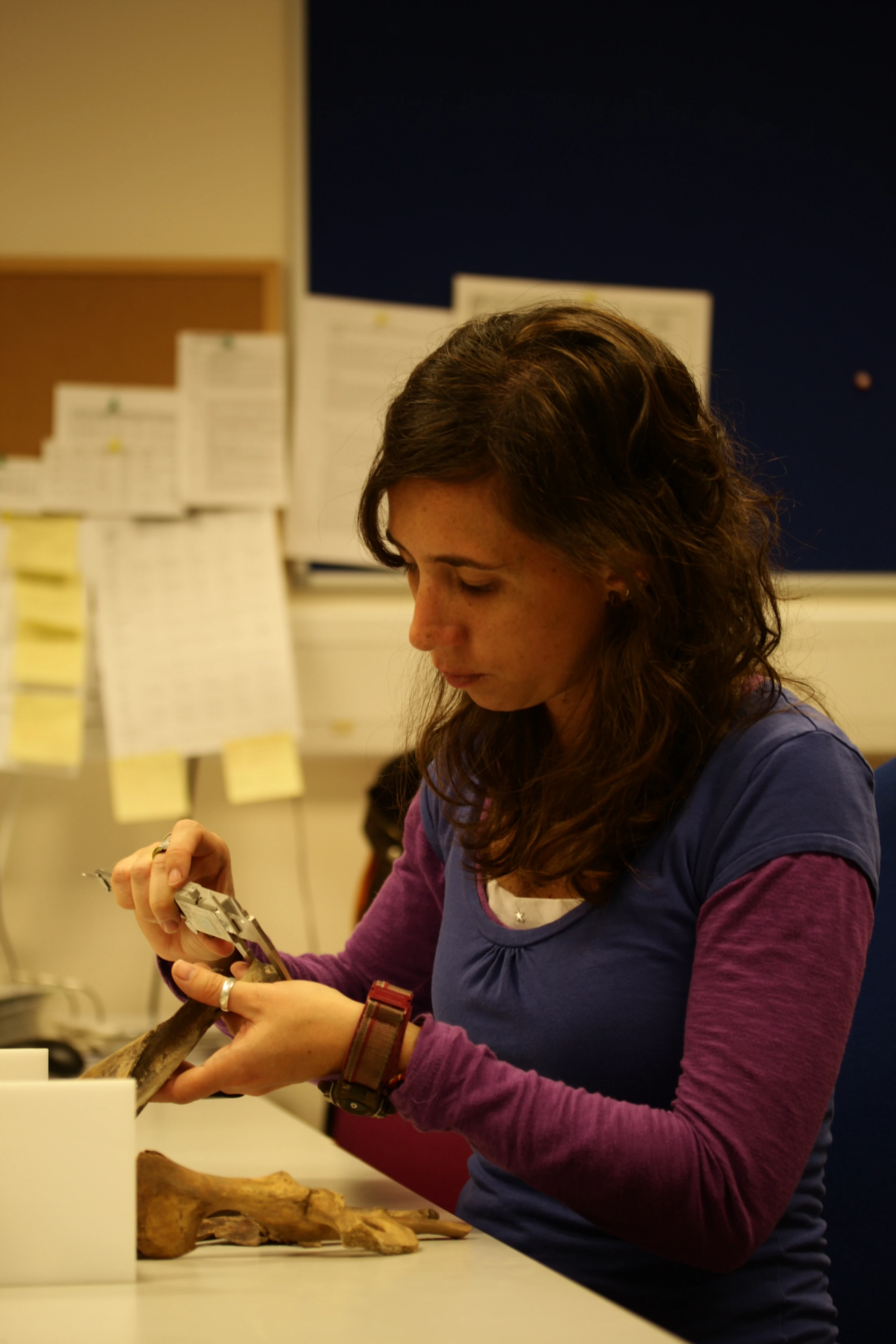
Rubicon's Faunal Remains Specialist Claudia Tommasino Suárez at work
Animal-bone analysis can reveal not only what people ate but how different parts of archaeological sites were used, how settlements related to one another and how economies changed through time.
At Prumplestown Lower in Co. Kildare, a Bronze Age site showed a clear division between dryland and wetland areas. The dryland assemblage consisted mainly of heads and lower limbs, suggesting slaughter took place there, while bones from all parts of the skeleton were present in the wetland area, indicating domestic waste disposal.
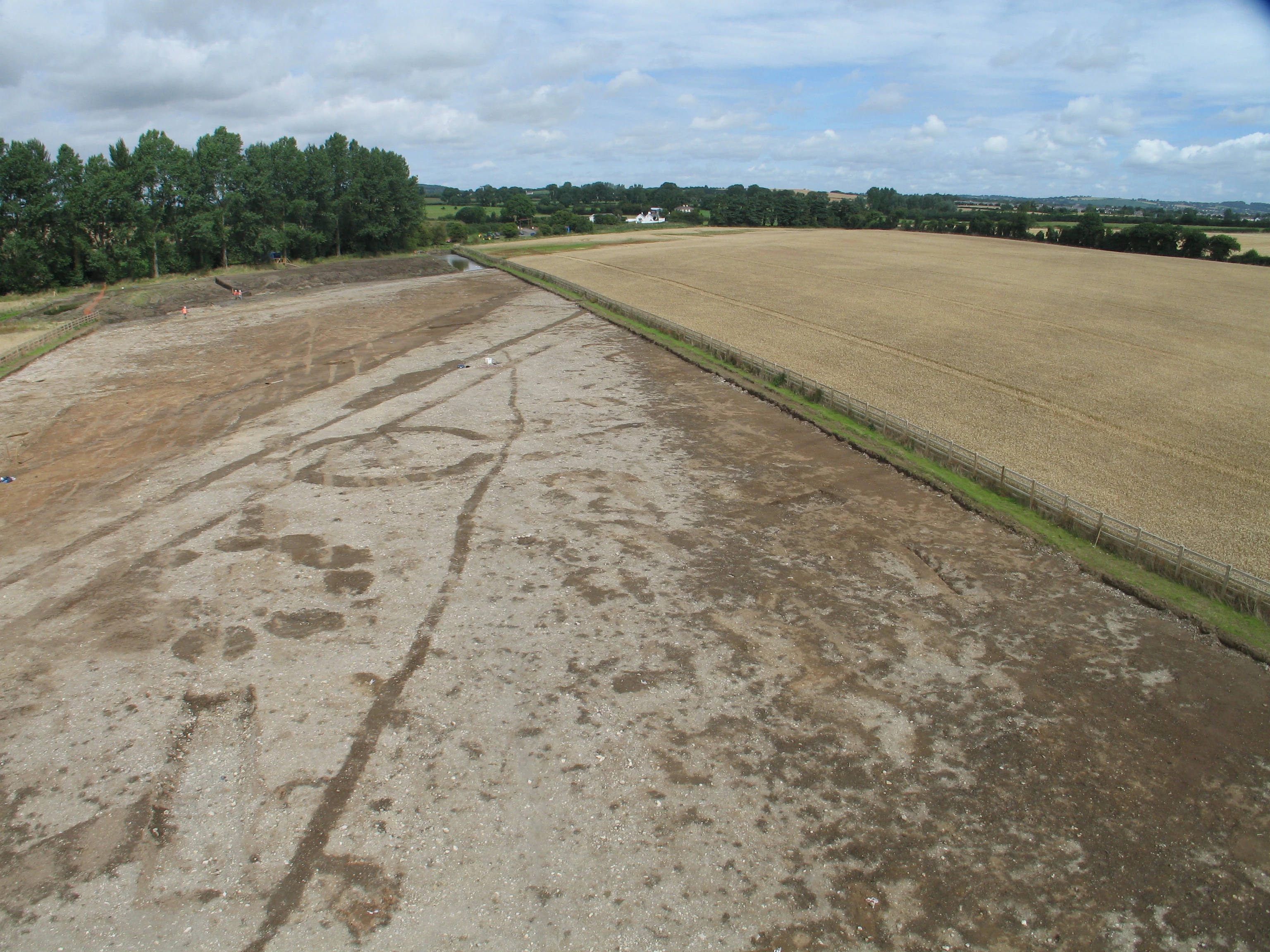
The site at Prumplestown Lower, with the dryland area in the foreground and wetland area in the background
Comparing nearby Early Medieval sites at Woodlands East, Woodlands West and Hallahoise suggested a wider division of labour. Many animals appear to have been slaughtered at Woodlands East, craft activities such as tanning and antler working were concentrated at Woodlands West, and Hallahoise showed the strongest evidence for domestic occupation and meat consumption.
A zooarchaeologist can also use animal remains to examine wider economic change. At Lorrha Church, Co. Tipperary, the earliest occupation was dominated by mutton consumption. Later, meaty portions seem to have been moved elsewhere, possibly reflecting the development of trade while the remaining material was used for craftwork.
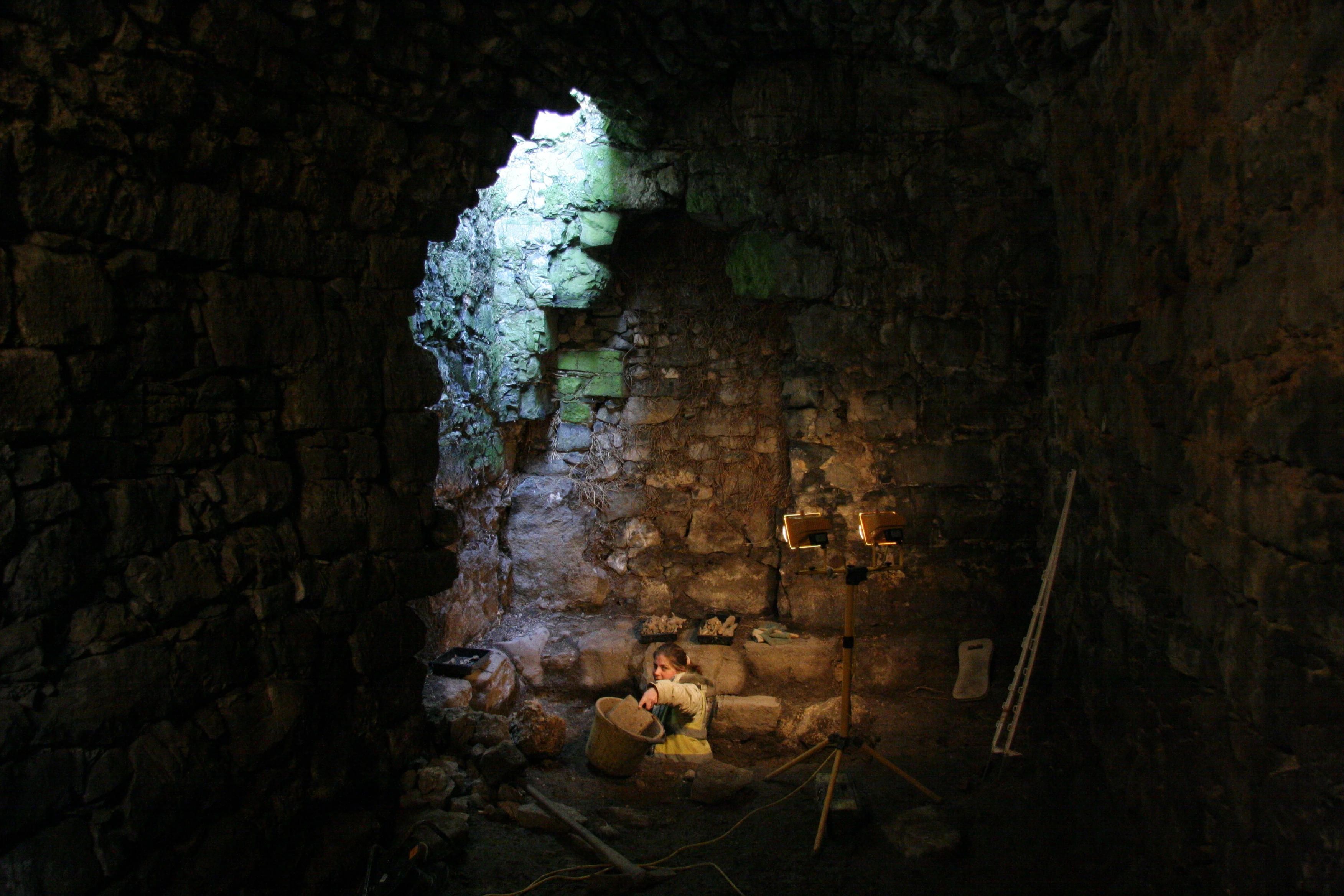
Excavation in progress at Lorrha Church, Co. Tipperary
Faunal analysis can therefore add both spatial and chronological depth to our interpretation of archaeological sites and landscapes.