
Rubicon Managing Director Colm Moloney described the Hackness Gun Battery on Hoy in Orkney, a conflict-archaeology site he excavated during two seasons in 1997 and 1999.
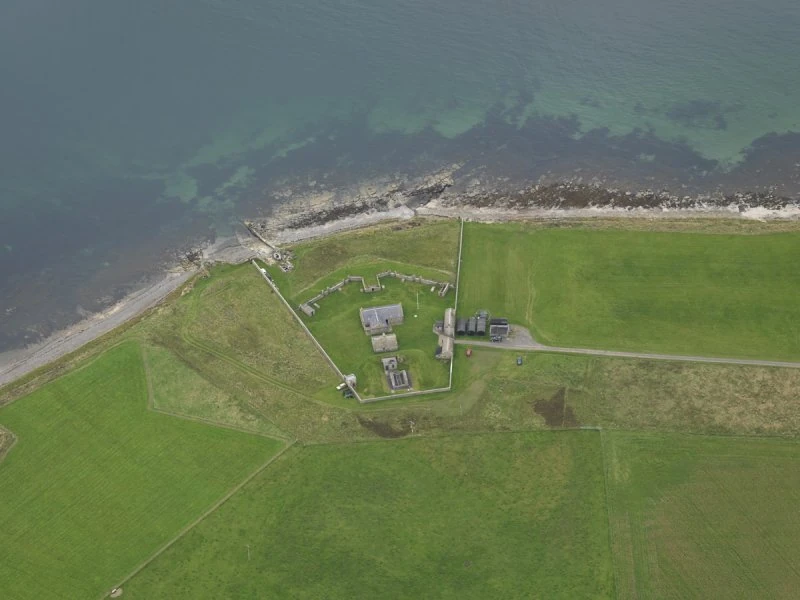
Aerial view of the Hackness Gun Battery as it appears today
The High Island
Hoy, from the Norse Haey or 'high island', is the second largest island in Orkney. The battery sits at South Walls overlooking Scapa Flow.
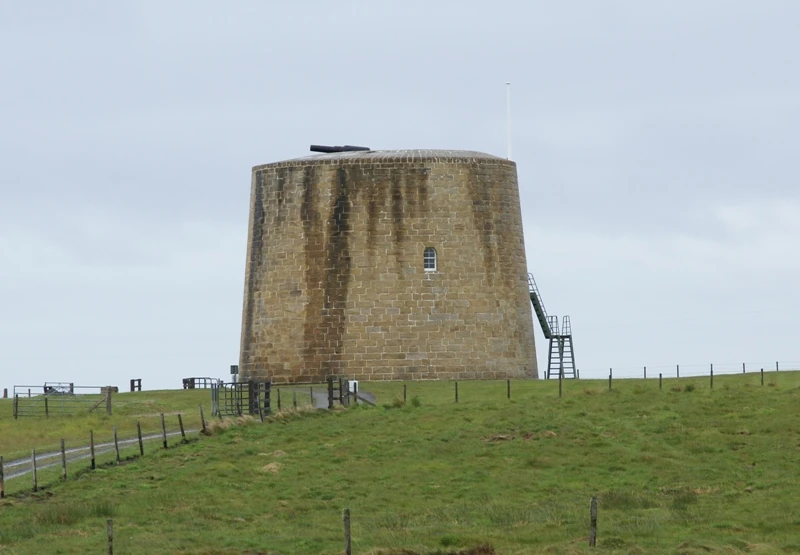
Hackness Martello Tower
The history of the gun battery
The battery and two associated Martello towers were constructed in the early nineteenth century to protect shipping from privateers during Britain's wars with Napoleonic France and the United States. Work began in 1813 and Sir Walter Scott visited in 1814. The complex was completed in 1815, just as the conflicts ended, and never saw action.
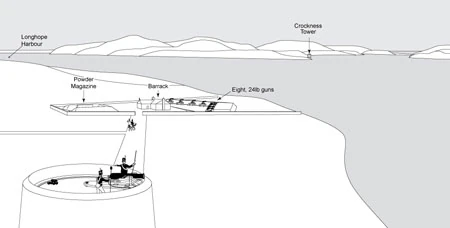
Artist's impression of how the Gun Battery would have looked in 1815 (Illustration by Mike Middleton)
A new perceived threat emerged after the Fenian Brotherhood's 1866 raid into Canada. The Admiralty modernised Hackness, replacing eight 24-pounder guns with four larger 68-pounders. Again the feared attack never came.
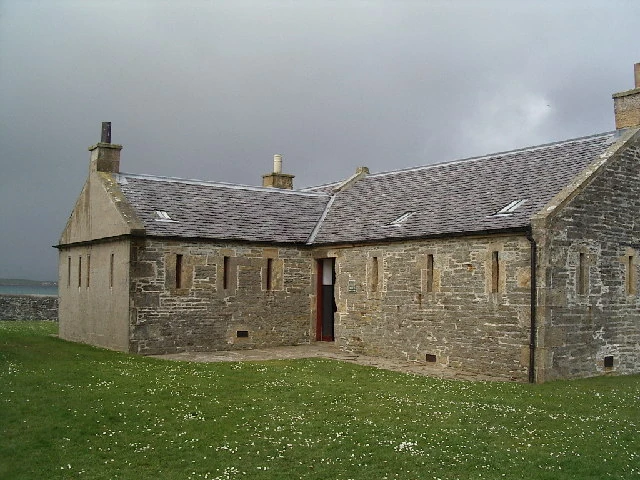
The Barracks at Hackness Gun Battery
My excavations at Hackness
Season 1 – November 1997
The first season concentrated on the powder magazine. This substantial building was designed so an accidental explosion would be directed away from the accommodation. It could hold up to 350 barrels of powder, had a raised ventilated floor to keep the contents dry and used brass fittings because brass does not spark.
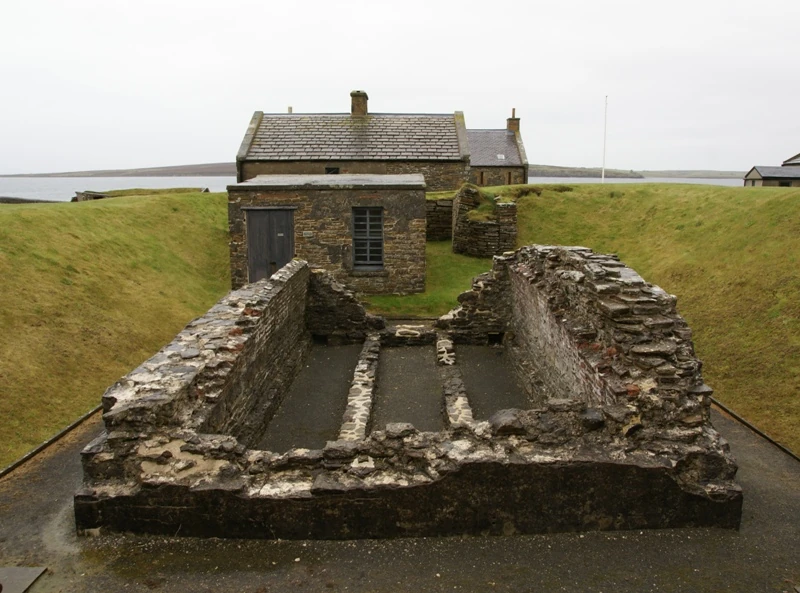
The excavated Powder Magazine at Hackness Gun Battery
Season 2 – June and July 1999
The second season investigated gun platforms and external defences. Excavation revealed evidence for both the 1815 and 1866 artillery layouts, including foundations and tracks for traversing gun carriages. The later rampart was remodelled with embrasures to protect the gunners.
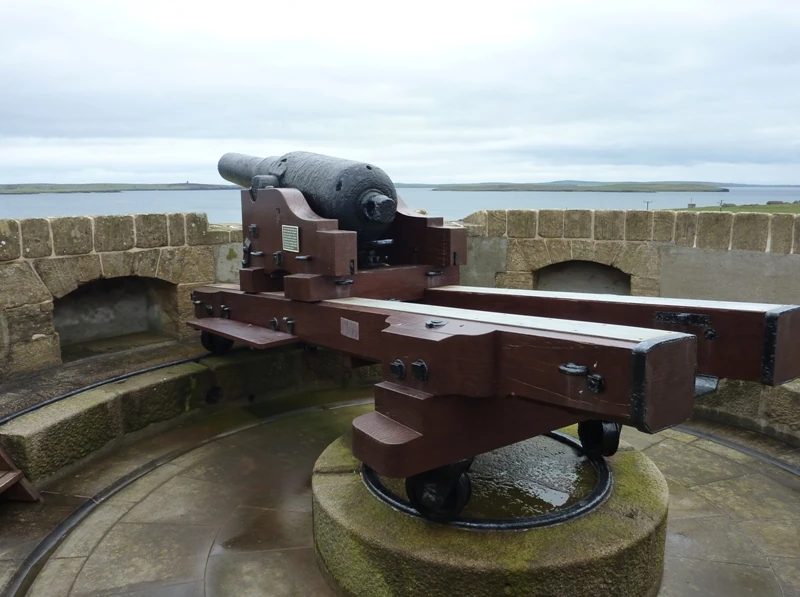
The artillery piece atop Hackness Martello Tower
Landward defences and post-excavation study of Admiralty plans showed how closely the surviving remains matched nineteenth-century design drawings.
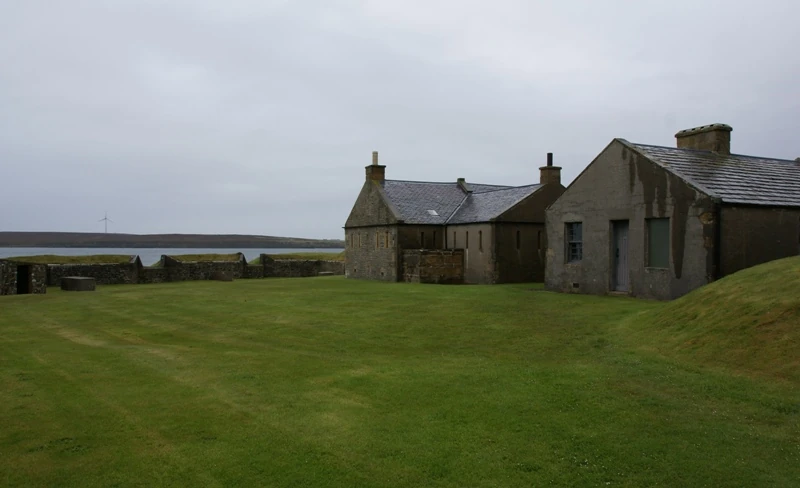
General view of the Battery interior
The Battery Today
After excavation the battery was partly restored by Historic Scotland. The site now presents reconstructed artillery, barracks, magazine and defences and offers impressive views across Scapa Flow.
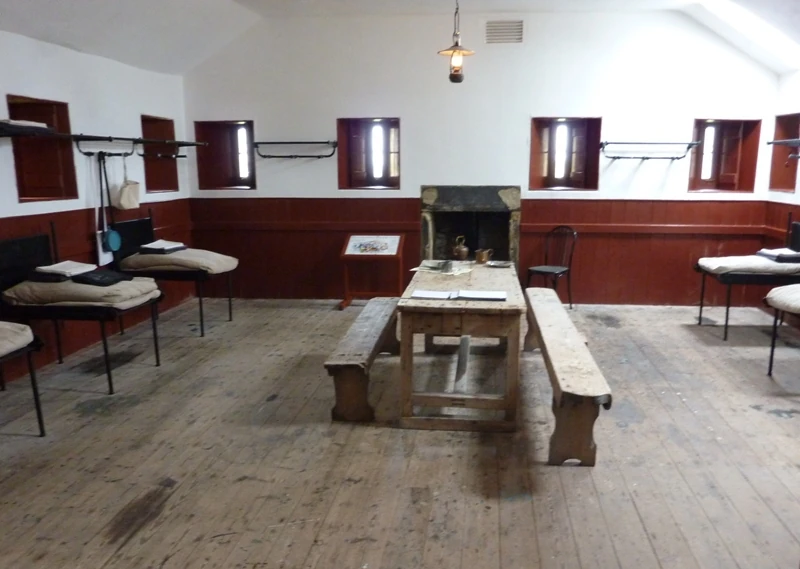
The reconstructed Barracks interior