
Test trenching, trench inspections, staff supervision and extremely strict lunchtime quality control. Our Crookstown team recently found themselves working under some unusually demanding management.
Archaeological test trenching requires careful planning, experienced staff, accurate surveying, safe machine excavation and constant assessment of the ground being opened up.
Fortunately, the Crookstown team had all of that, plus a small, white, four-legged Site Manager who appeared on site and immediately began taking a very hands-on approach to project delivery.
A thorough inspection of the trenches
No sooner had excavation begun than the Site Manager was out personally inspecting the newly stripped ground.
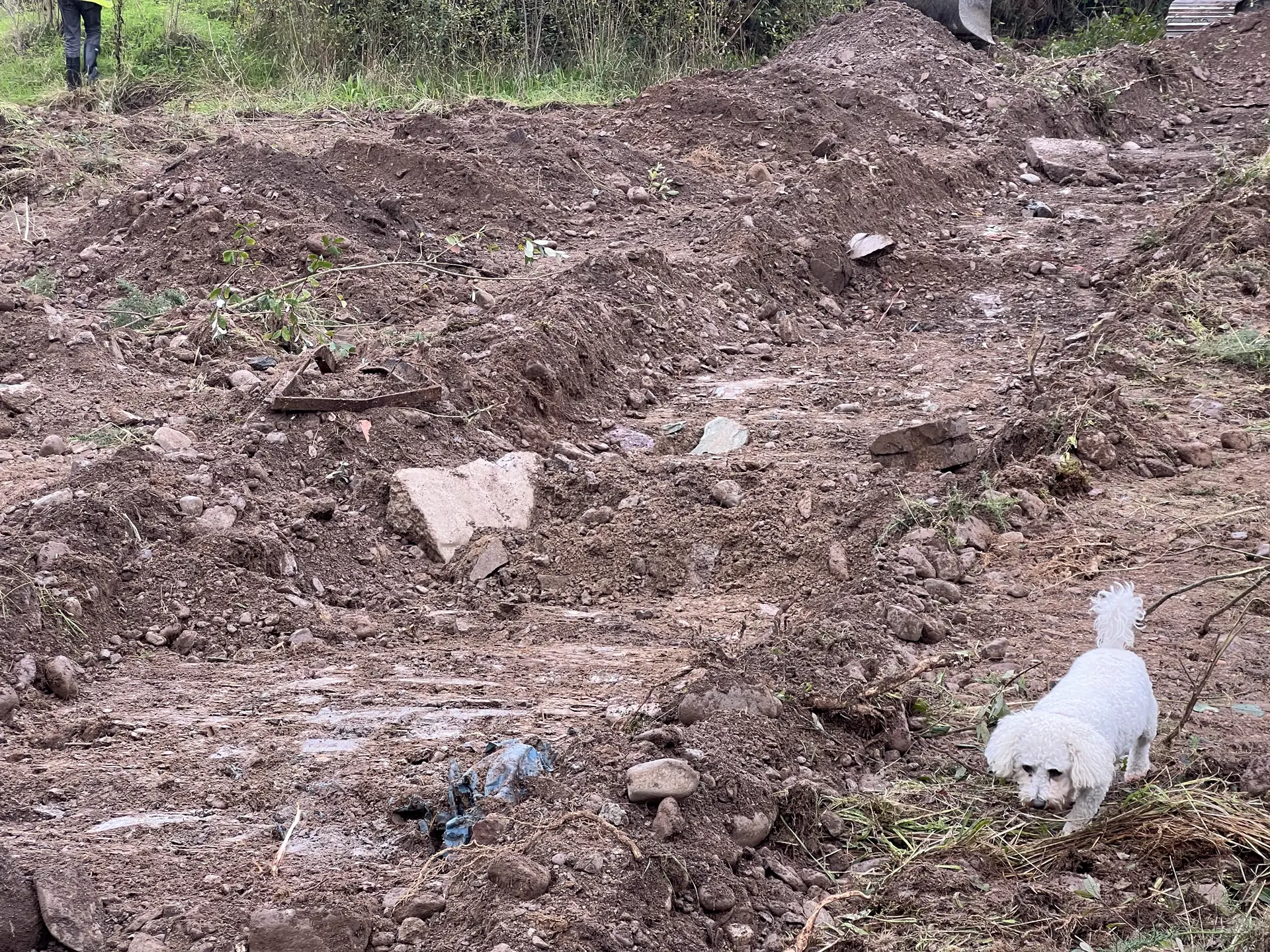
While conventional archaeological inspection normally involves examining soil changes, stratigraphy, cut features and inclusions, our Site Manager favoured a slightly different methodology: walk over everything, sniff anything suspicious, and investigate every loose stone individually.
Productivity briefly suffered when management discovered that spoil heaps were considerably more interesting than the programme had anticipated.
Nothing escaped management's attention
Once the initial trench inspection was complete, the Site Manager moved on to the wider task of quality assurance.
Spoil heaps, equipment, staff and anything else within walking distance were subjected to regular checks throughout the day.
The exact criteria being used during these inspections remain commercially sensitive.
The CAT was subjected to a DOG inspection
Underground services were another key concern. The team's C.Scope cable avoidance equipment was carefully inspected before use.
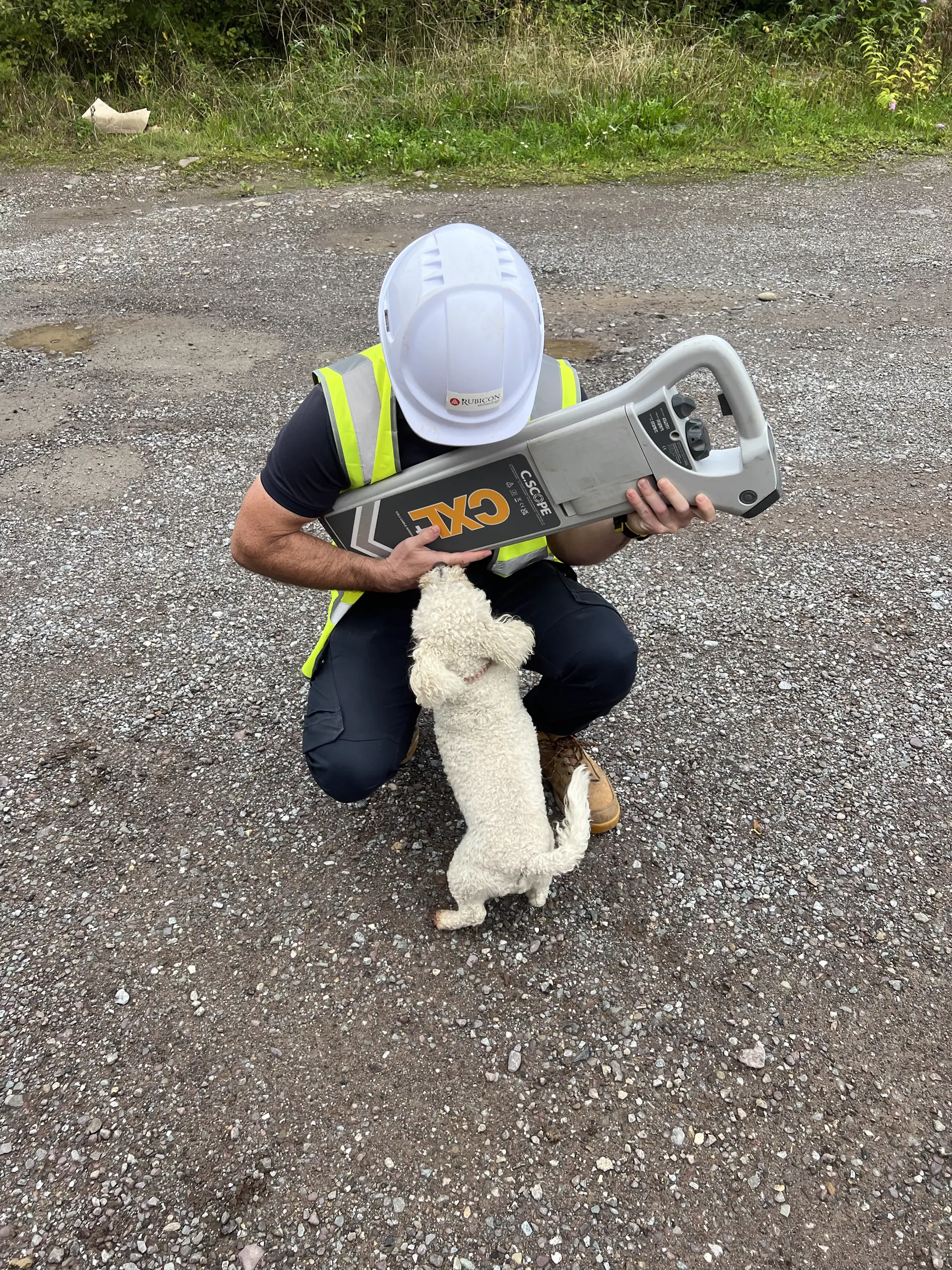
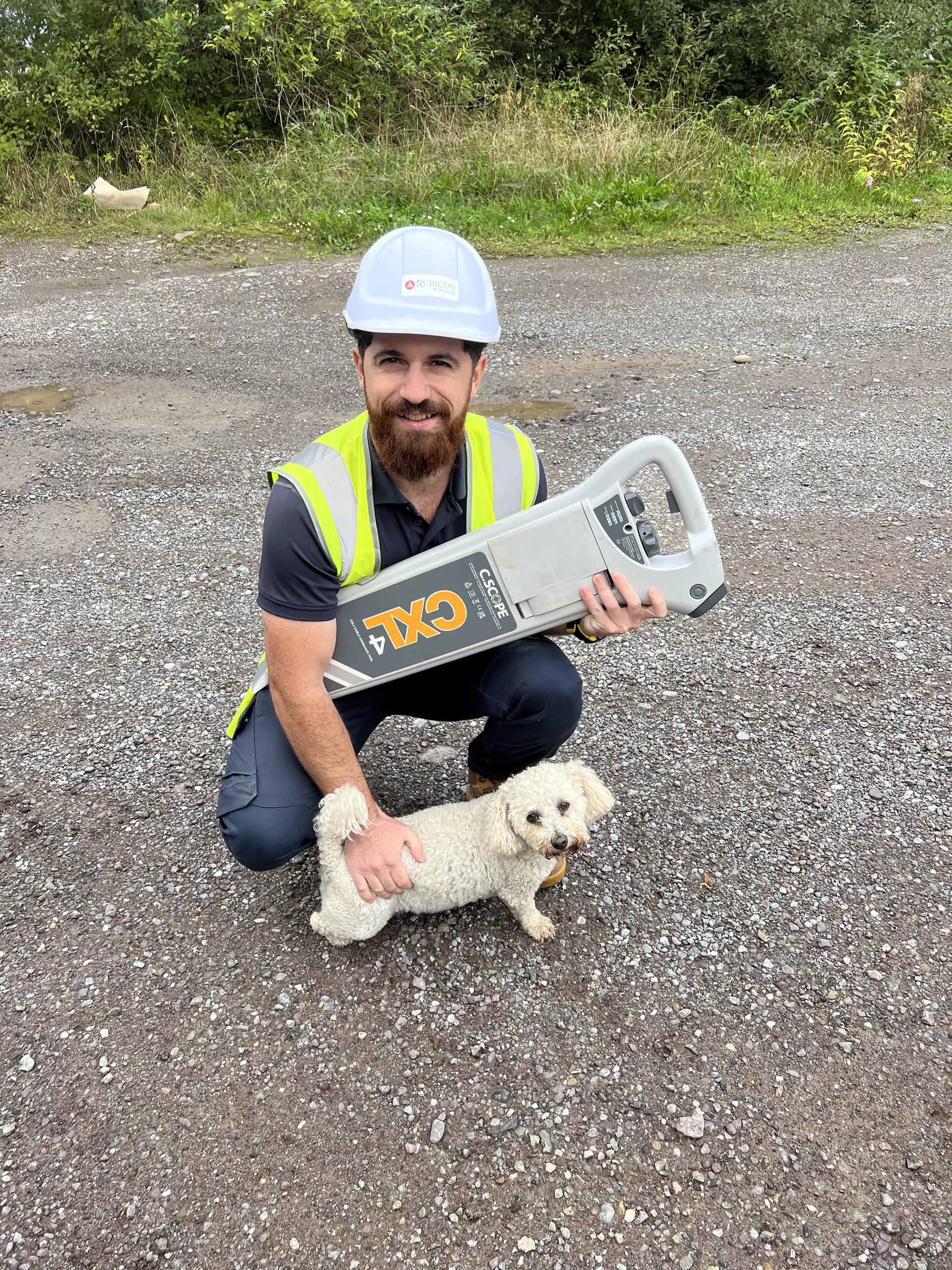
Despite some initial confusion regarding why a site containing a DOG also required a CAT, permission to proceed was eventually granted.
A strong focus on team morale
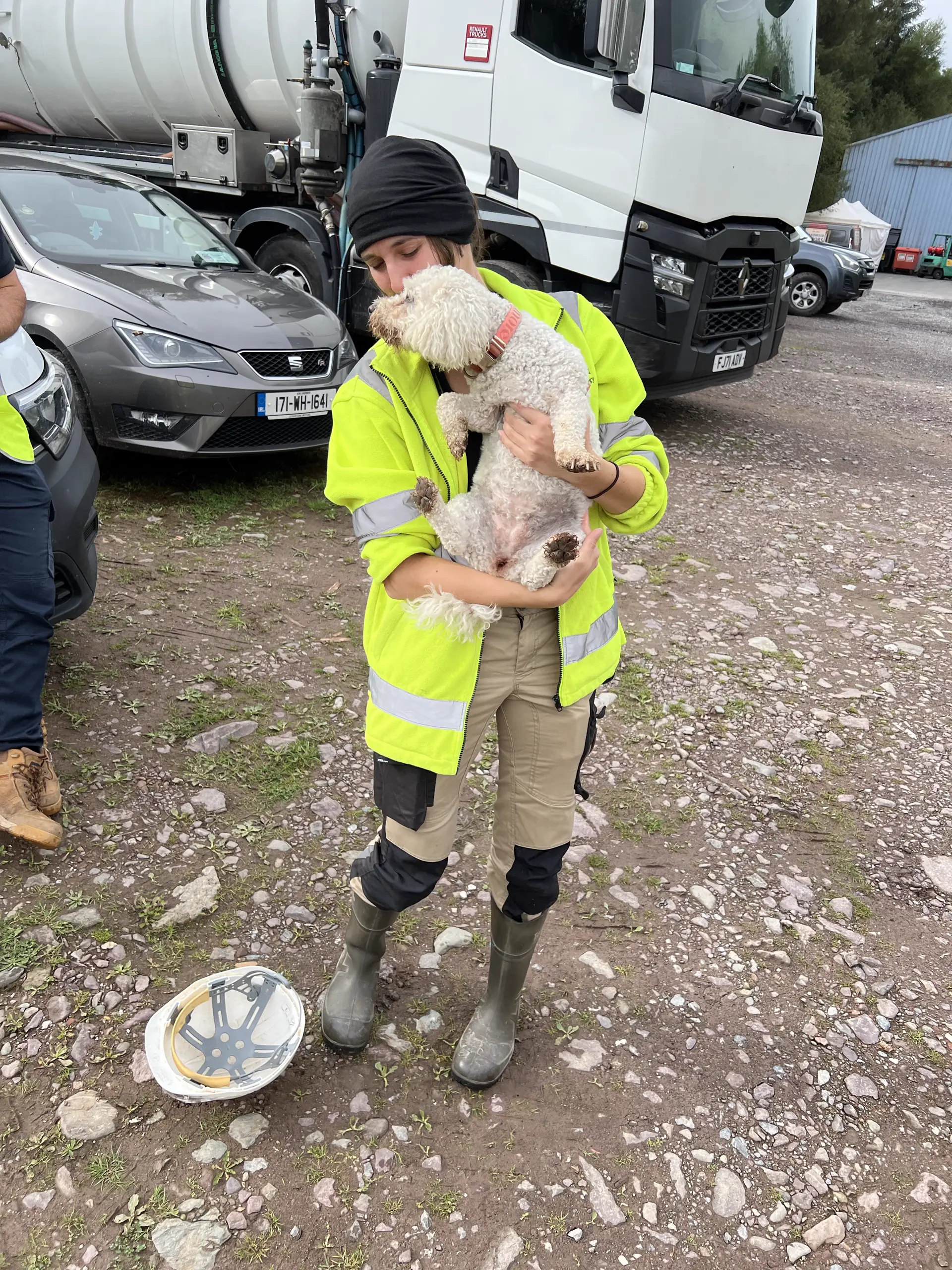
The role was not purely technical. Regular staff welfare checks were undertaken throughout the day, generally involving being picked up, carried around the compound and receiving considerable amounts of attention.
Early indications suggest this management technique was extremely popular and may be considered for wider rollout across Rubicon projects.
Lunch underwent extensive quality assurance
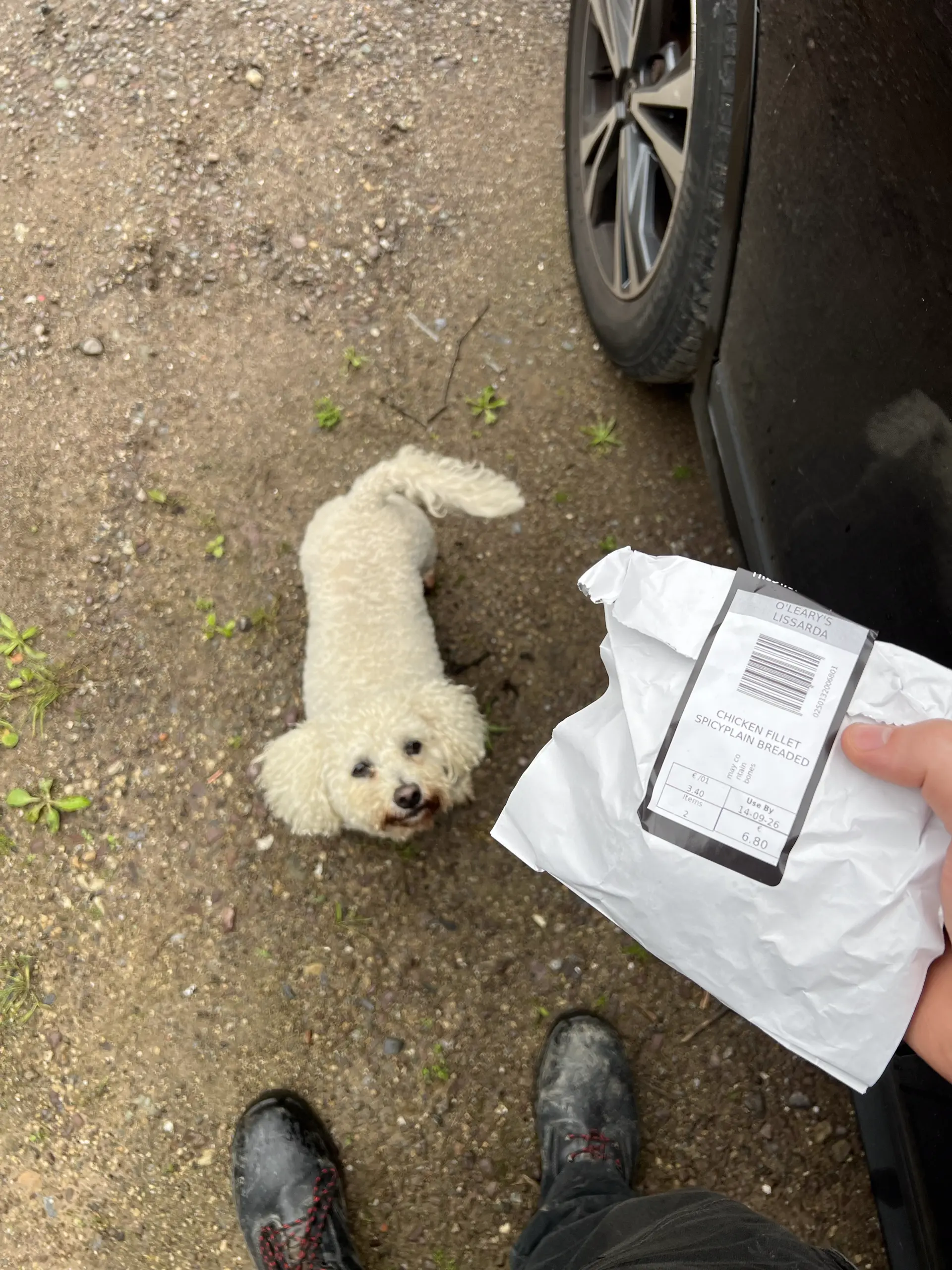
The most intensive inspection of the day occurred during lunch.
A package labelled Chicken Fillet Spicy/Plain Breaded was identified and subjected to close visual assessment.
The Site Manager repeatedly offered to conduct destructive testing of the sample, entirely in the interests of quality assurance.
This generous proposal was, regrettably, declined.
Technical work was successfully delegated
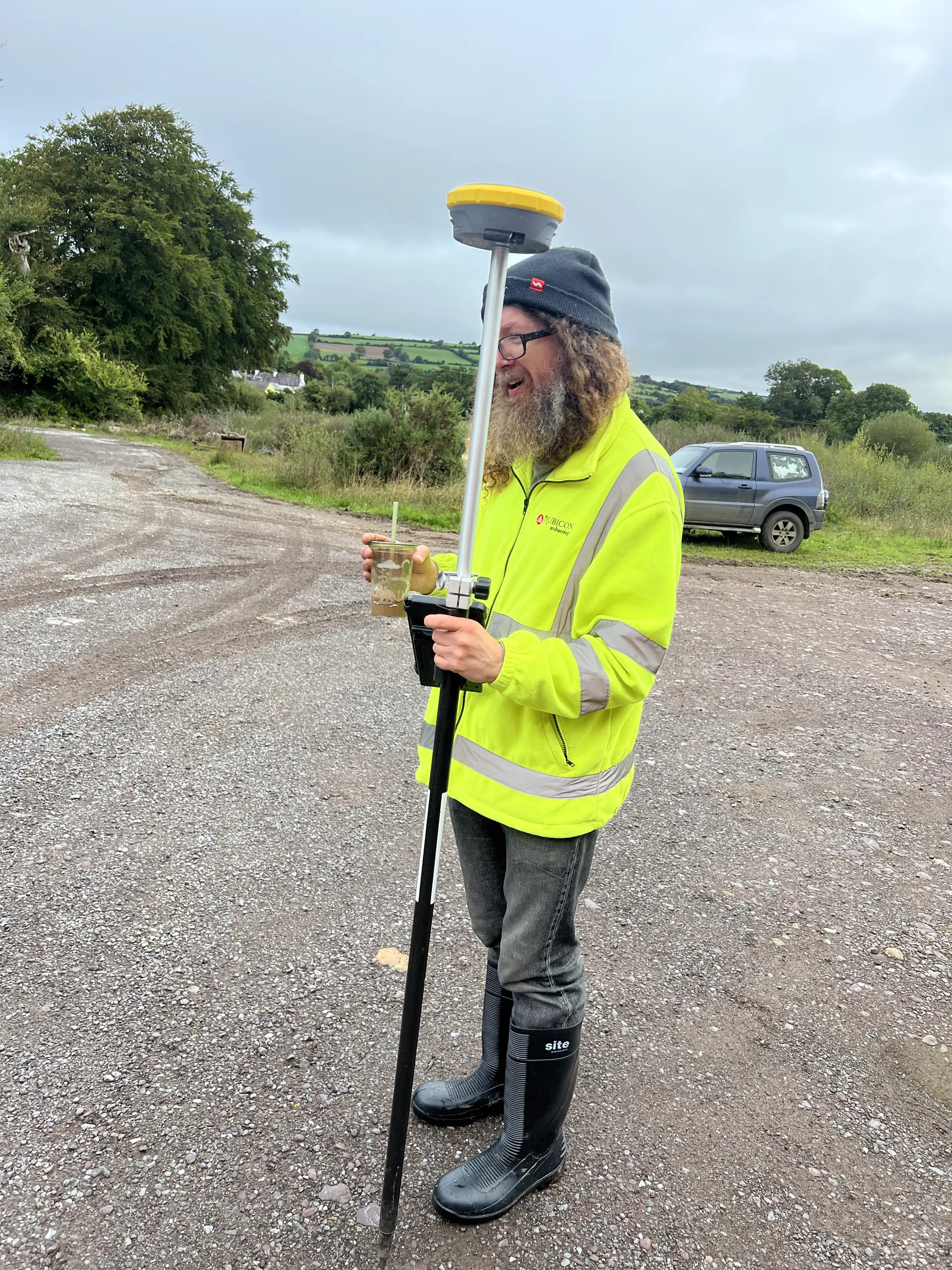
With the trenches being accurately surveyed and recorded, management adopted the traditional senior leadership approach of allowing the technical team to get on with the complicated bits.
End of day transport operations
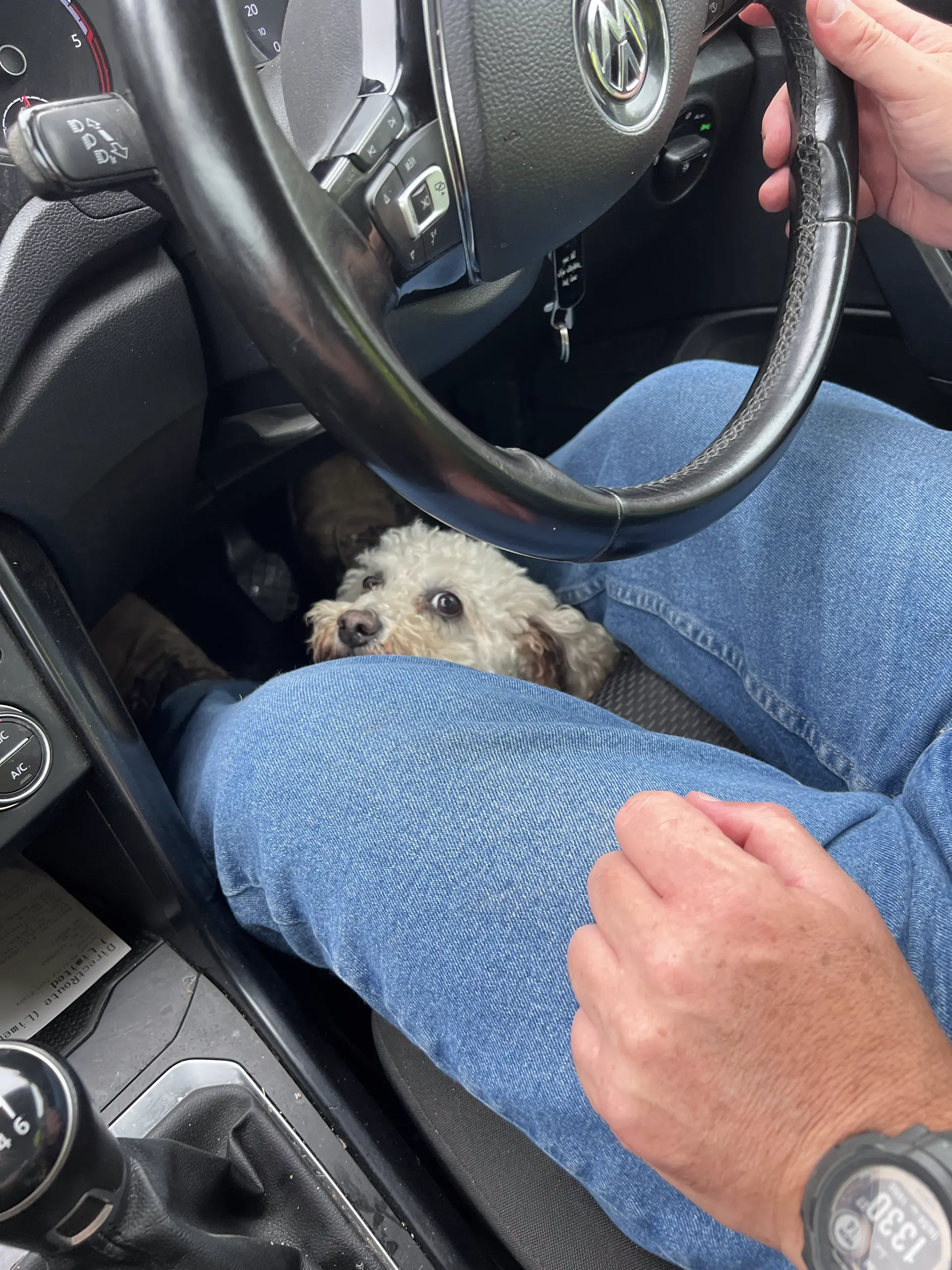
After a long shift supervising excavation, surveying, services detection and lunch, the Site Manager moved on to transport operations.
No mileage sheets were submitted.