
Sometimes archaeology fleshes out history, allowing us to touch and interact with historic objects and features. Sometimes the relationship goes the other way, with historical records helping identify archaeological sites and archaeological discoveries prompting new documentary research.
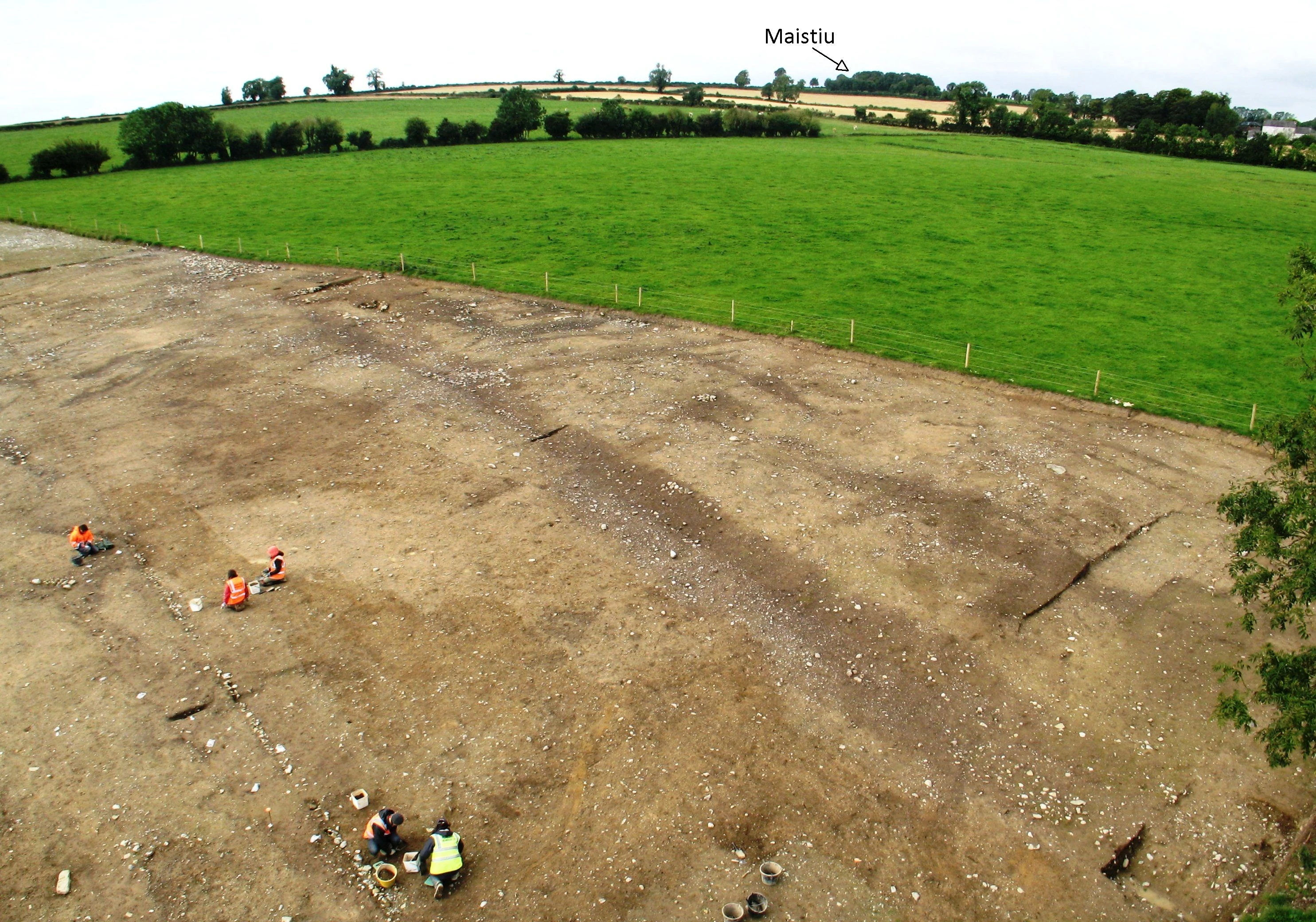
Excavation at the deserted village at Mullamast, overlooked by the 'Royal Site' of Maistiu
During archaeological investigations in advance of the N9/N10 scheme in County Kildare, a large excavation was undertaken at Mullamast on behalf of the National Roads Authority and Kildare County Council. The nearby 'Royal Site' of Maistiu gave the townland its name, while the Down Survey map of 1655–6 also showed a castle in the area.
Aerial photography, geophysical survey and test excavation revealed a major site, leading to an excavation covering 23,024 m². Multiple phases ranged from prehistory to the post-medieval period, but the main focus was a substantial later medieval village occupied around AD 1200–1500.
The excavated section was laid out around an axial routeway with residential building compounds on either side, though much of the village probably remains beyond the motorway corridor.
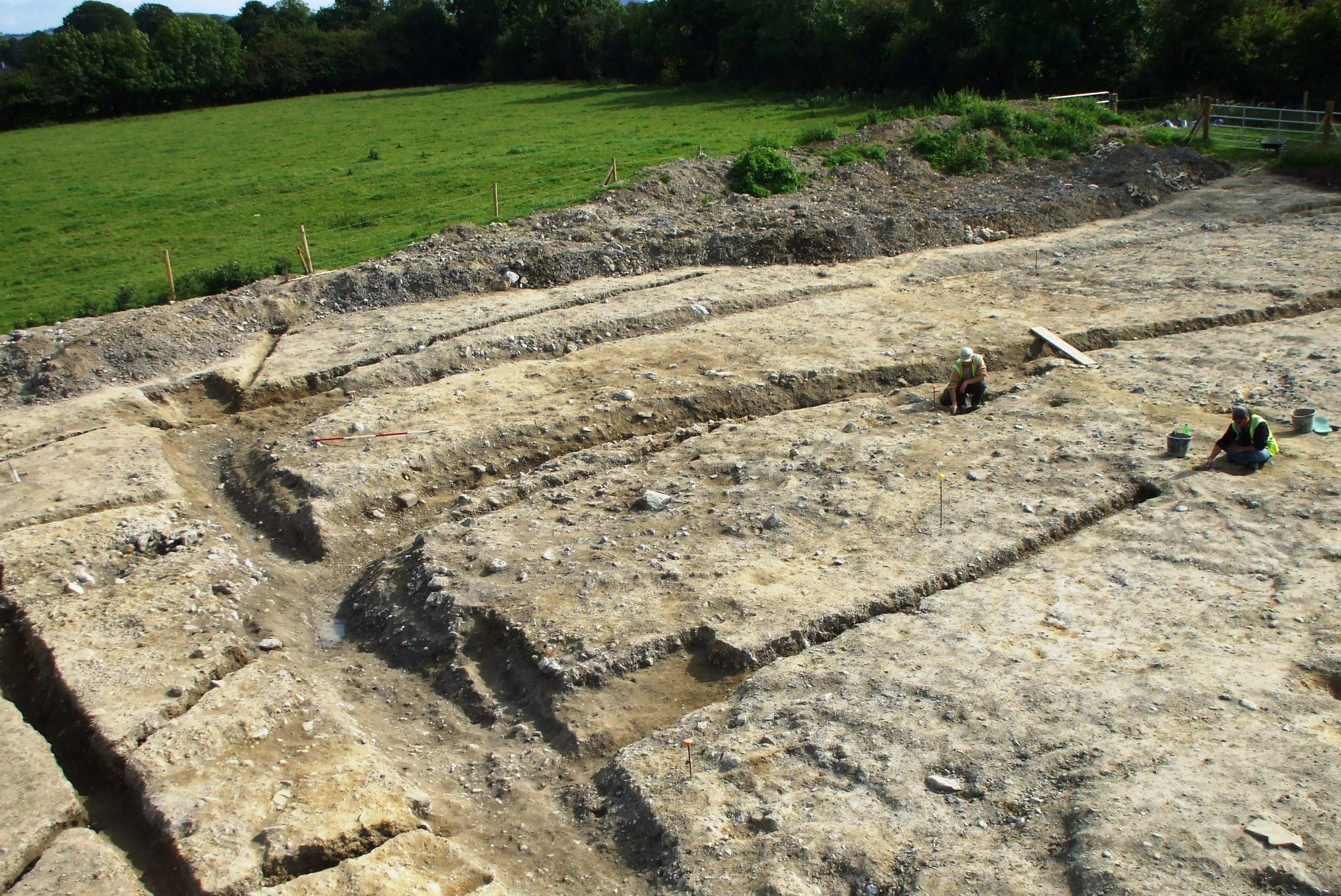
Building Compound 1, under excavation
Historical work then found references to the manor and village of Mullamast in records associated with the Earls of Kildare, including a quit claim in the Red Book of the Earls of Kildare and records from the aftermath of Silken Thomas's revolt. A possible 1282 reference to Stephen de Molachmast may also relate to the settlement.
Questions remain, including the exact location of the castle and church. The project demonstrates how closely archaeology and documentary history can work together to rediscover a lost settlement.