
Although archaeology is about discovery, excavators often have some idea of what a site may contain. Irish burnt mounds or fulachta fiadh are common Bronze Age sites associated with heating water. A flintlock pistol is therefore one of the last objects we expected to find beside a prehistoric burnt mound at Whitestown, Co. Waterford.
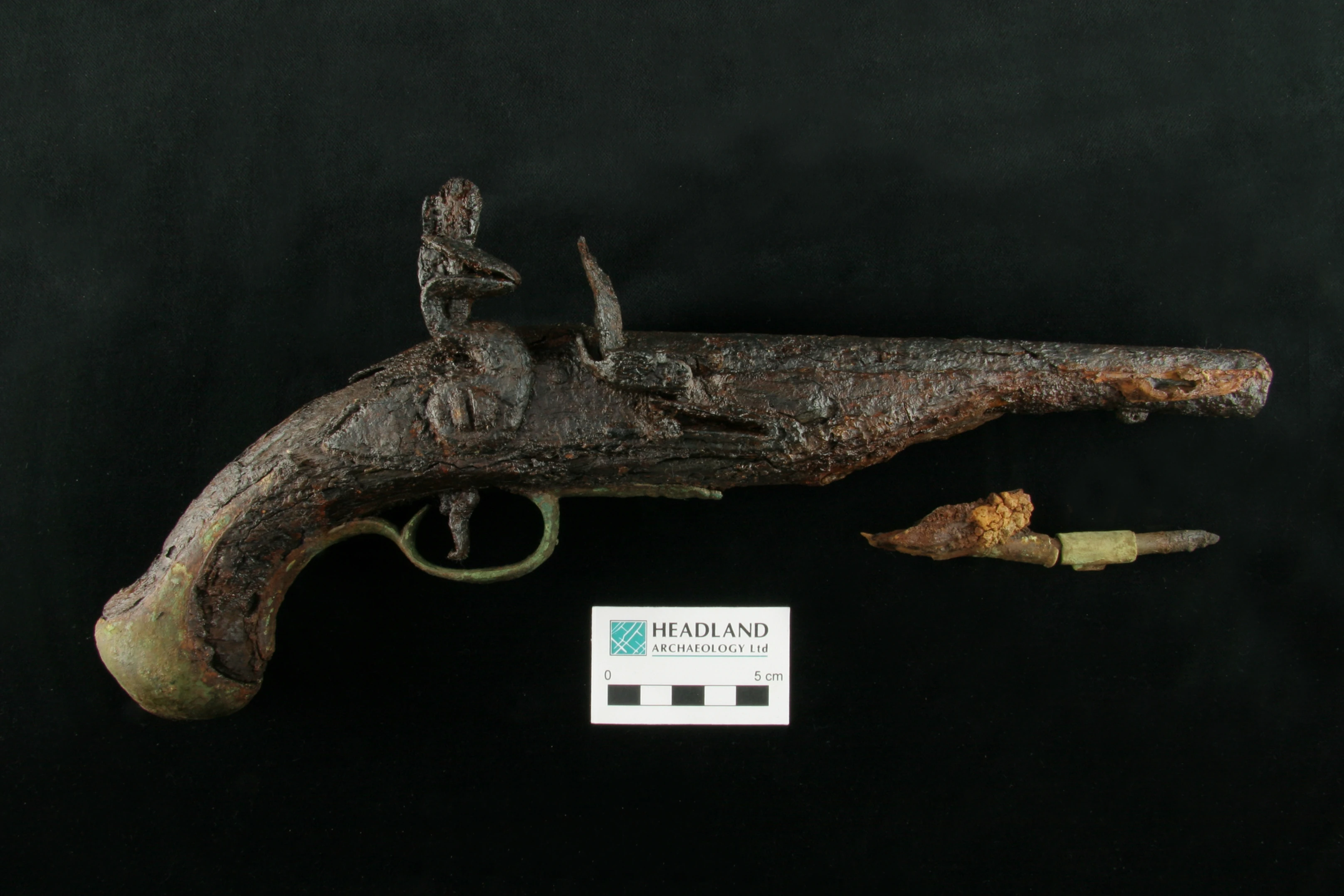
The pistol as it appeared in the conservation lab following blocklifting
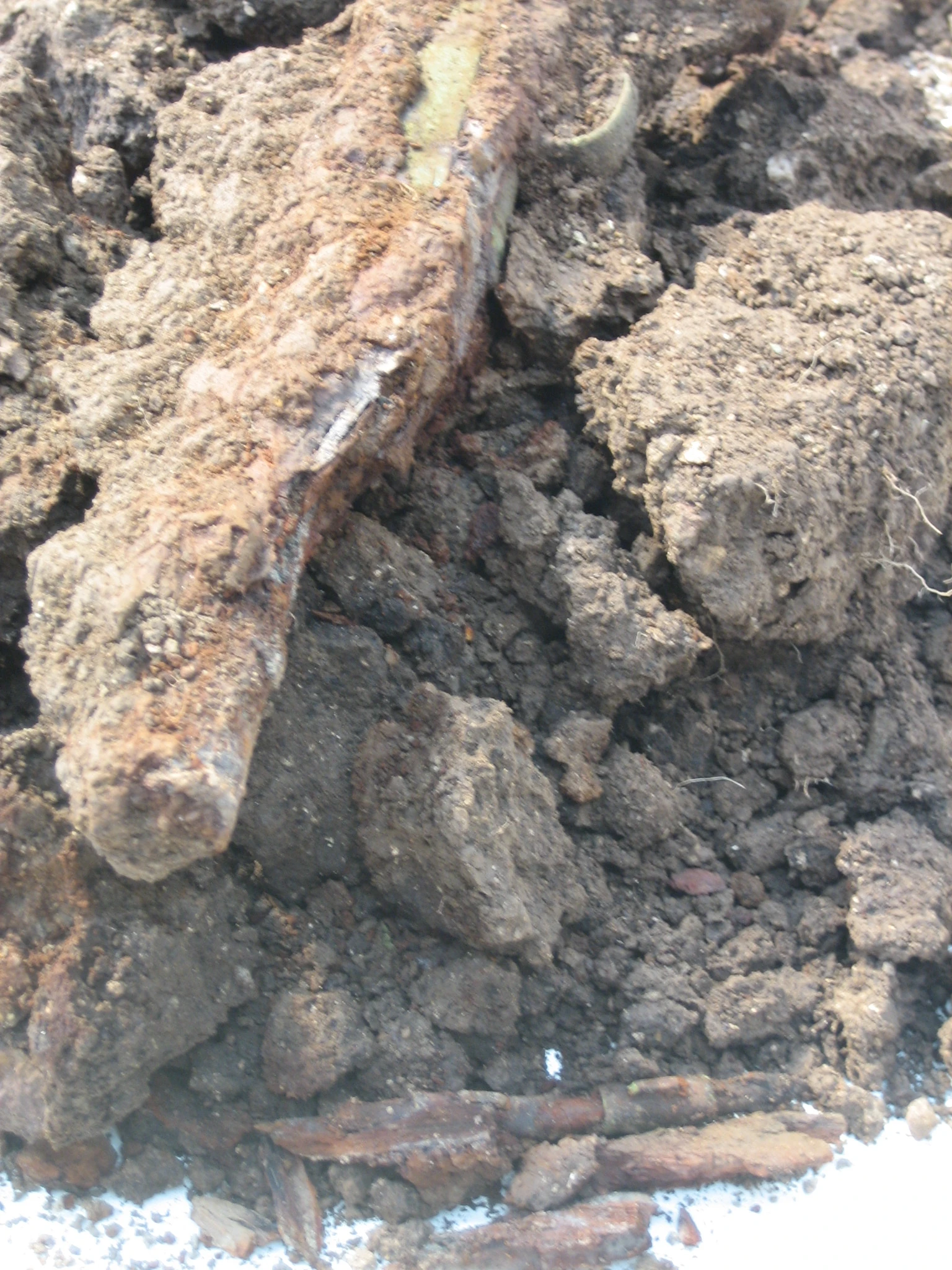
The pistol was discovered in a shallow depression near the burnt mound, probably the remains of an old field boundary, during works for the East Waterford Watermains Supply. It was removed by block lifting and sent for conservation and X-ray.
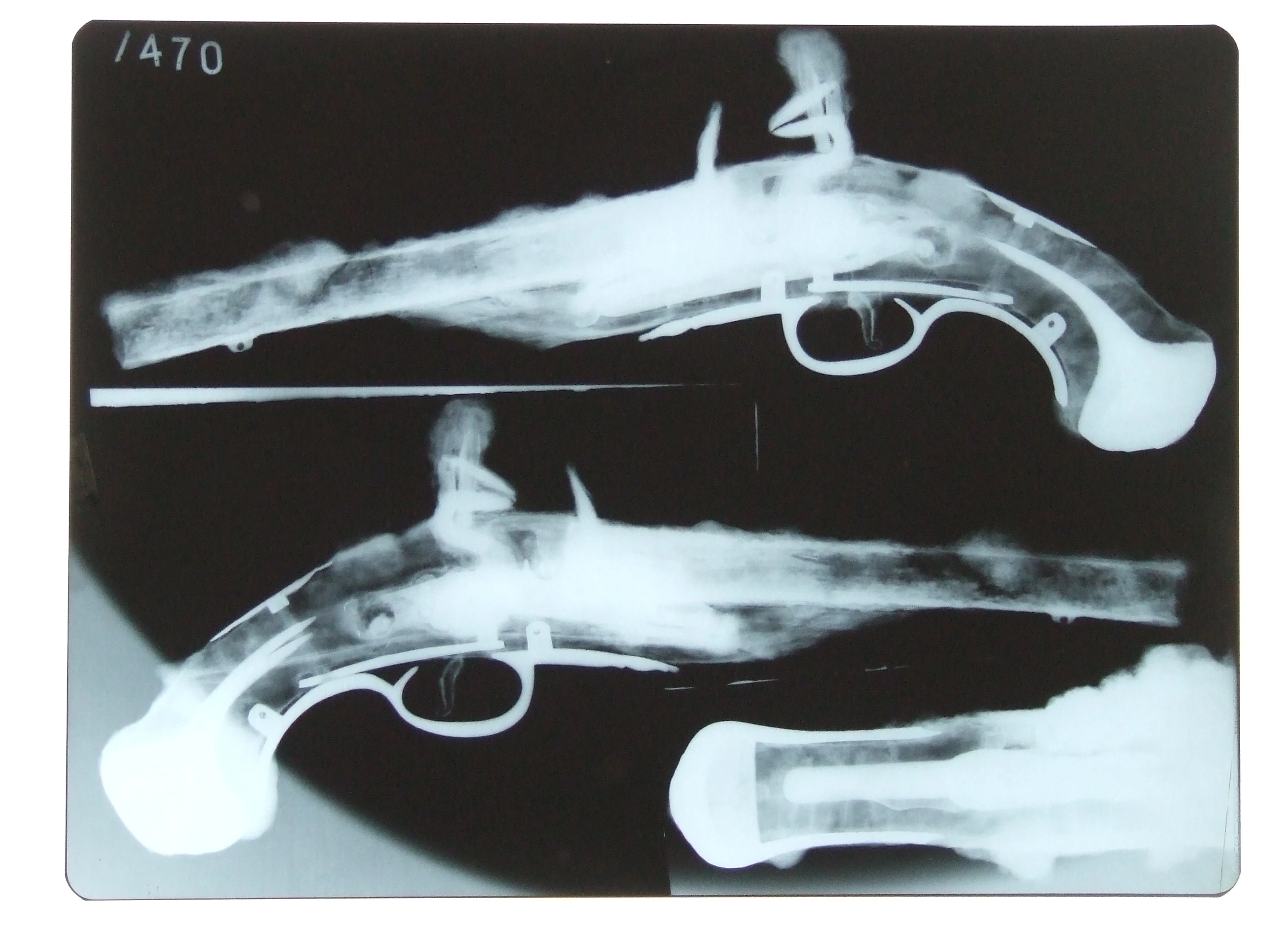
X-Ray of the pistol reveals it is not loaded
The X-ray confirmed it was unloaded. Analysis identified it as a flintlock, the dominant firearm ignition system of the later seventeenth and eighteenth centuries.
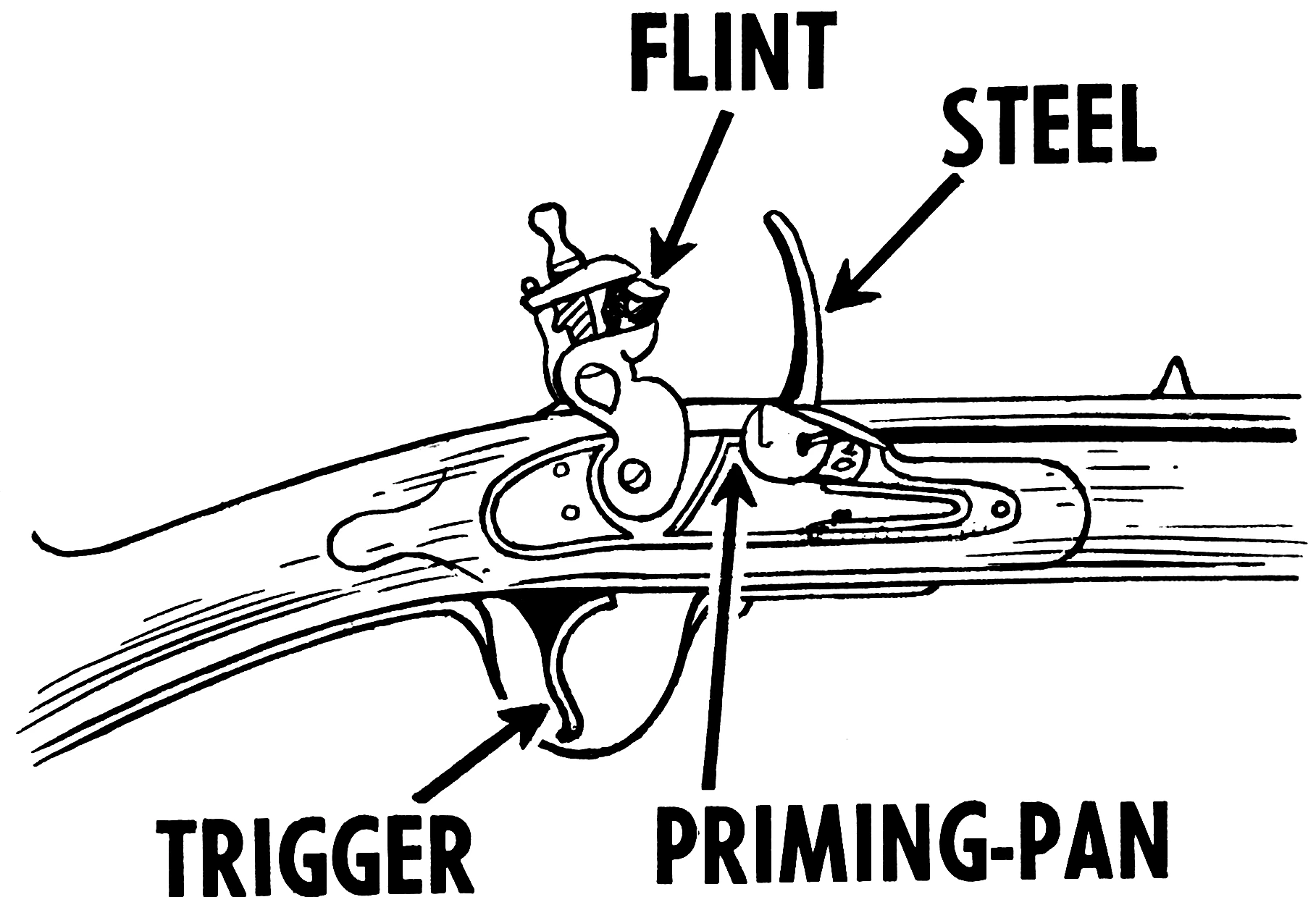
The component parts of a flintlock mechanism
To fire a flintlock the weapon was loaded from the muzzle, primed with fine powder, brought to full cock and fired as the flint struck the steel, sending sparks into the priming pan and then the main charge.
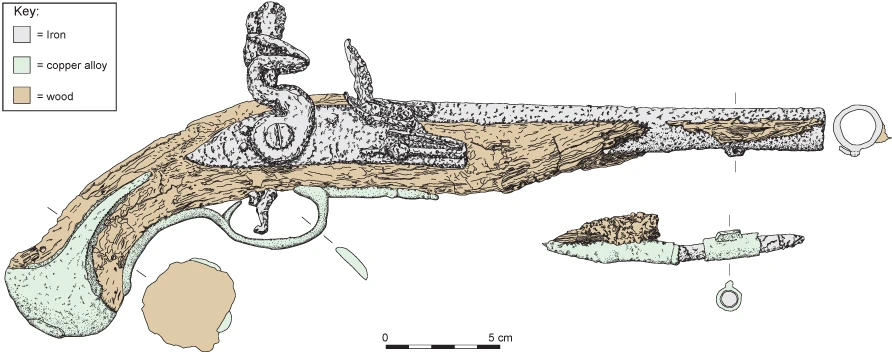
Graphic showing the pistol's constituent materials
Despite poor preservation, the Whitestown weapon appears to be a late eighteenth-century military service pistol, perhaps intended for dragoons or mounted troops. Its unloaded state, missing flint and half-cock position suggest deliberate concealment rather than hurried disposal. It may have been hidden after an indiscretion or stored for later recovery.
Although events such as the 1798 or 1848 rebellions provide tempting historical contexts, the pistol cannot securely be linked to either. It may have remained in use well into the nineteenth century.
The fully conserved Whitestown Flintlock Pistol
Whoever concealed it did not want it found. It remained hidden for perhaps 100–200 years until archaeological work exposed one of the more unusual finds recovered from an otherwise prehistoric site.