
Sixteen metres is not exactly a long distance. Yet the residents of a house in Mullaghmast, Co. Kildare, sometime around 1350 BC appear to have been interred in a penannular ring-ditch only sixteen metres from their home.
Rubicon's Nial O'Neill excavated the house and ring-ditch on behalf of the National Roads Authority and Kildare County Council as part of the N9/N10 Kilcullen to Waterford Scheme in 2007. The house survived as a circle of postholes about 6.5 m wide with a fireplace, partitions and storage pits. Environmental material produced a radiocarbon date of 1530–1300 BC.
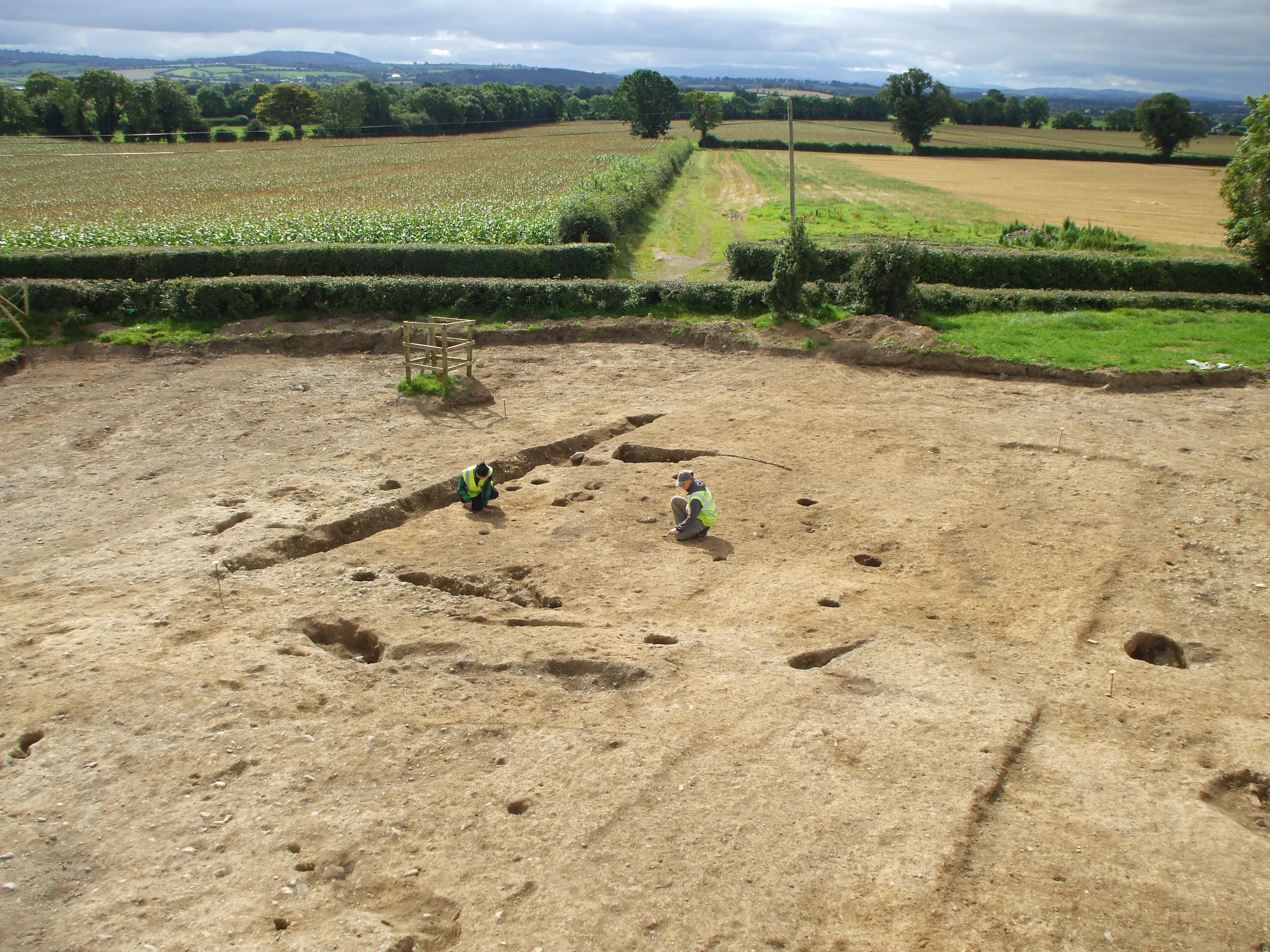
The Bronze Age house during excavation
A storage pit contained hazel and oak charcoal, together with cultivated barley, wheat, oat and rye and wild species. Middle Bronze Age pottery was also recovered from the postholes.
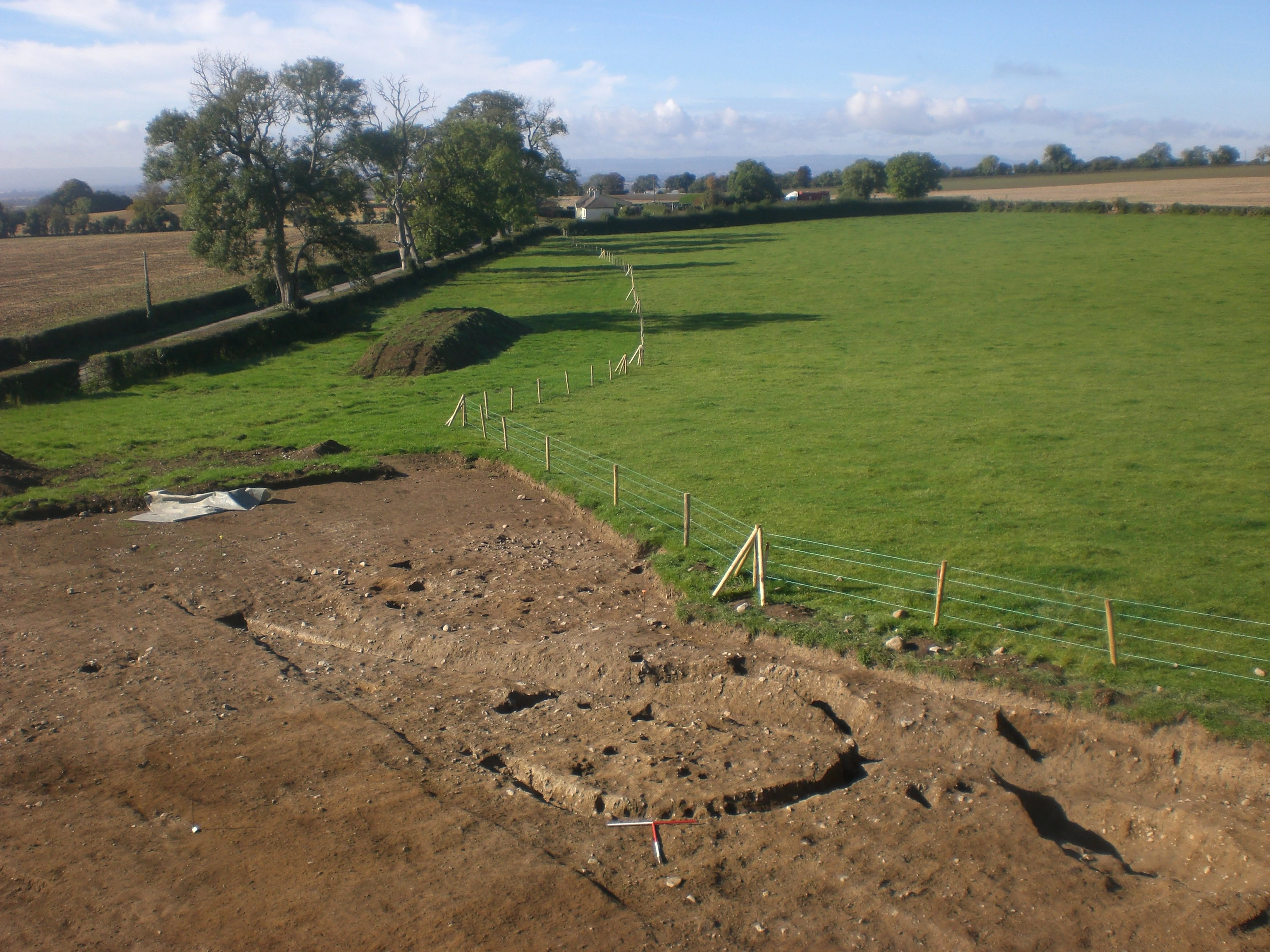
The Bronze Age ring-ditch under excavation
The ring-ditch, 16 m from the house, was about 5.5 m in diameter with a 1.5 m-wide southeast-facing entrance. Stakeholes indicated a possible entrance feature or barrier and several features in and around the monument produced cremated human bone. Material from the ditch dated to 1500–1210 BC, while a nearby cremation burial dated to 1440–1190 BC.
The evidence suggests the domestic and funerary monuments were contemporary or near-contemporary. It is possible that the people buried beside the ring-ditch were members of the same community who built and occupied the house.
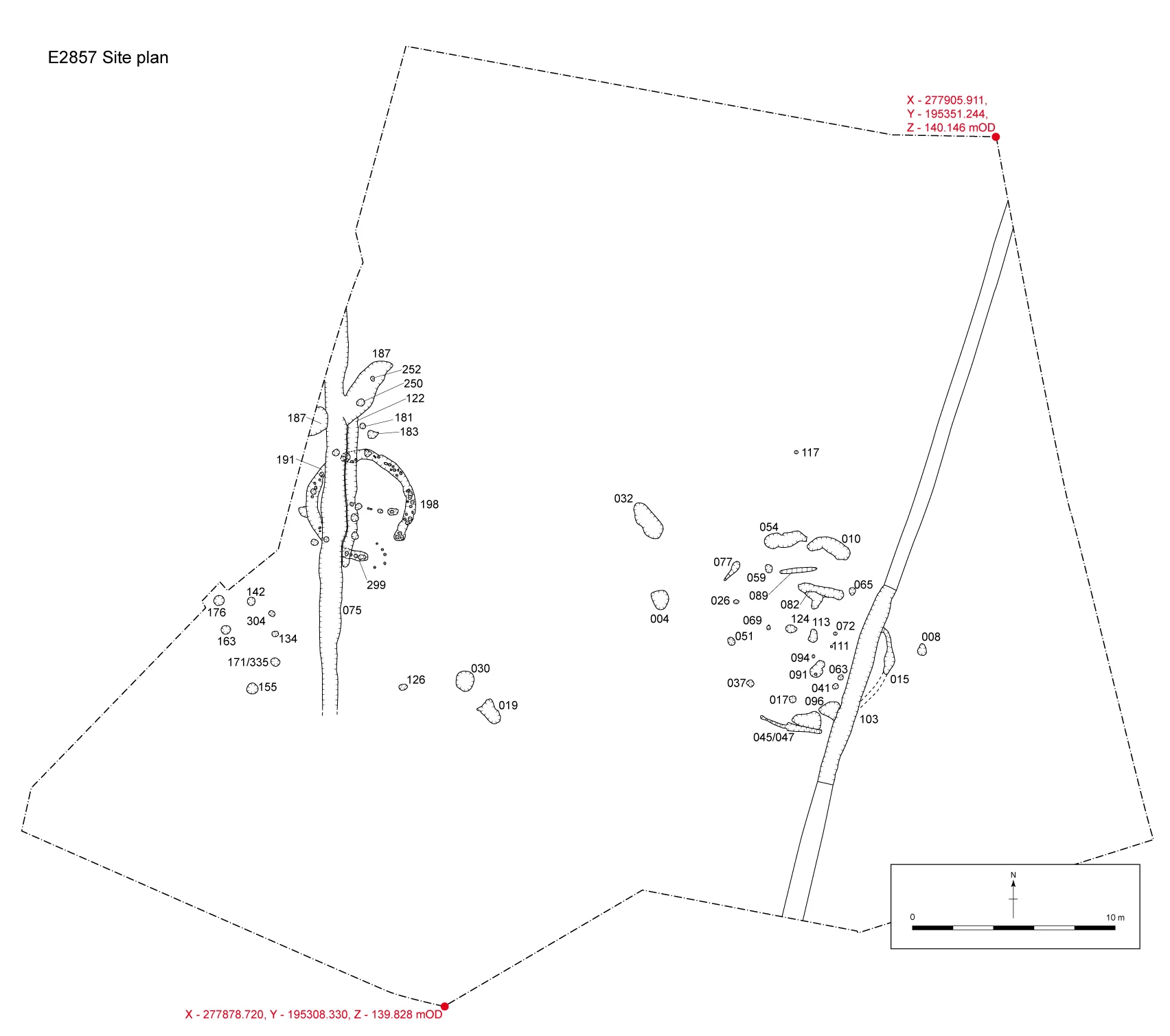
Plan showing the proximity of the two monuments; the ring-ditch to the west and house to the east, only 16 m apart