
Leading on from Parts 1 and 2 of our Bronze Age pit-cooking experiment, we stepped up a gear and moved onto pork. The previous experiment with lamb had slightly over-cooked the meat, so this time the aim was to reduce the intensity of heat and cooking time.
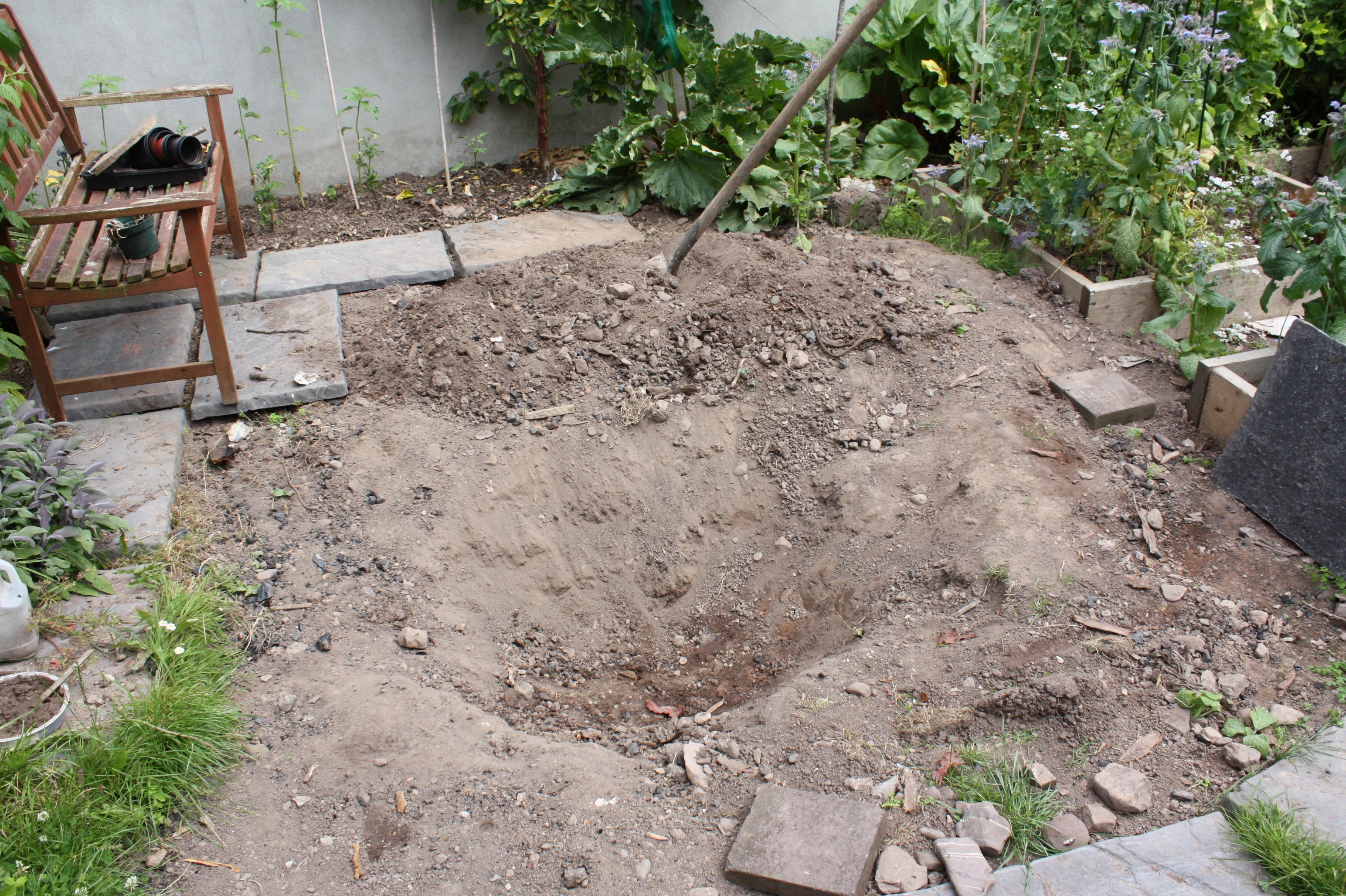
The Part 2 roasting pit cleaned out and ready for more action
The cooking team consisted of Damian Shiels, Colm Moloney and Louise Baker. We re-used the earlier pit and stones, which were beginning to crack from repeated heating in a way consistent with archaeological burnt-stone deposits. Two pork shoulder joints were scored, seasoned and wrapped before cooking.
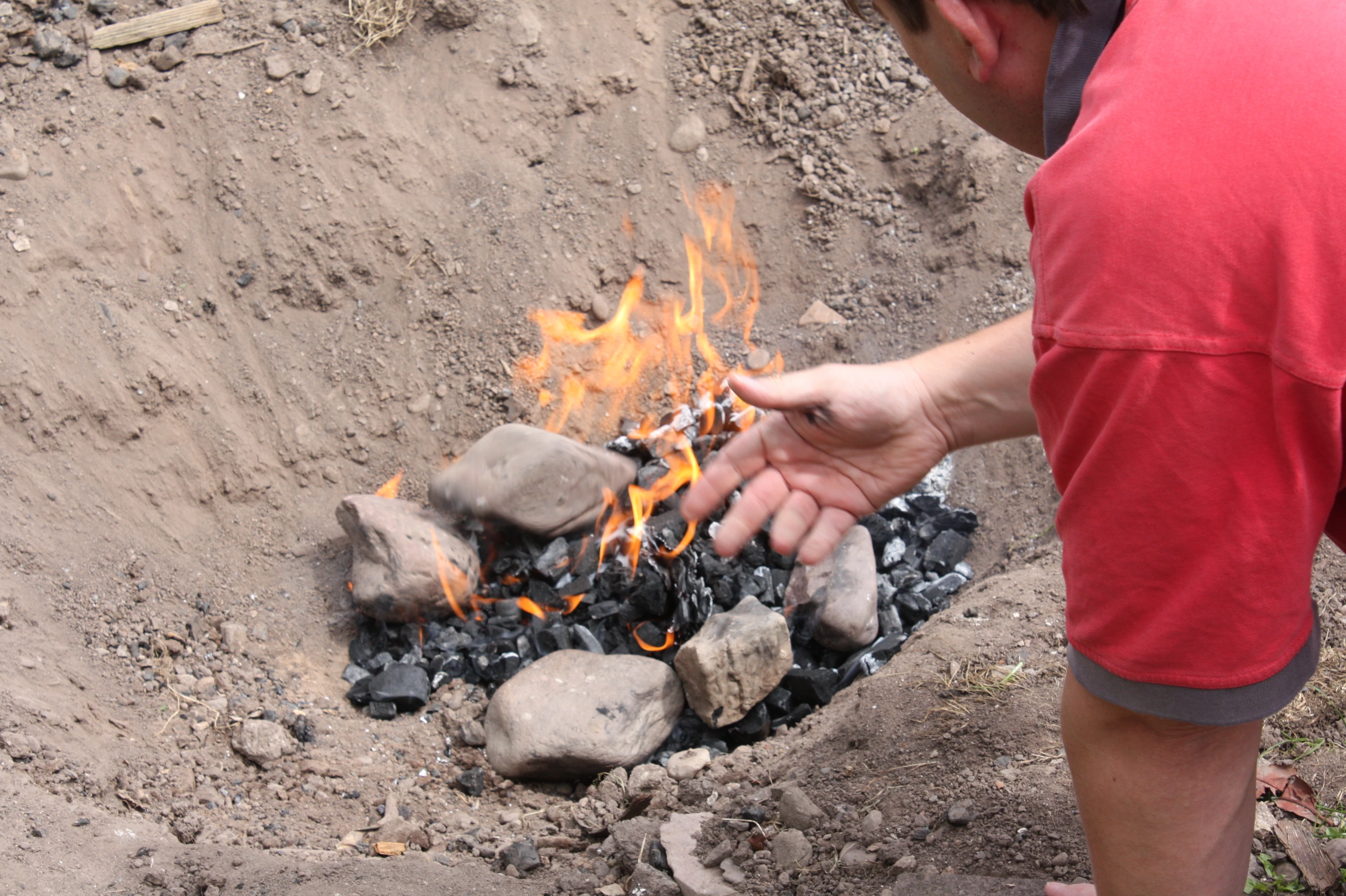
A more conservative fire is set in the base of the pit
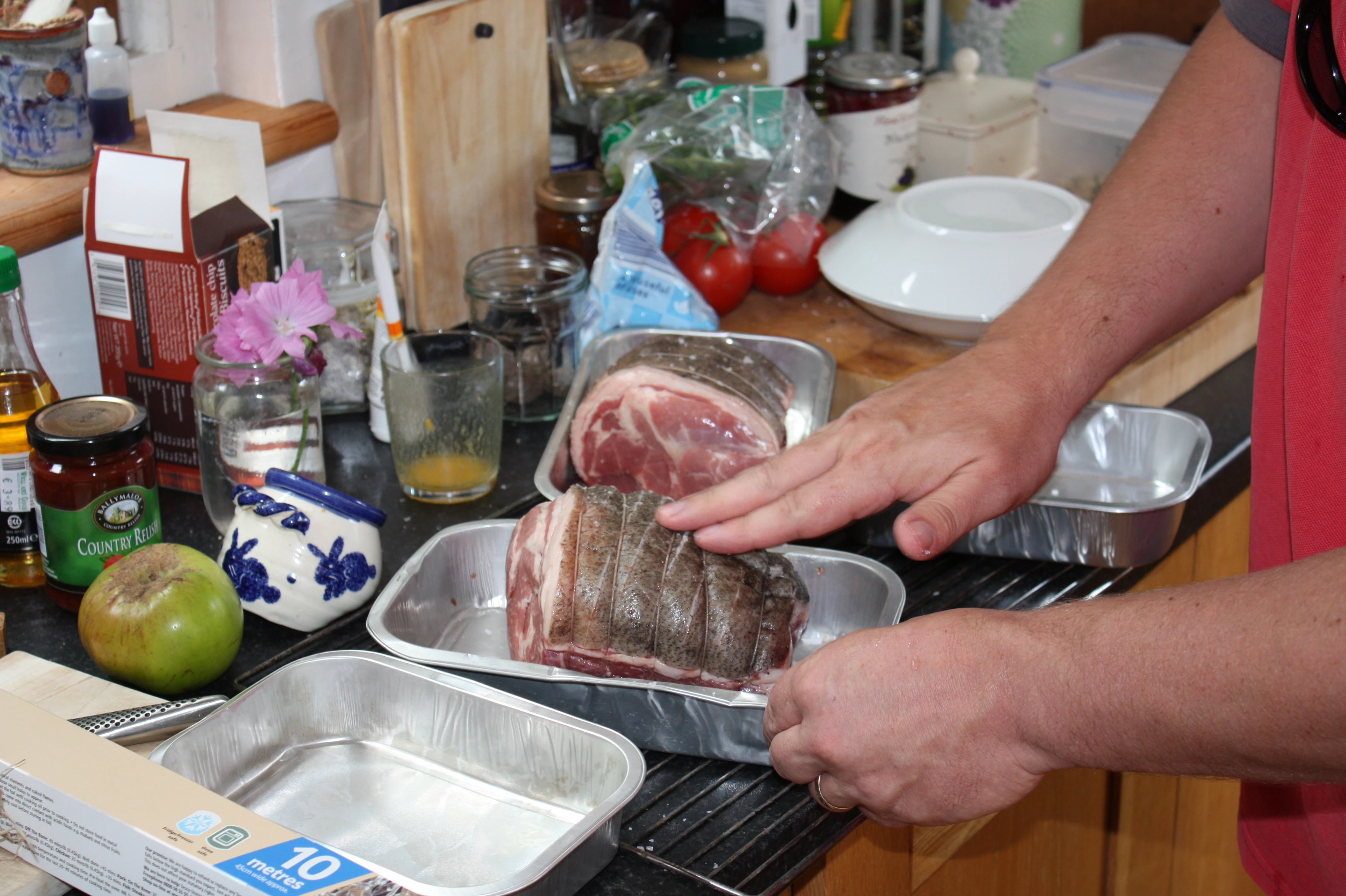
Porky is prepped by scoring the skin and seasoning
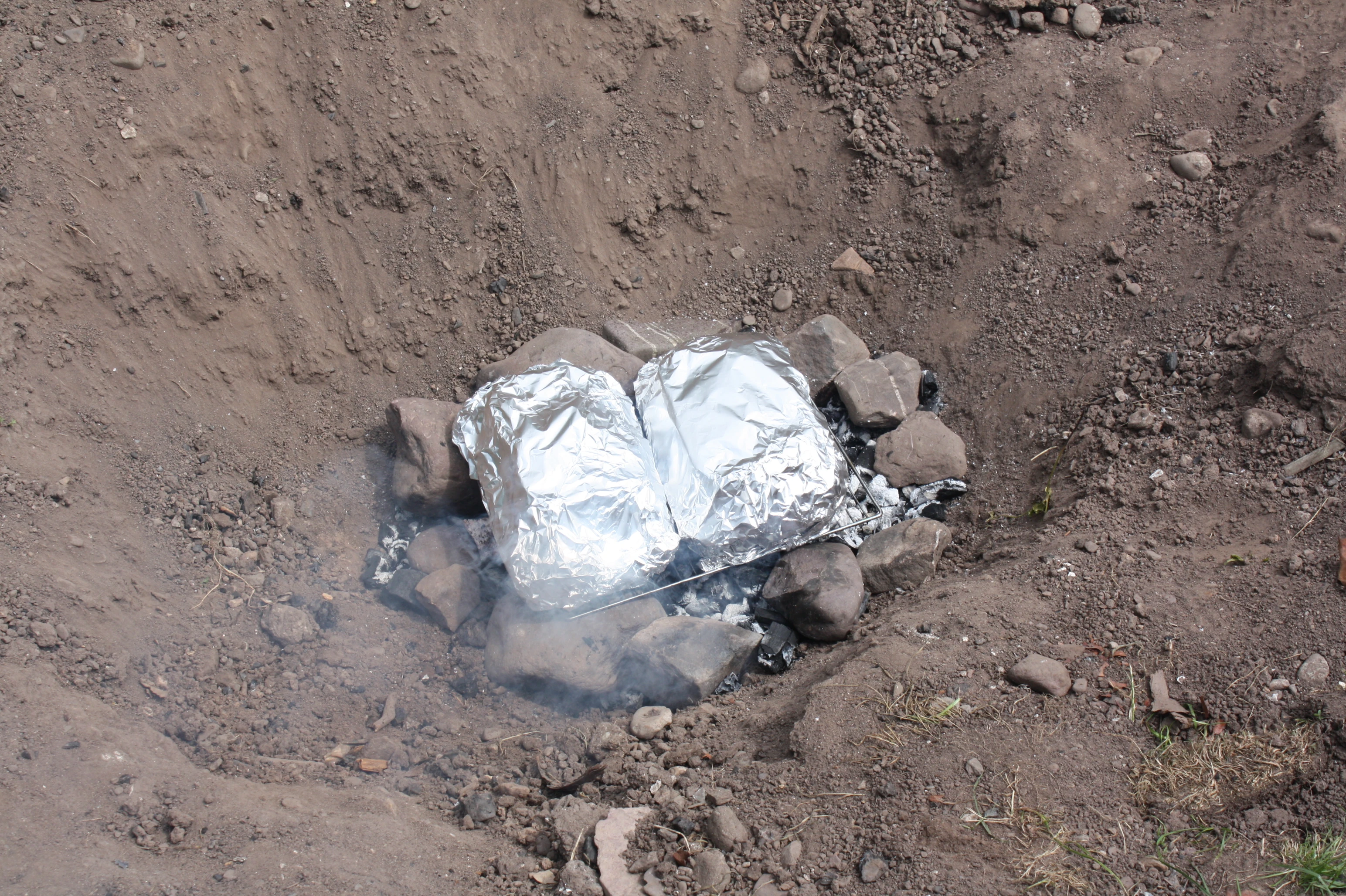
The meat is added to the fire and surrounded with hot rocks
The pit was sealed with soil and a second, less intense fire was built over it. After two and a half hours we excavated the meat.
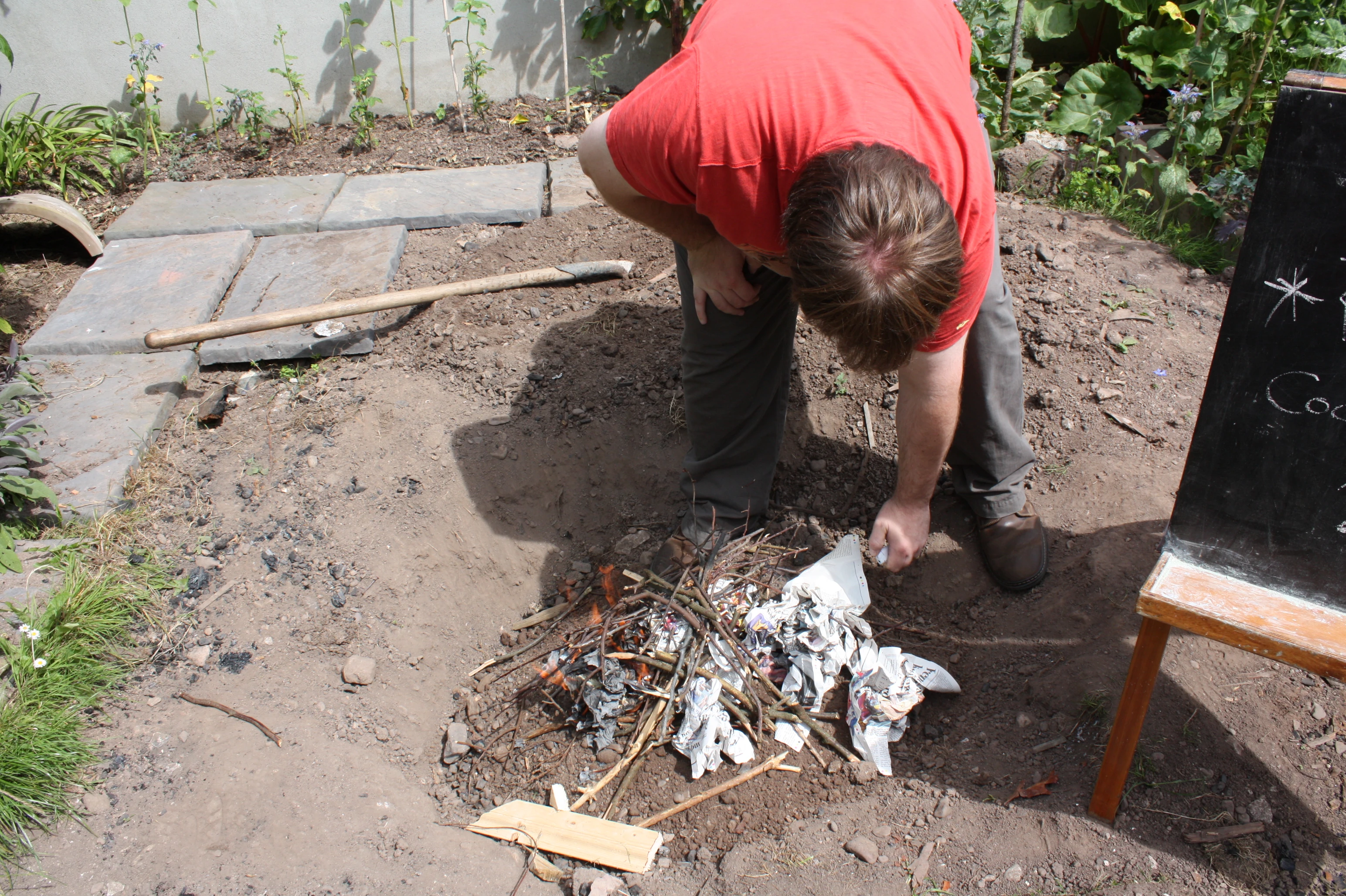
Following backfilling a fire is built on top of the pit
The result was very rare pork: the core temperature was only about 140 degrees, compared with around 170 degrees in the previous experiment. We had underestimated the time required and been too conservative with the surface fire.
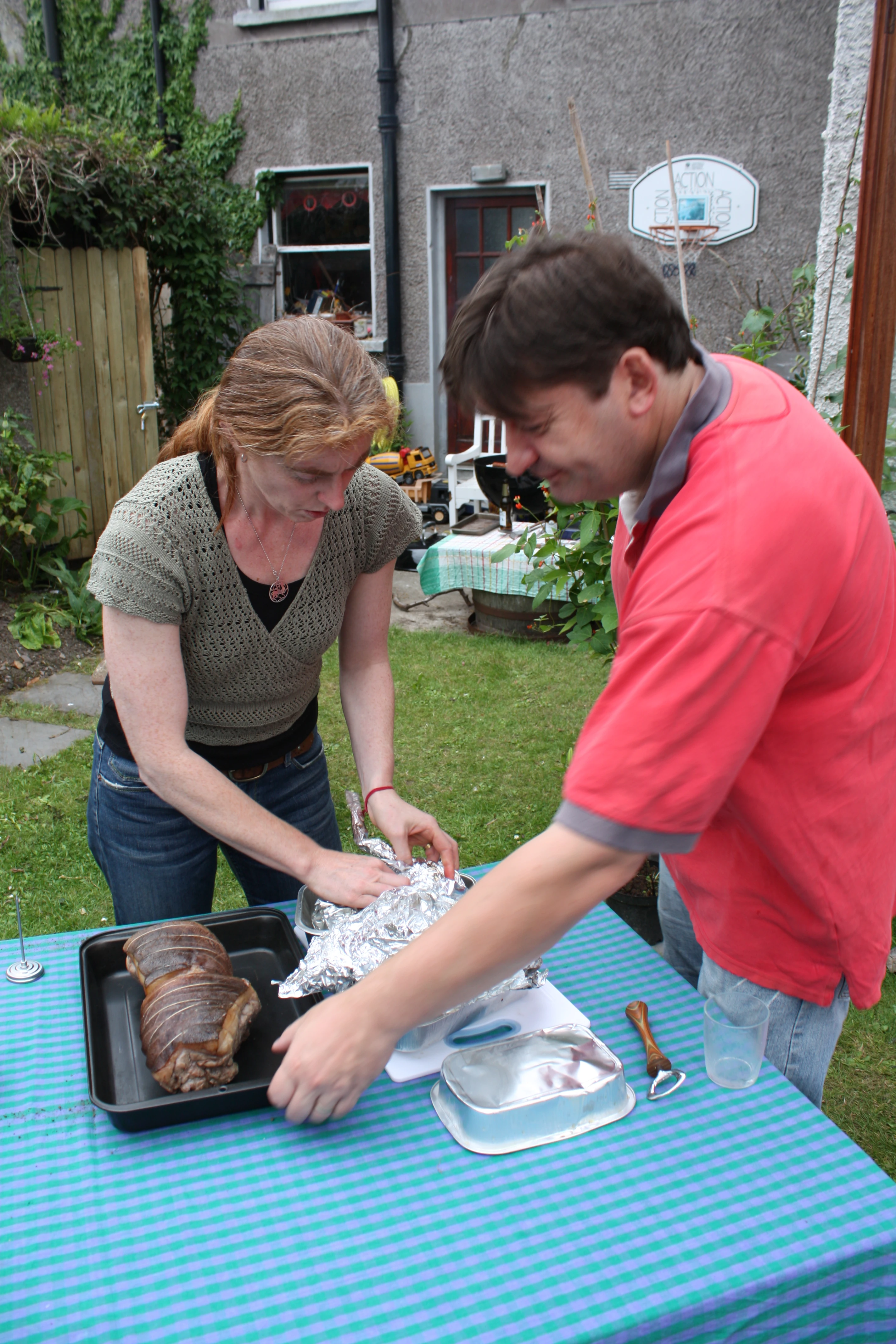
Following removal, the moment of truth: FAIL!
Pit roasting leaves little opportunity to put food back in once excavated, so timing and heat are critical. The pork also highlighted the problem of producing crackling.
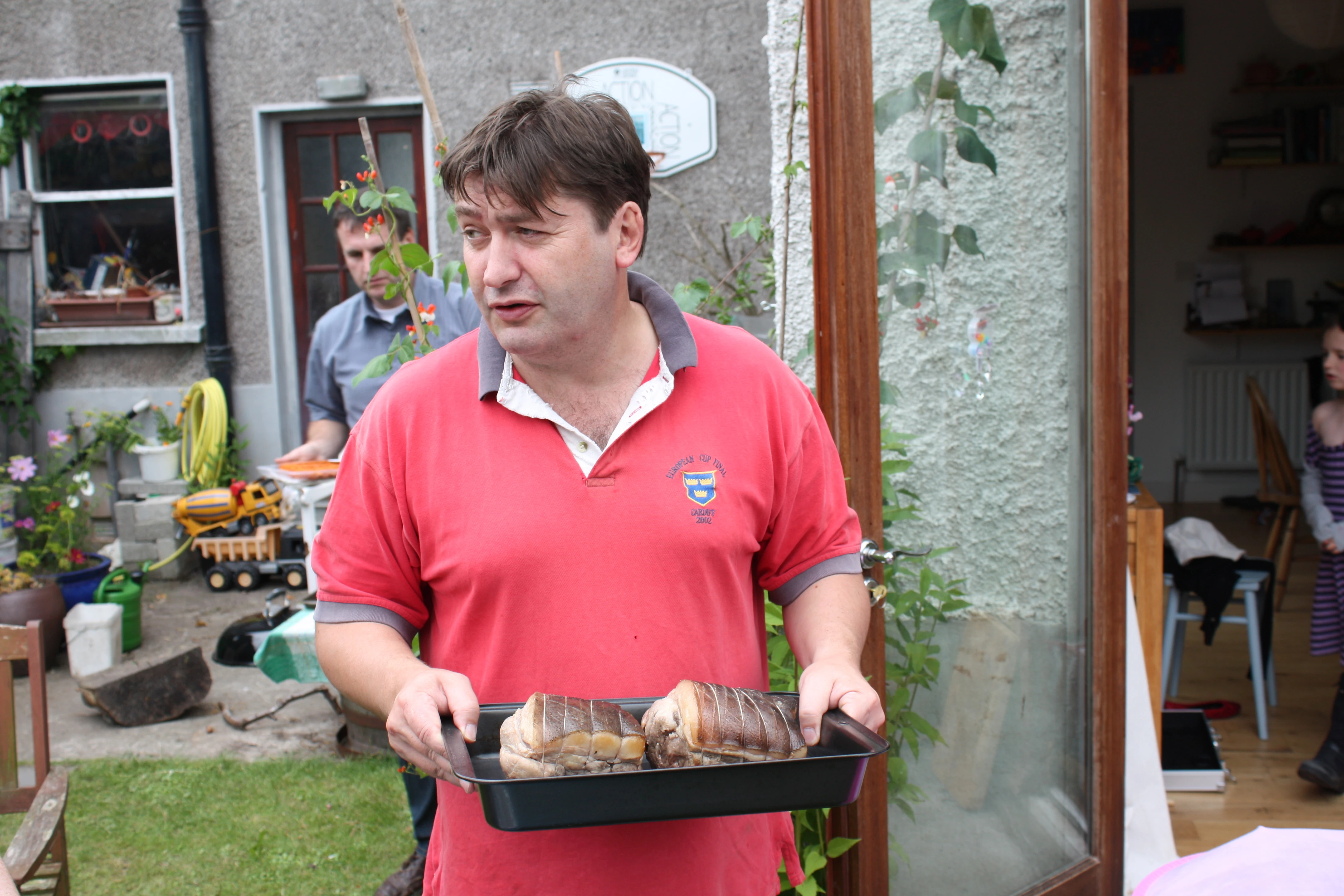
Off to the oven to finish off Porky – his reprieve was short-lived
The obvious next step for the Pit Roast Research Committee was to attempt an entire suckling pig.