
Leading on from Part 1, Rubicon's Colm Moloney undertook the second stage of the Bronze Age pit-cooking experiment using a shoulder of lamb, a hole in the garden and some enforced child labour. The aim was to measure the heat generated and the cooking time required. The experiment differed from the prehistoric model by using tinfoil to wrap the meat.
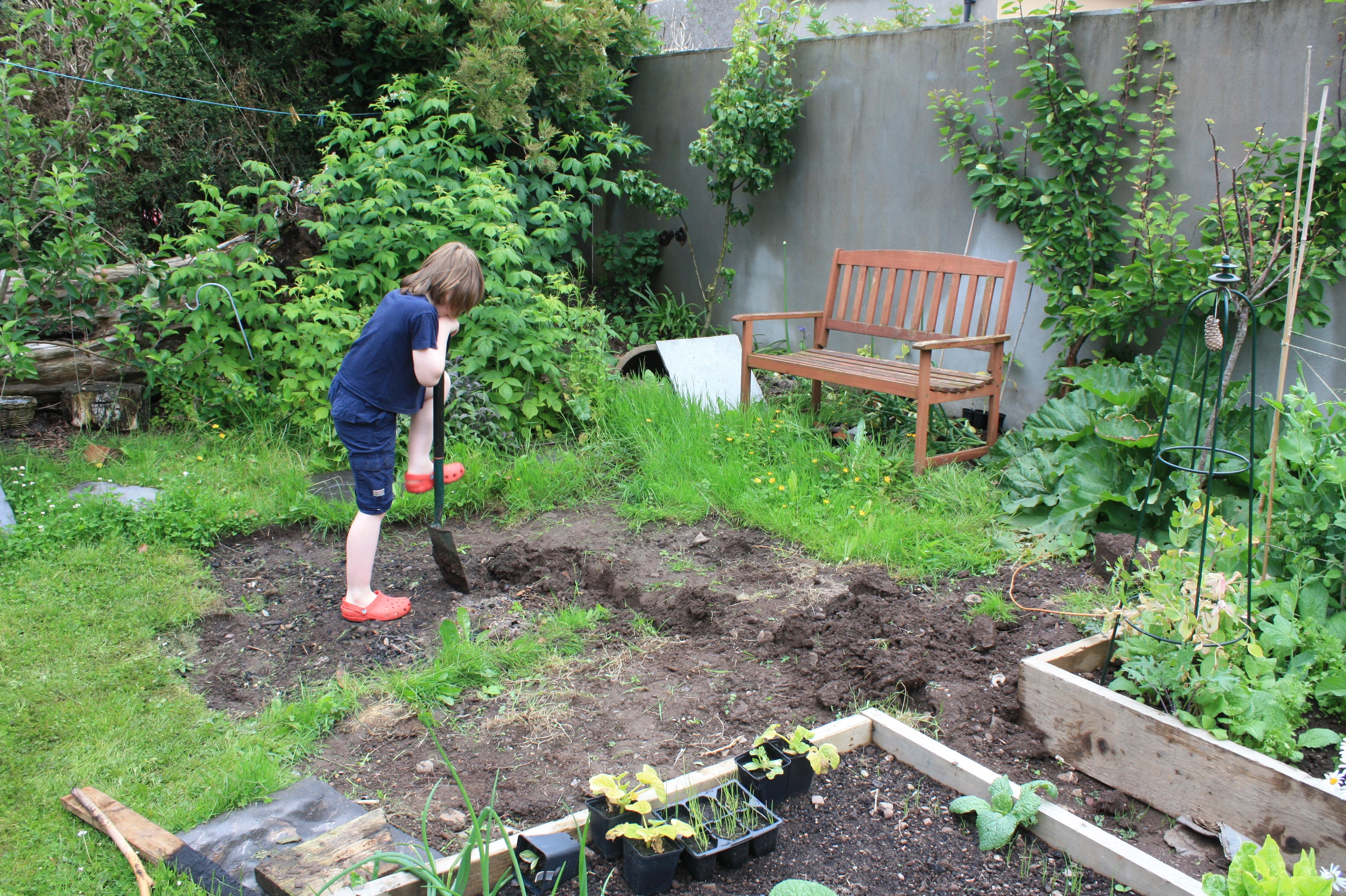
Stage 1: Dig a pit large enough to take the joint and a large quantity of charcoal and stone
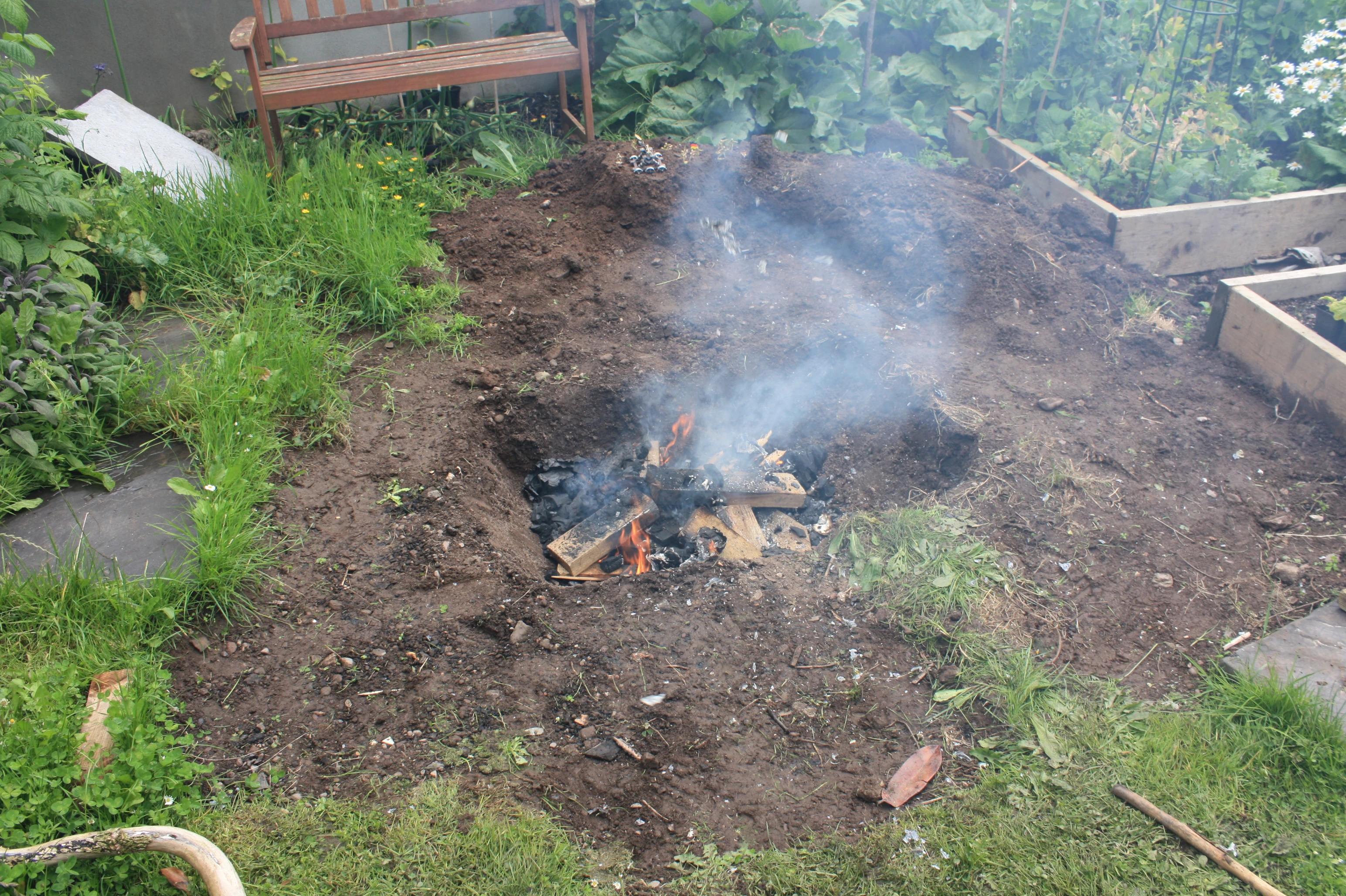
Stage 2: Light a fire in the pit
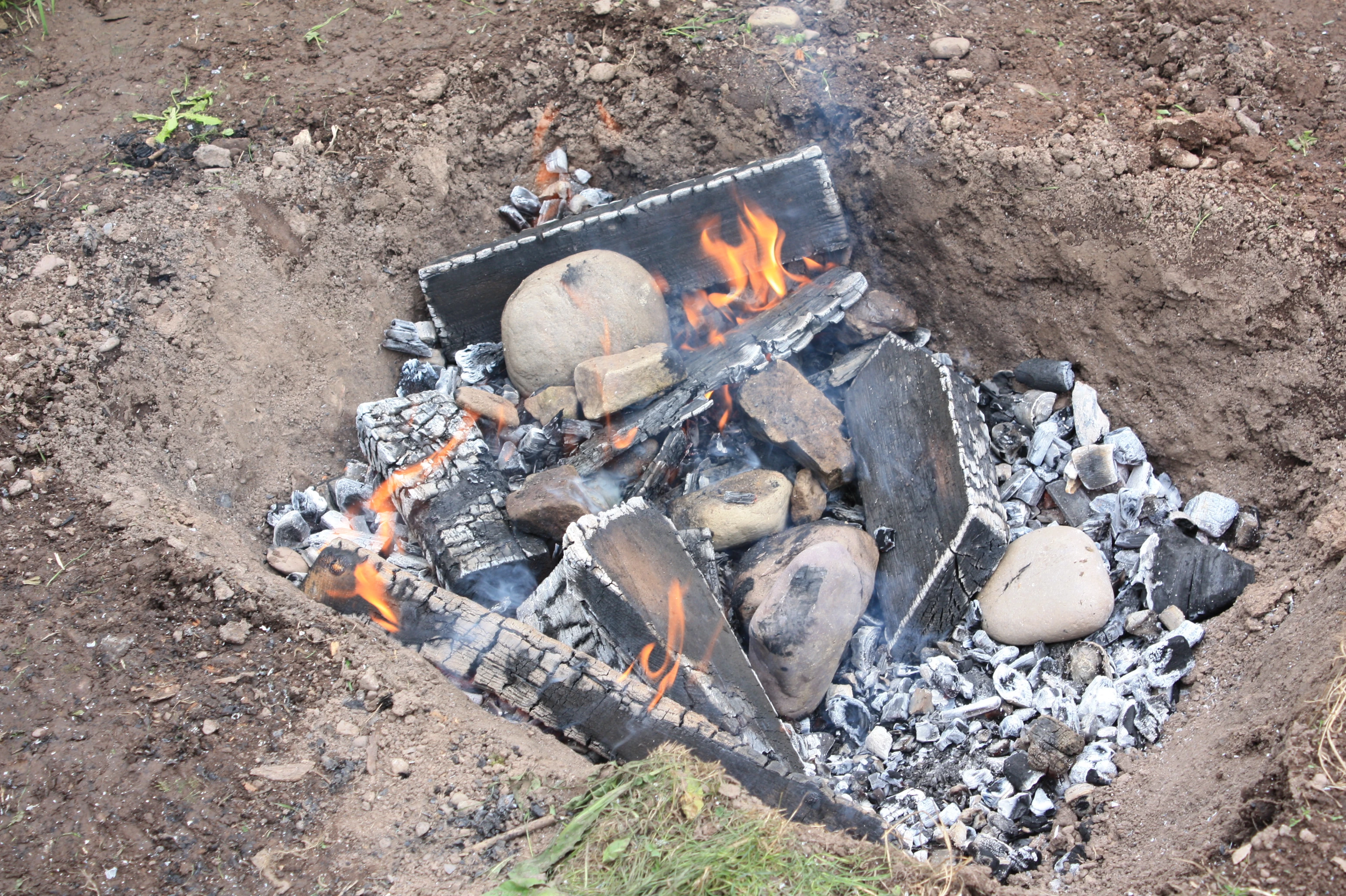
Stage 3: Once the flames have died down, add stone to the charcoal
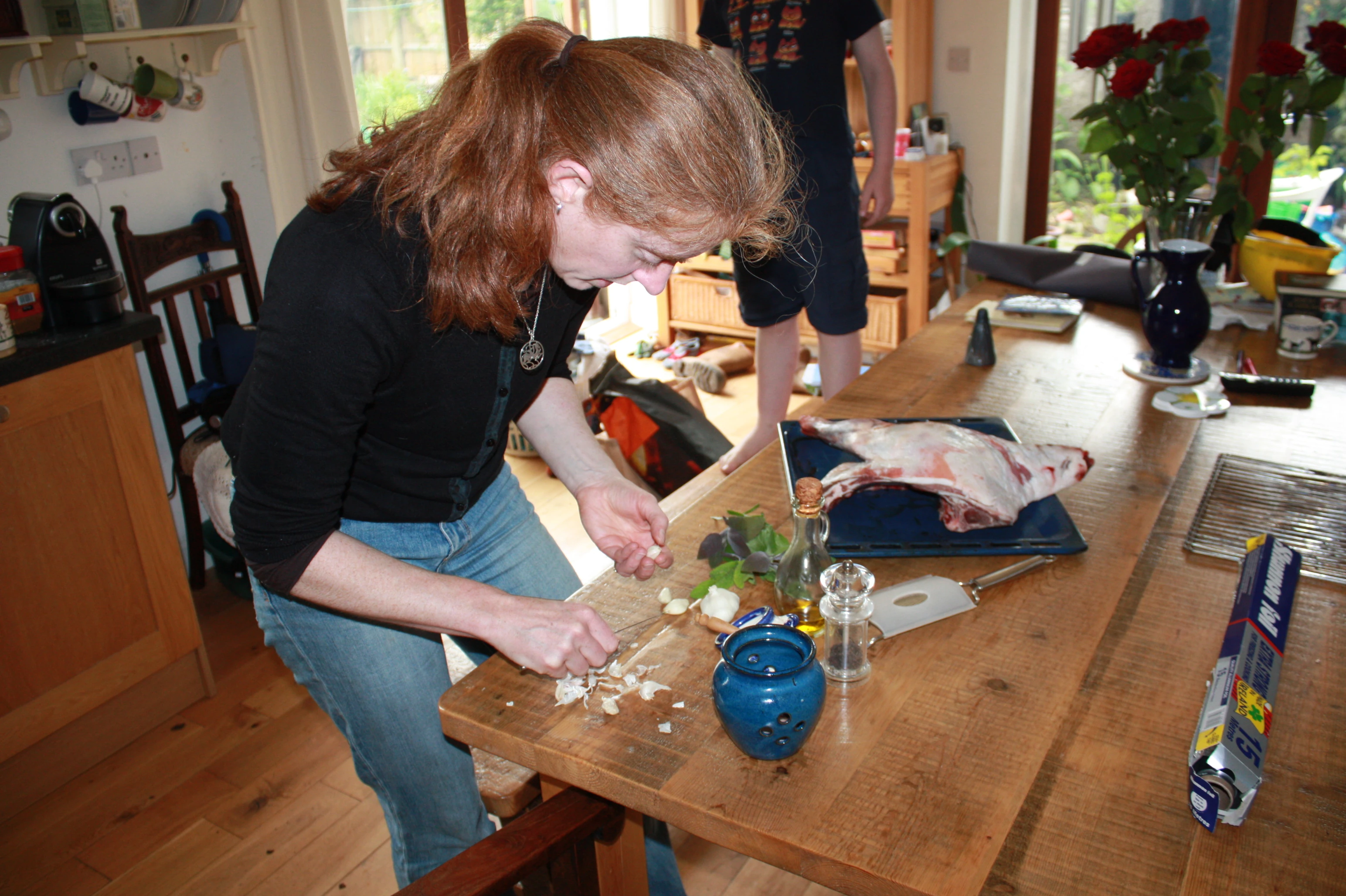
Stage 4: Prepare the meat by scoring the fat and adding butter, salt, garlic and herbs
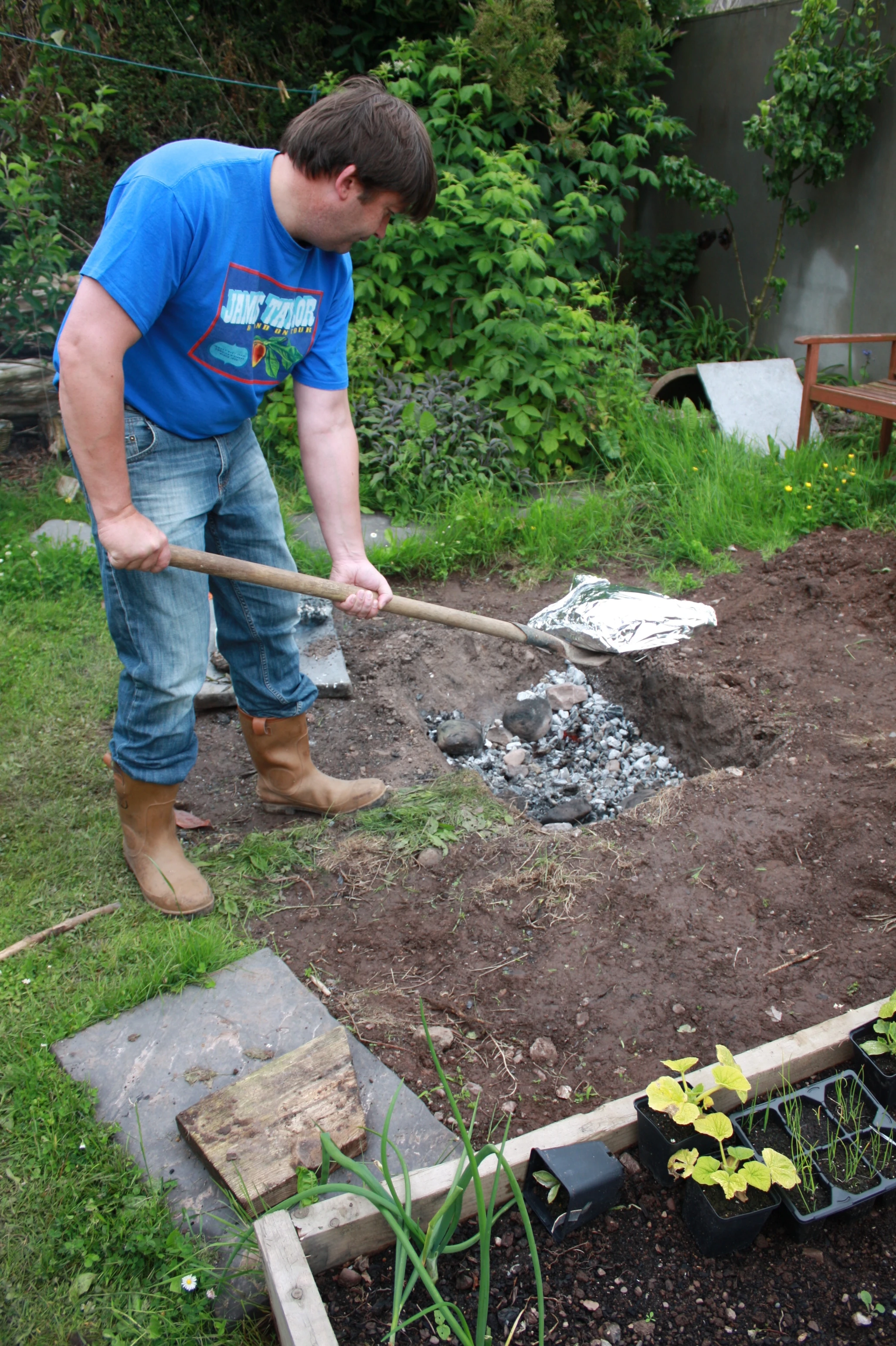
Stage 5: Wrap the meat; future experiments would test materials such as grass, reeds, bark or seaweed
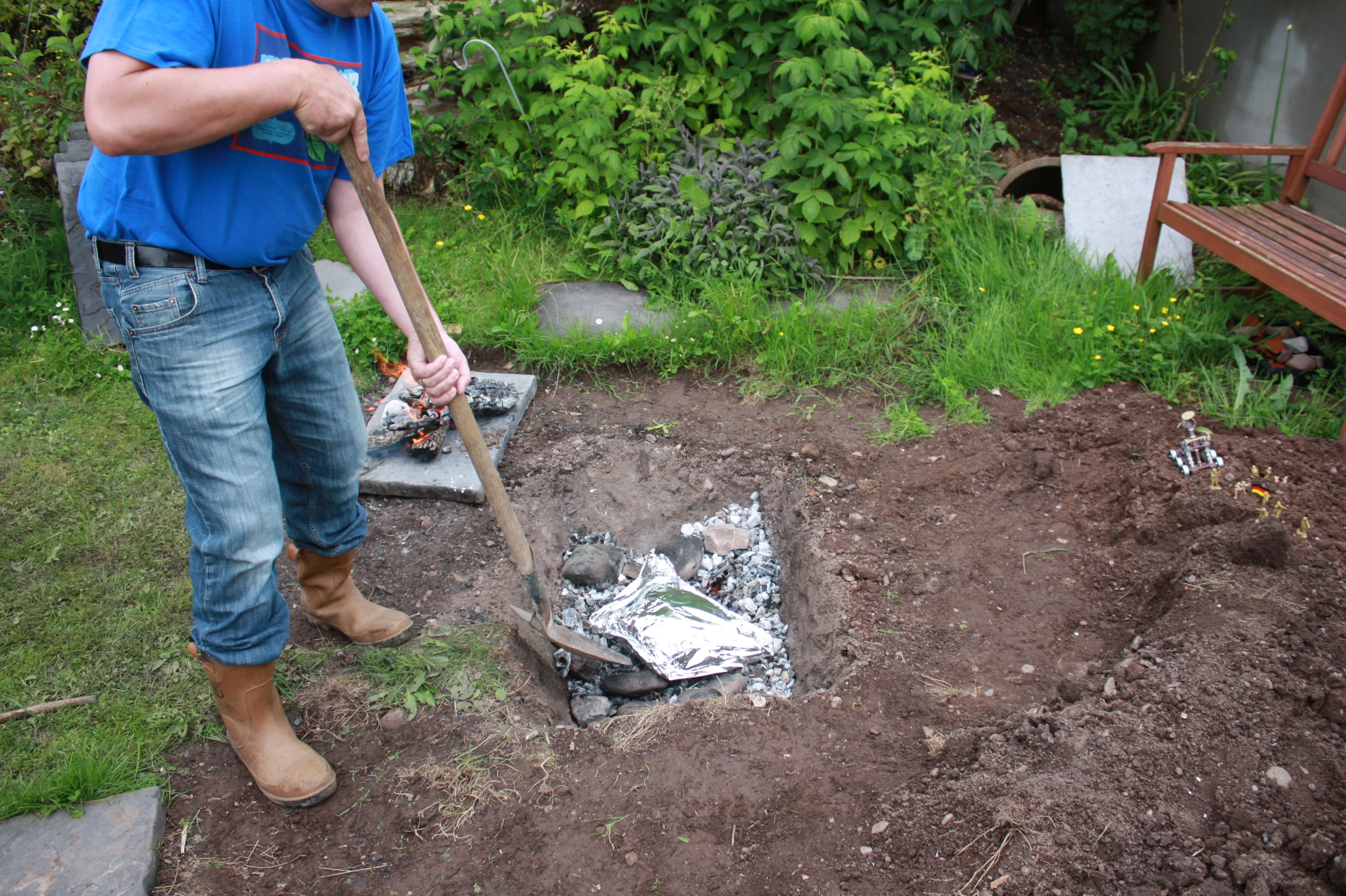
Stage 6: Place the meat into the hot coals and surround it with hot stone and charcoal
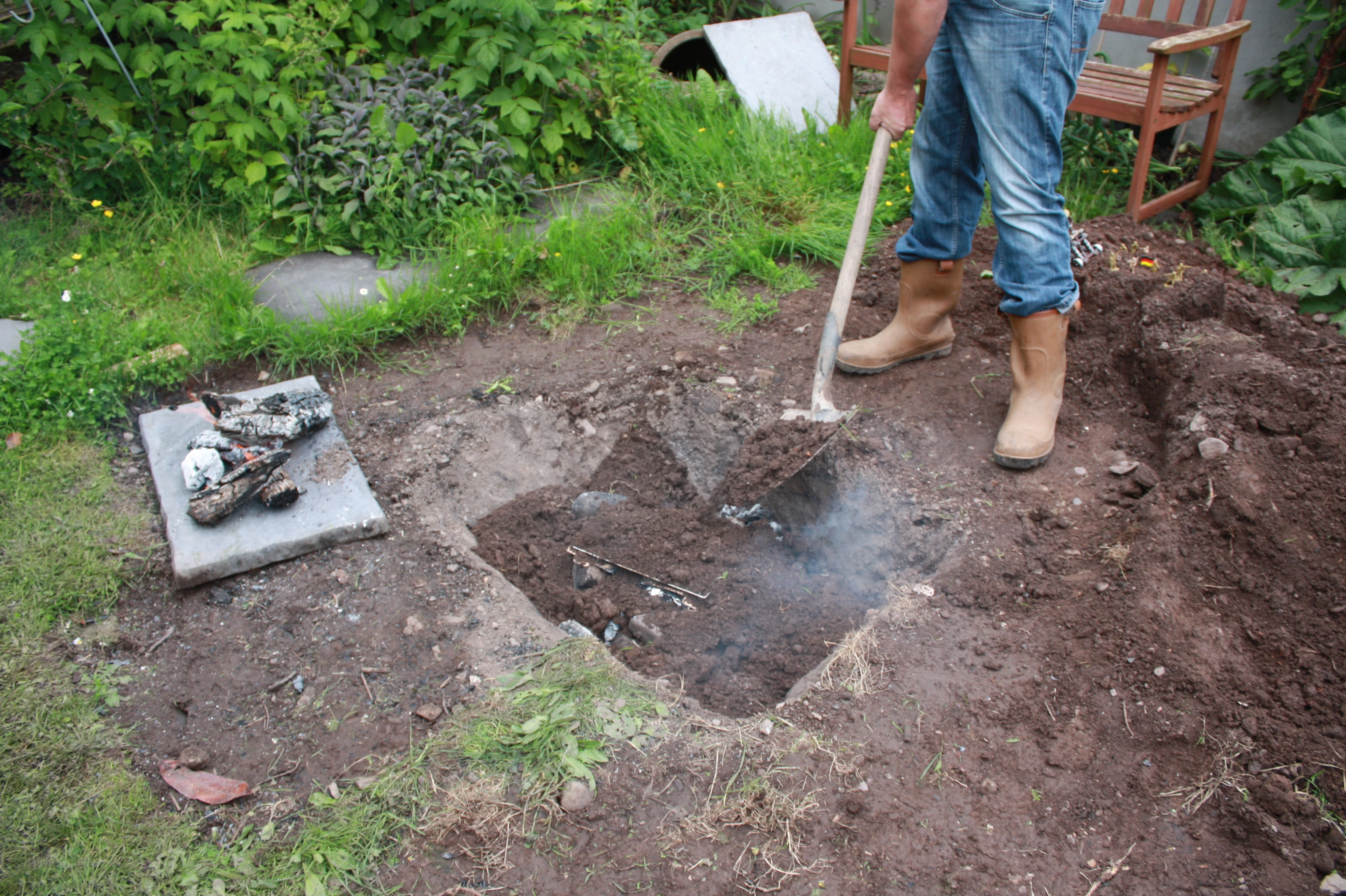
Stage 7: Backfill the pit with a thin insulating layer of soil
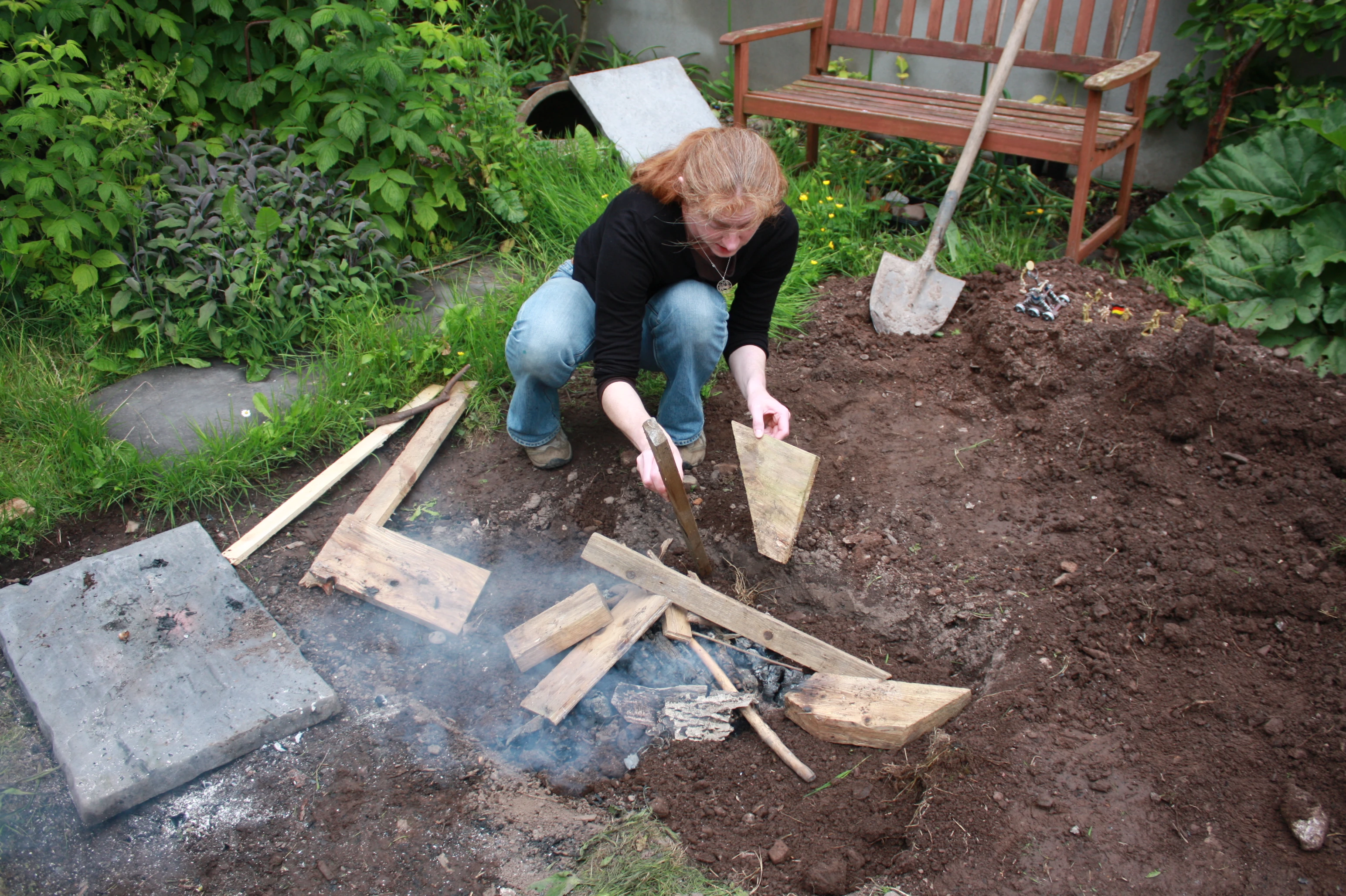
Stage 8: Build a surface fire and keep it at a moderate size for several hours
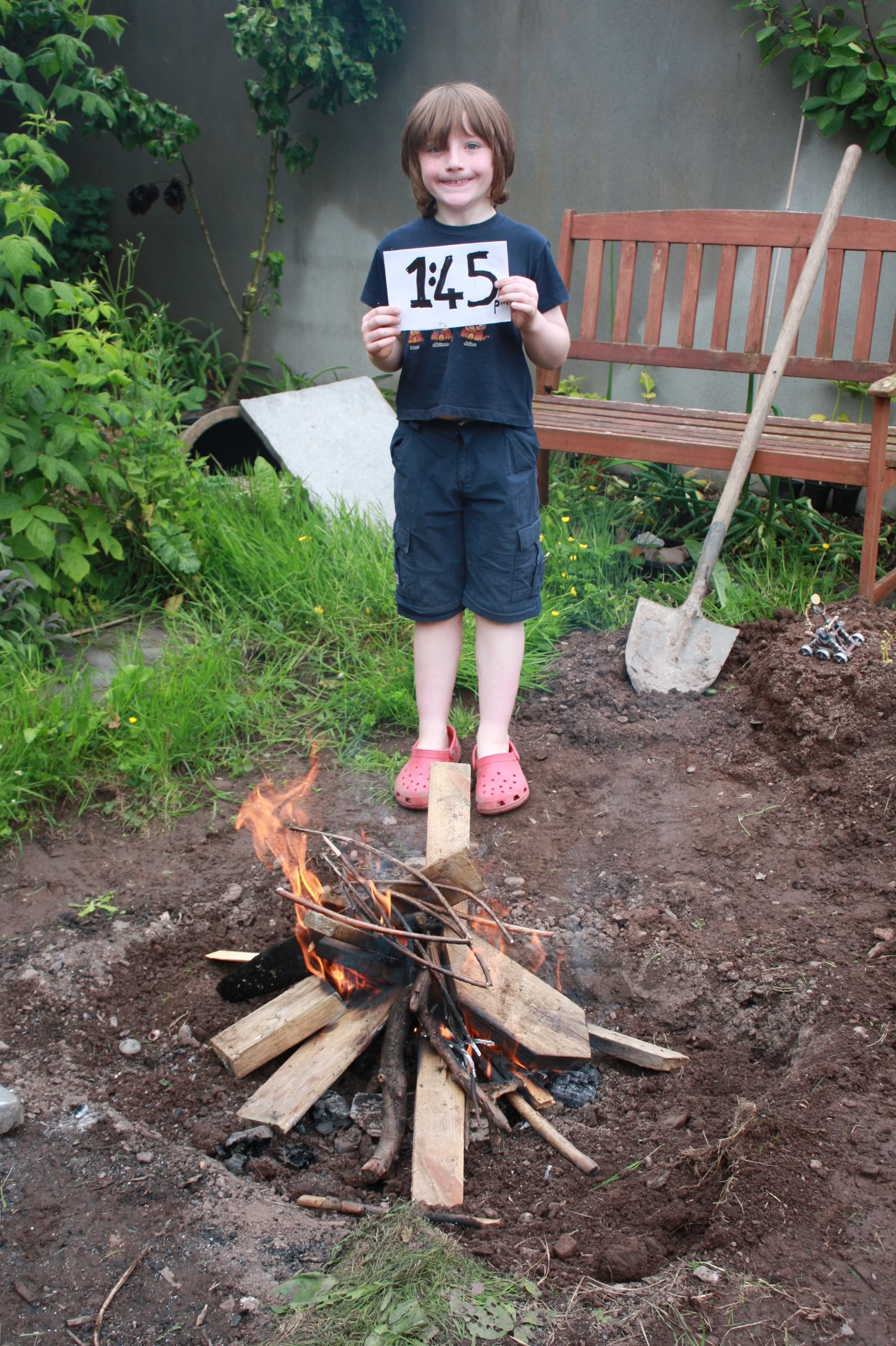
Stage 9: Time check
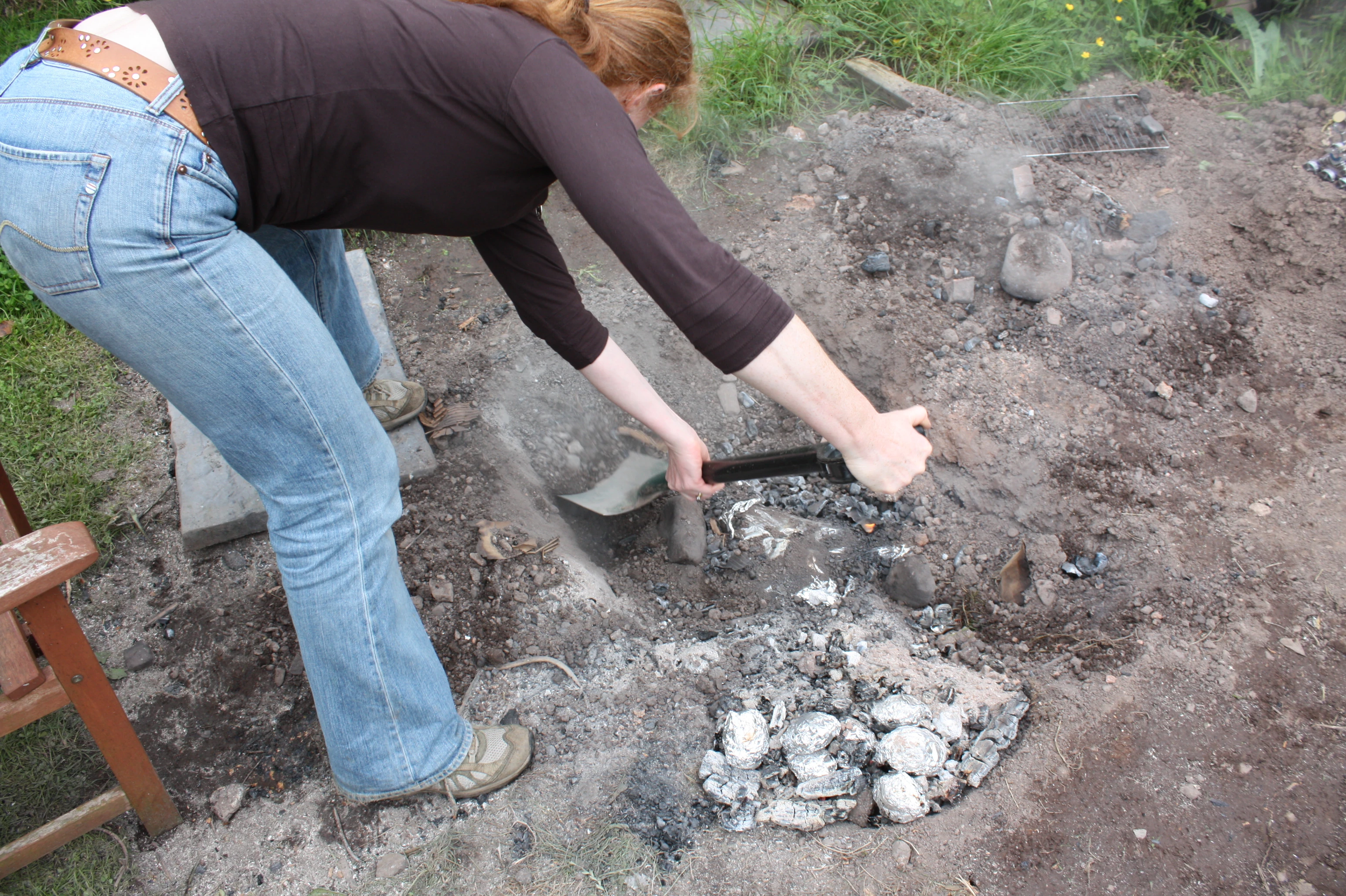
Stage 10: Carefully excavate and remove the wrapped meat
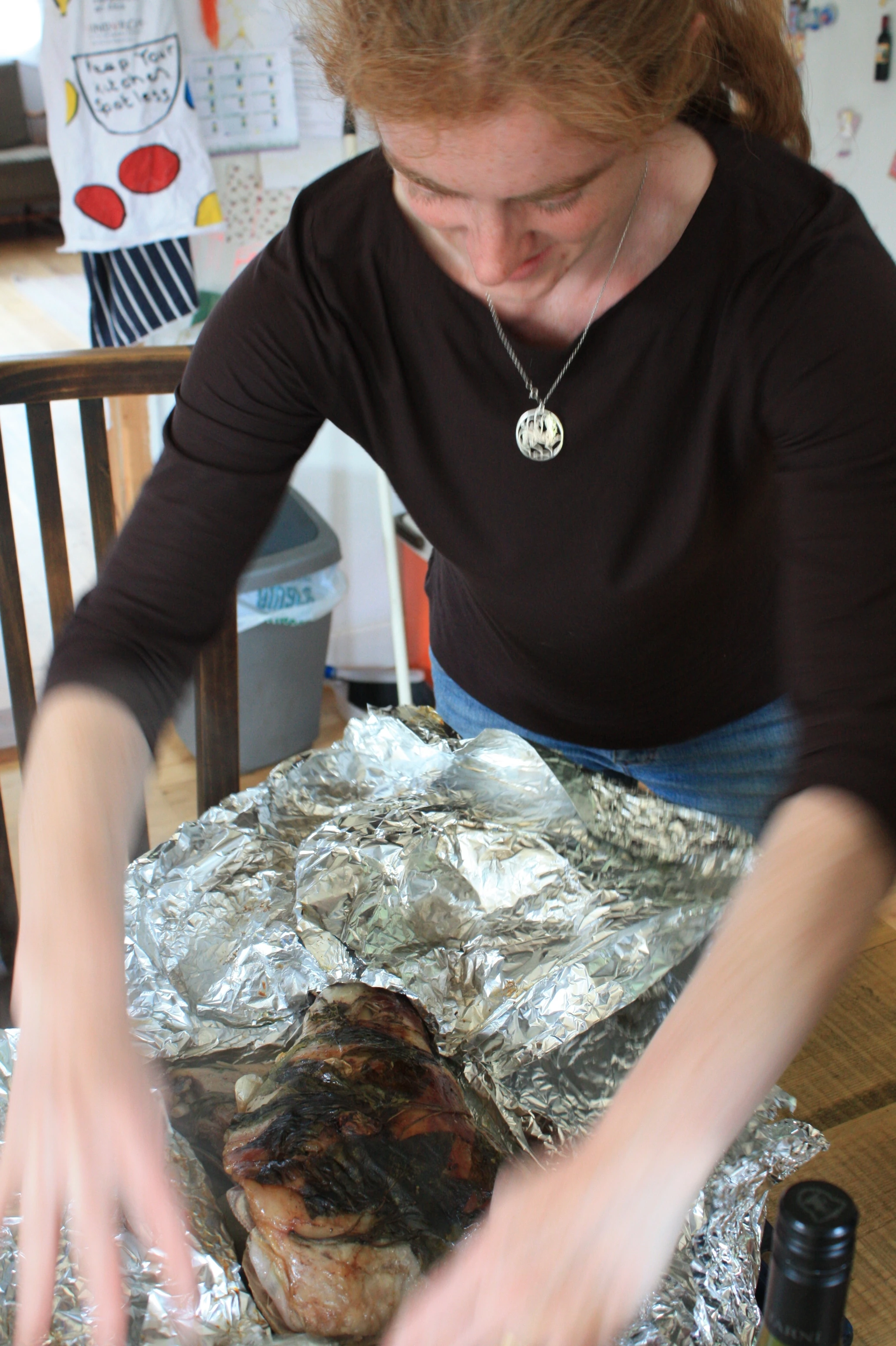
Stage 11: The moment of truth – the pit base measured about 170°C and the meat about 190°C, indicating it was slightly over-cooked
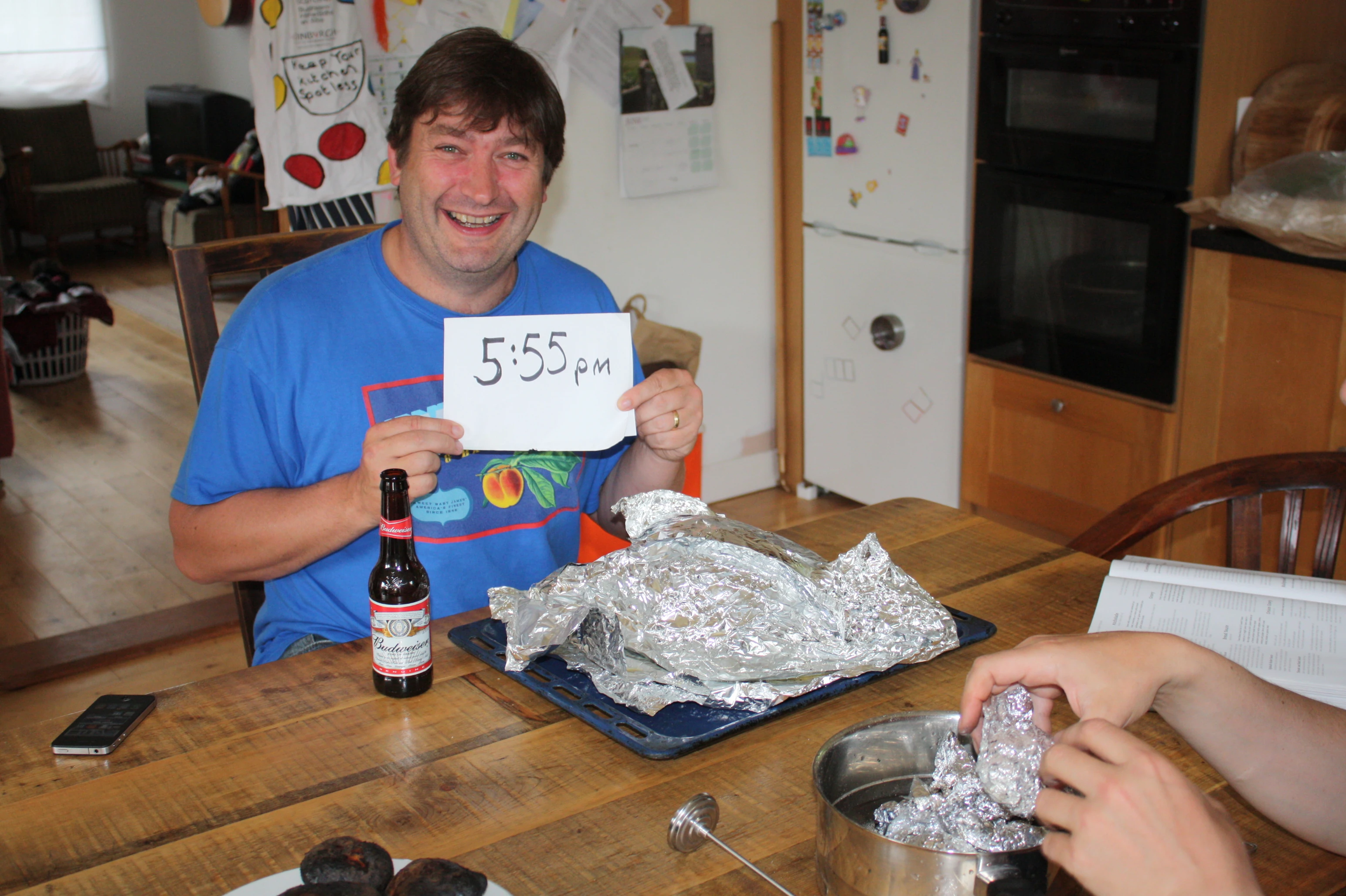
Stage 12: In future reduce the cooking time or intensity of the surface fire
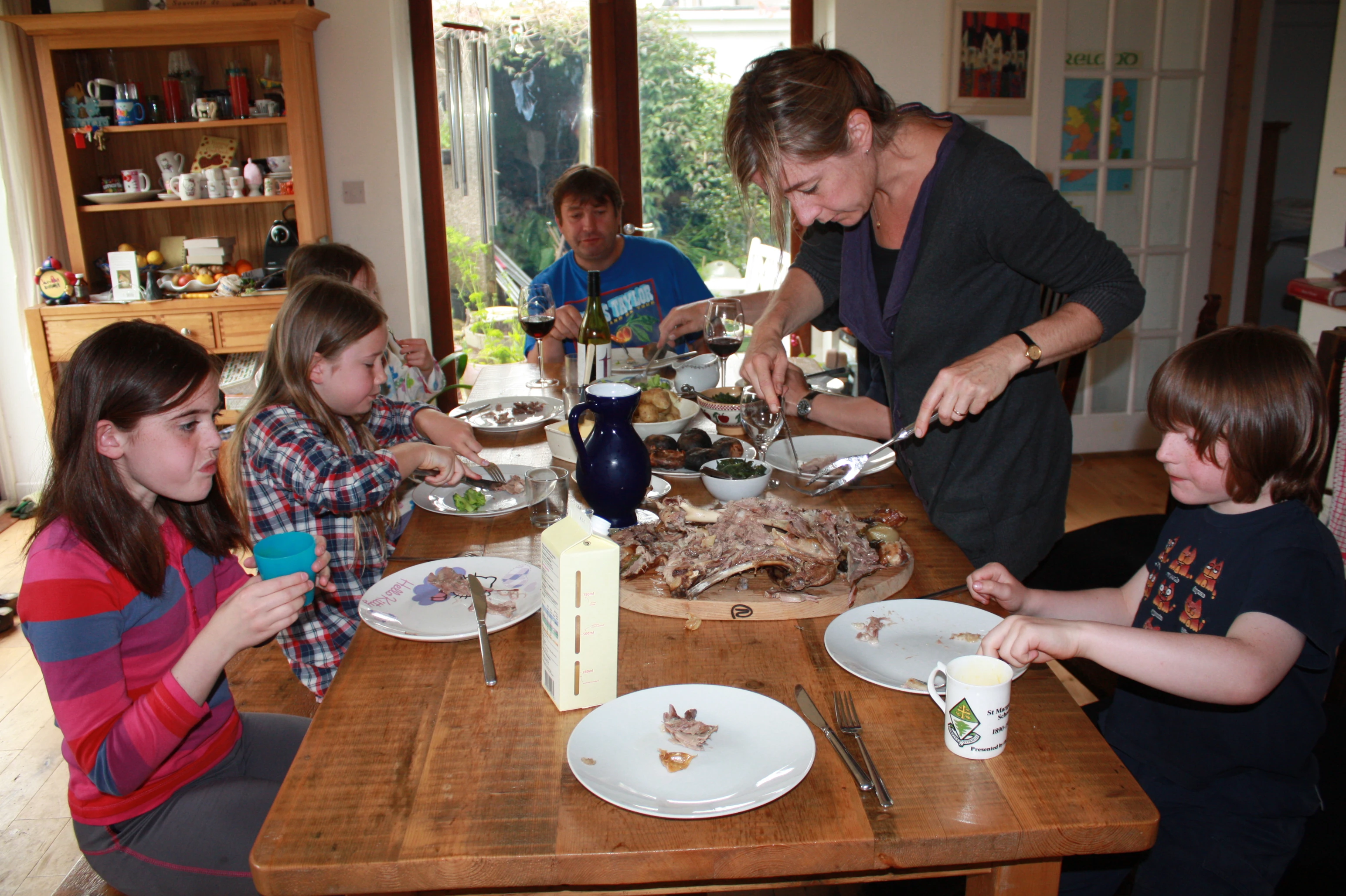
Stage 13: Feasting – the meat was succulent and fell from the bone
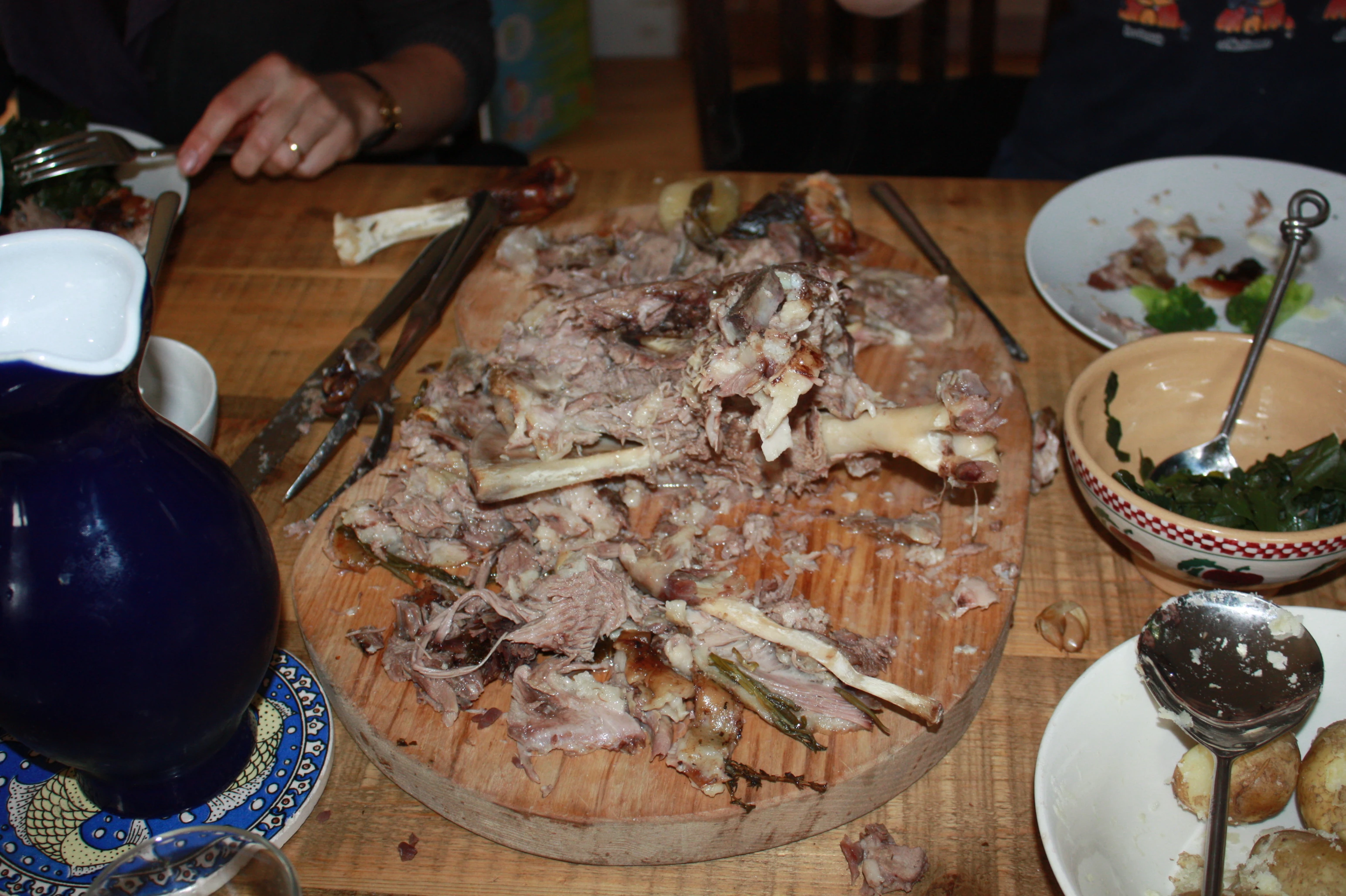
Stage 15: The remnants – overall the experiment was considered a success
The next planned attempt was pork, with the intention of testing a seaweed wrapping rather than modern foil.