
During excavations on the N9/N10 Carlow Bypass we encountered a Middle Bronze Age settlement at Tinryland. Alongside post-built roundhouses and pits was an elongated feature packed with heat-cracked stone and edged with reddened clay, evidence of intense heat. Burnt pig bone, hazelnut shells, worked flint and domestic pottery came from its backfill, while a possible windbreak suggested control of airflow.
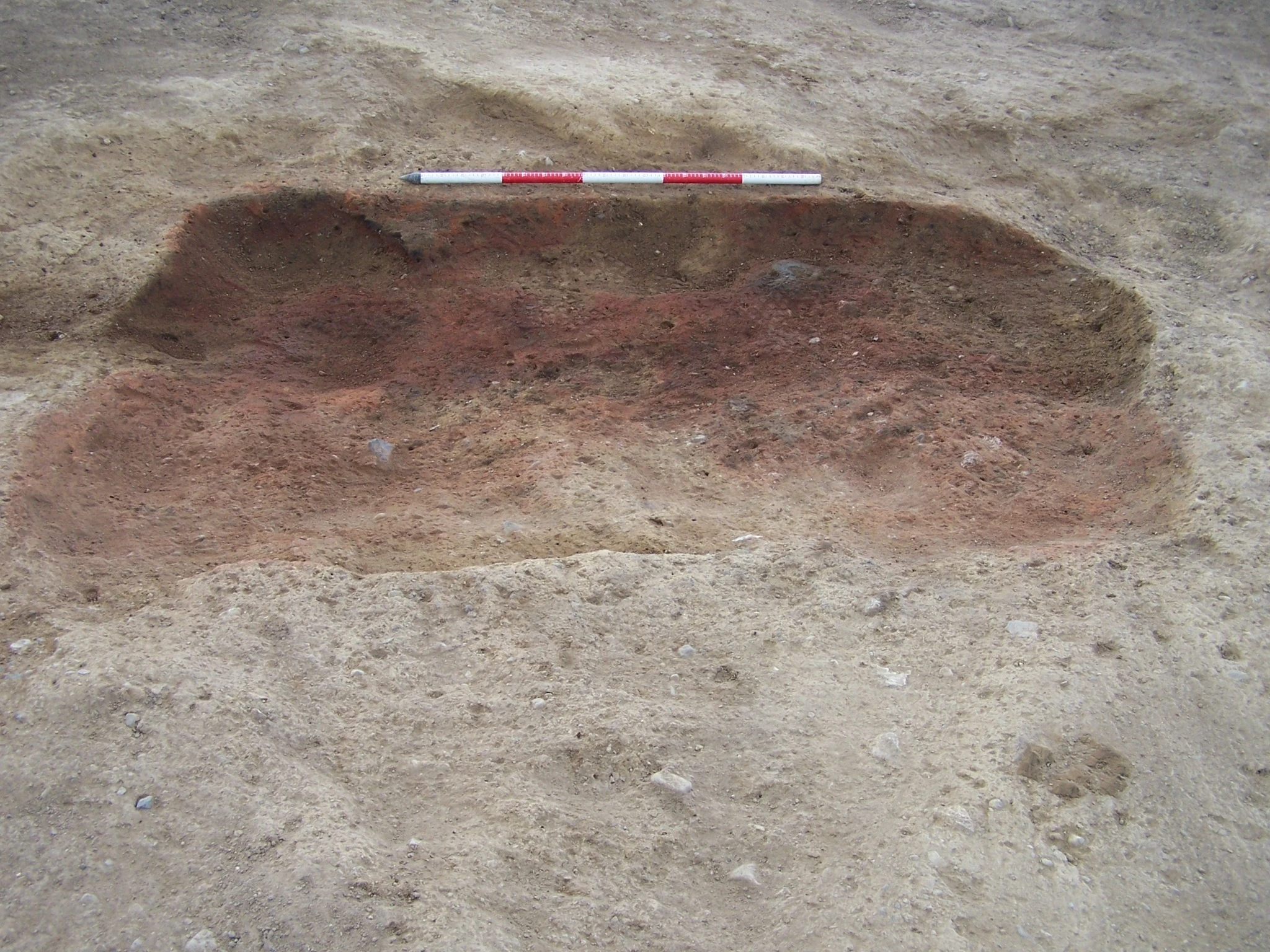
Post-excavation shot of the Tinryland Bronze Age pit showing reddening caused by intense heat
The evidence suggested a roasting pit. A useful modern parallel is the Maori-style earth oven described by Hugh Fearnley-Whittingstall: a large pit containing fire, hot coals and stone, covered with vegetation, meat and vegetables, sealed with earth and heated from above with a second fire.
In a Bronze Age Irish context the wrapping layer could have been large leaves, grass, seaweed or straw. The combined heat from below and above would create a simple oven, potentially capable of cooking very large joints or whole animals over many hours.
The next step was to reconstruct the process on a smaller scale and test whether it worked, beginning with a leg or shoulder of lamb before eventually attempting an entire pig.