
One of the most important roles of any archaeologist is to communicate their findings to others, be they fellow archaeologists or members of the public. The strongest and most direct method of imparting information is by visual means, be it site plans, reconstructions, artefact photography or illustration. Rubicon prides itself on its graphics department, one of the largest and most accomplished in Europe.
One of the most technical and challenging aspects of archaeological graphics is artefact illustration, a technique discussed here by illustrator Sara Nylund.
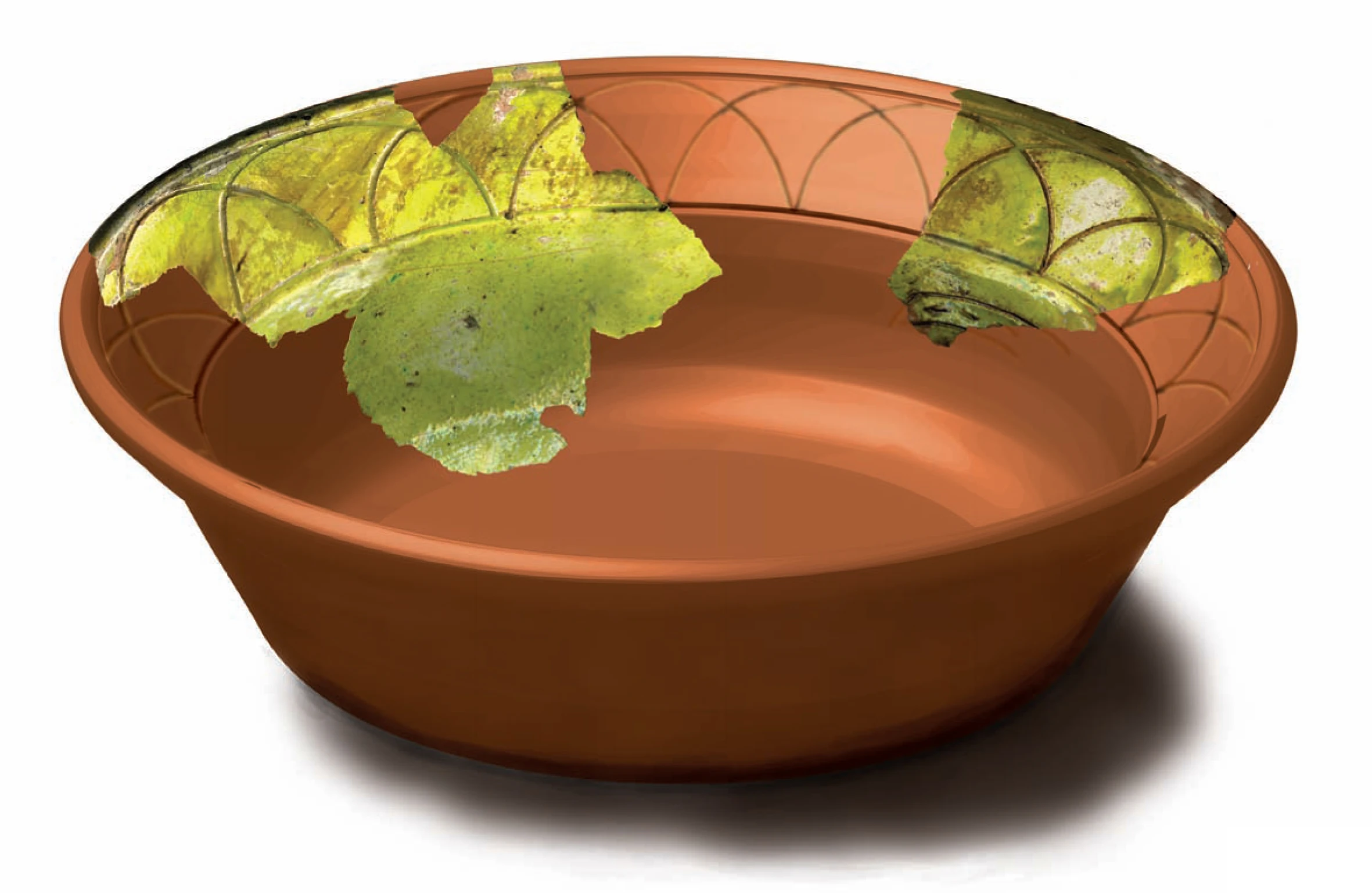
3D imagery is one tool in the archaeological graphics armoury, but it cannot always reproduce the detailed information imparted in a technical illustration
The archaeological profession and its sub-discipline of archaeological illustration have seen astonishing leaps in technology. The realm of archaeological graphics is now dominated by the computer, yet archaeologists still turn to one traditional method time and time again for a record of their finds: artefact illustration.
Artefact illustration – just a pretty finds drawing?
An artefact illustration is a true record of an object and its material condition. The trained illustrator interprets the find to convey size, shape, decoration, manufacturing techniques, fabric, thickness and sectional profile.
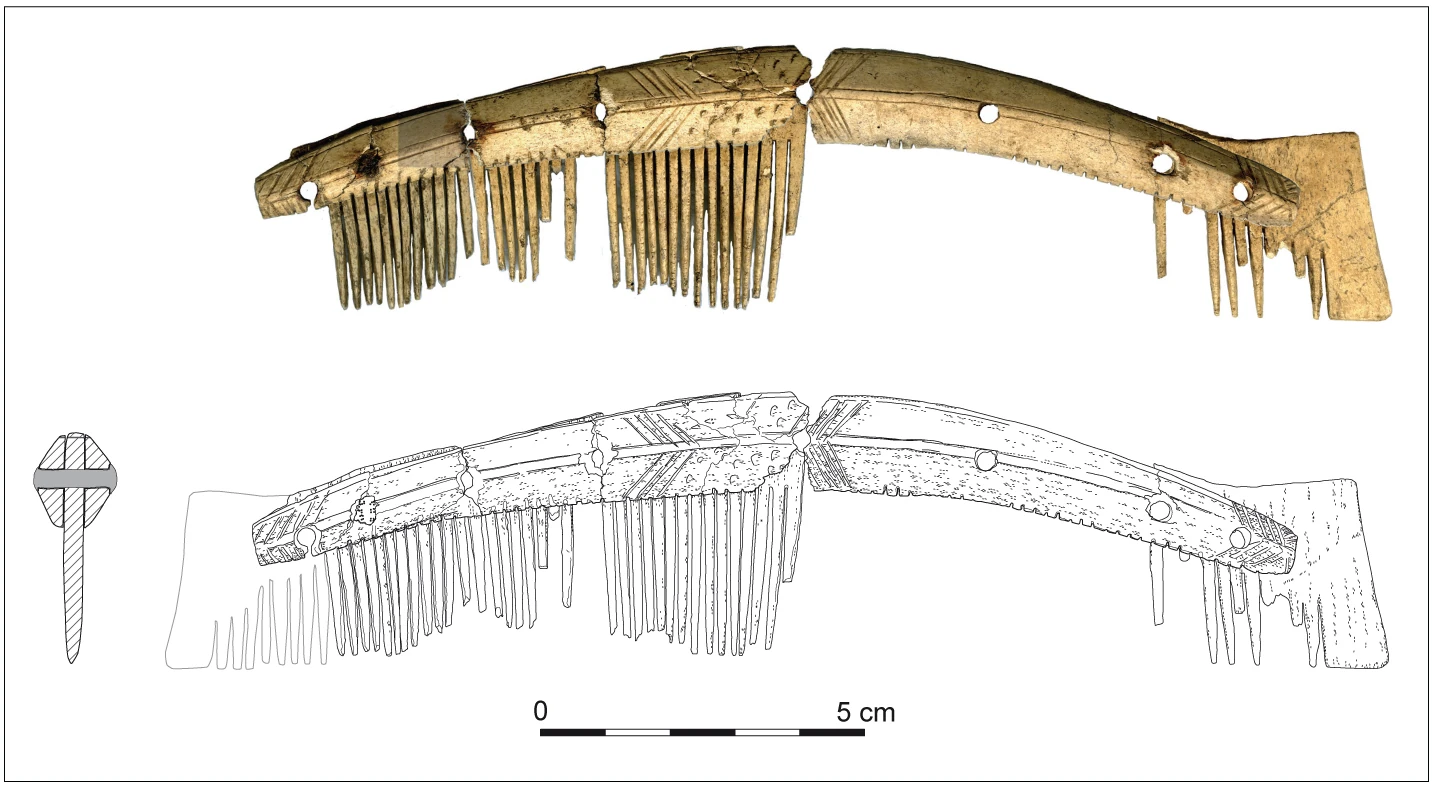
The archaeological illustration conveys more information on the fabric of this composite medieval bone comb than the photograph
Artefact illustrations often contain several views as well as sections and projections. The finished illustration must also convey any aesthetic qualities inherent in the object.
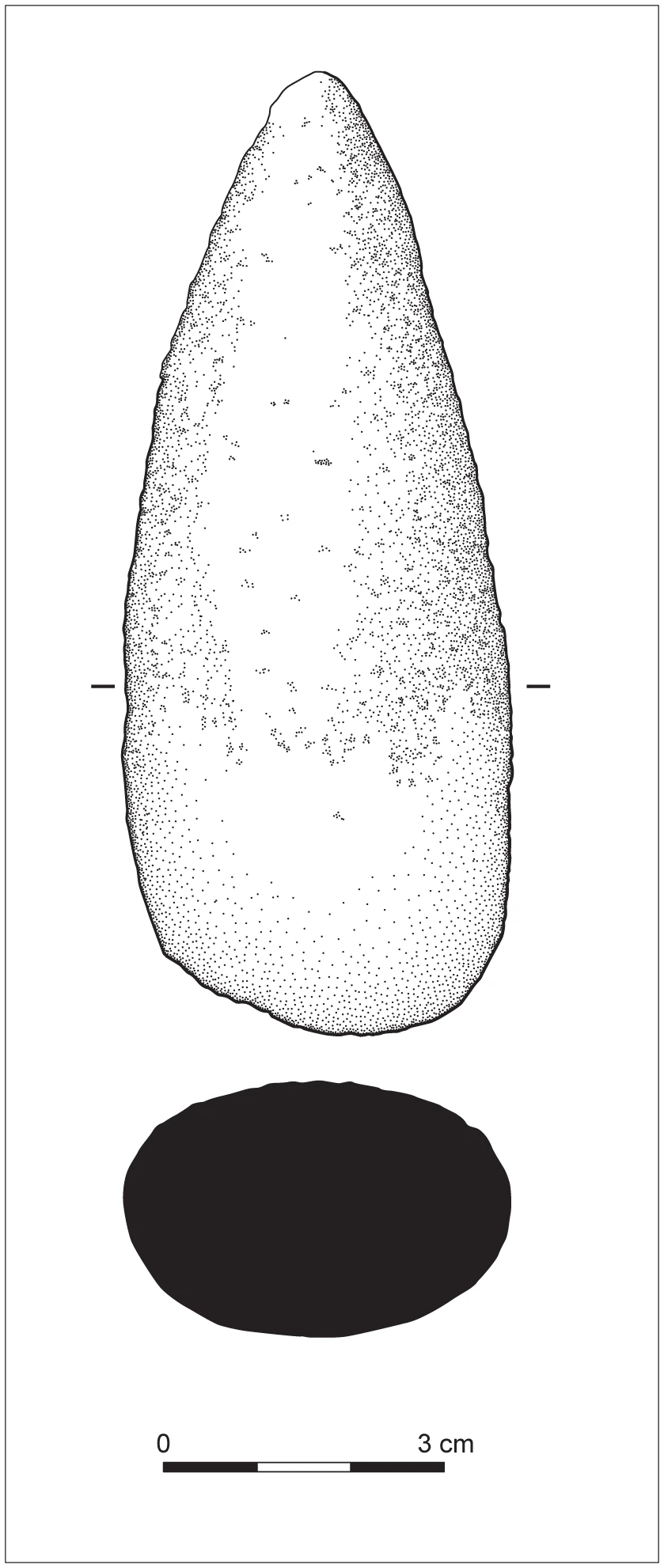
Illustration of this prehistoric stone axe highlights the difference between the rough and polished texture on the object's surface
This is why a scanner or camera cannot simply replace the illustrator. A good archaeological drawing is organised, logical, clean and consistent, with conventions for lighting, views and sections. Different finds are rendered using stippling and lines as appropriate, while original features are distinguished from damaged areas.
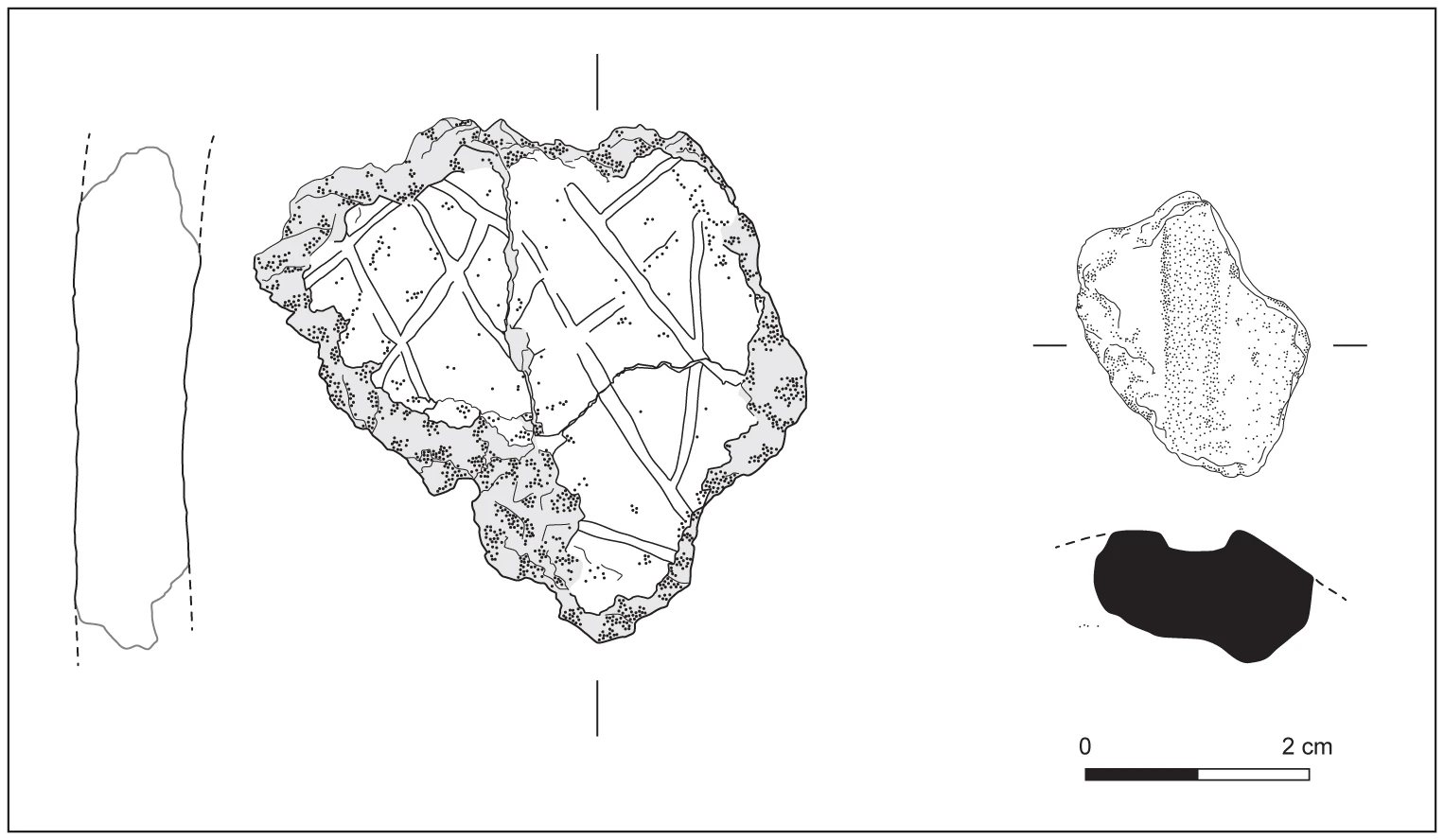
This illustration conveys both the decoration on this prehistoric pottery sherd as well as its profile and section
Archaeology will always require illustrators who can produce visual records suitable for publication. Artefactual drawing requires a scientific approach while still demanding the skills of a traditional artist. Computers have transformed the workflow but have not replaced the human touch.
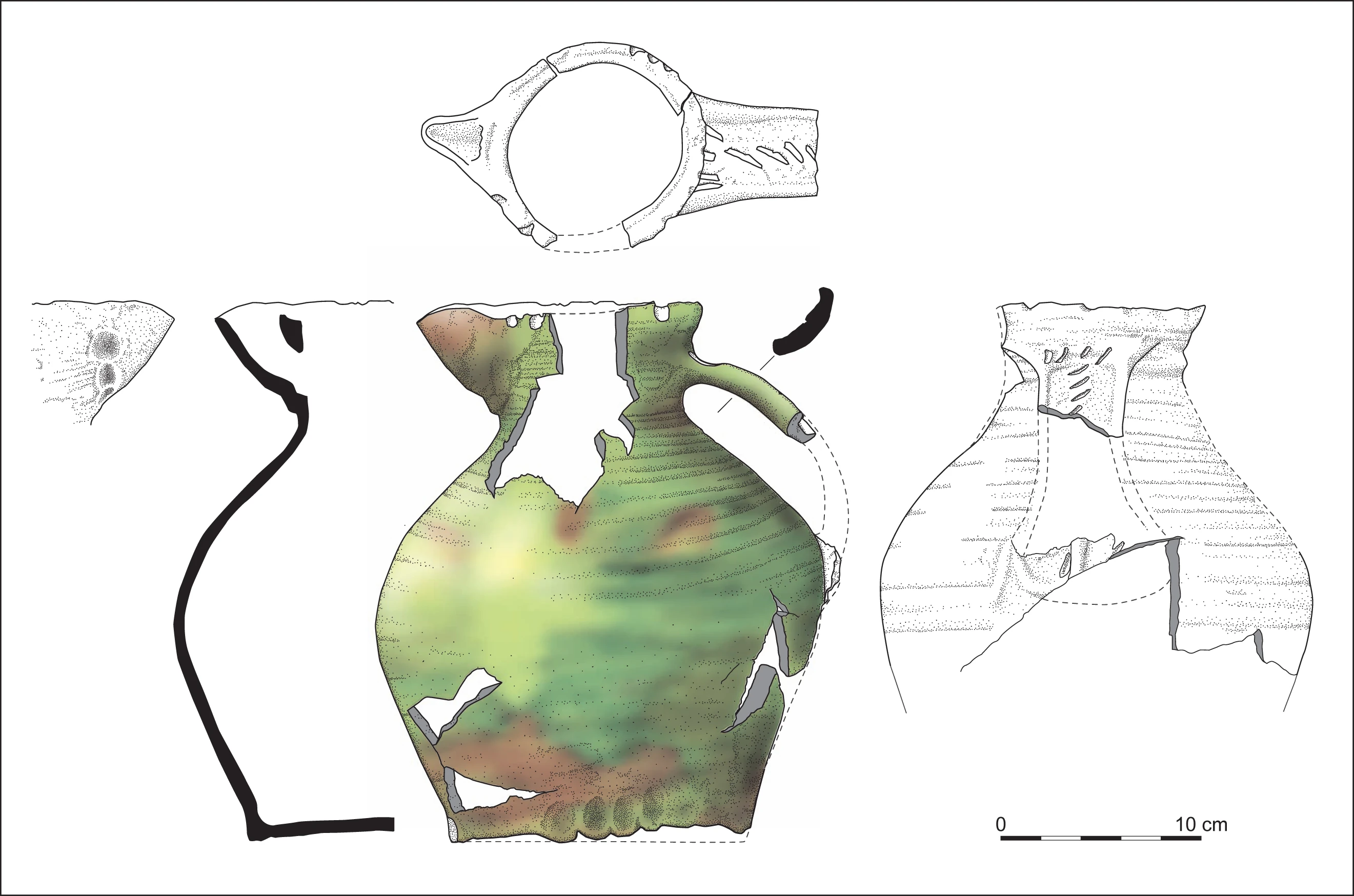
Digital illustration allows additional information to be included on traditional illustrations; this example highlights glaze on a medieval pot