
Our third week at Caherduggan was spent excavating sections across the large ditch or moat surrounding the tower. Once the topsoil was removed the moat appeared as a dark band across the site. Excavating its fills quickly revealed a large amount of stone.
This proved to be the remains of a wall or revetment built into the side of the moat to strengthen the castle's defences.
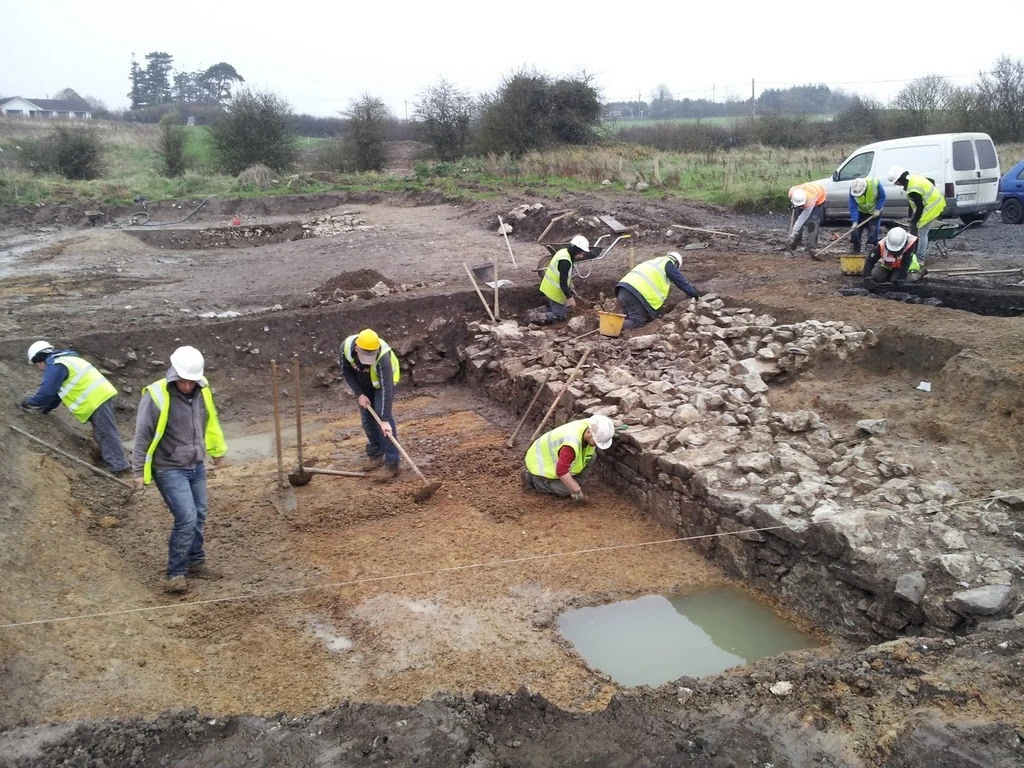
Excavation of the moat in progress, with the remains of the wall or revetment visible
Pottery from the moat included material made in the sixteenth or seventeenth century, showing that the ditch was being filled by the seventeenth century. Some pottery came from England and continental Europe, including decorated German wares, suggesting the castle occupants had access to imported goods. Animal bone from the moat would also allow specialists to investigate diet.
The defensive moat was probably water-filled and the revetment wall would originally have stood higher, perhaps with a bank behind it from which defenders could operate.
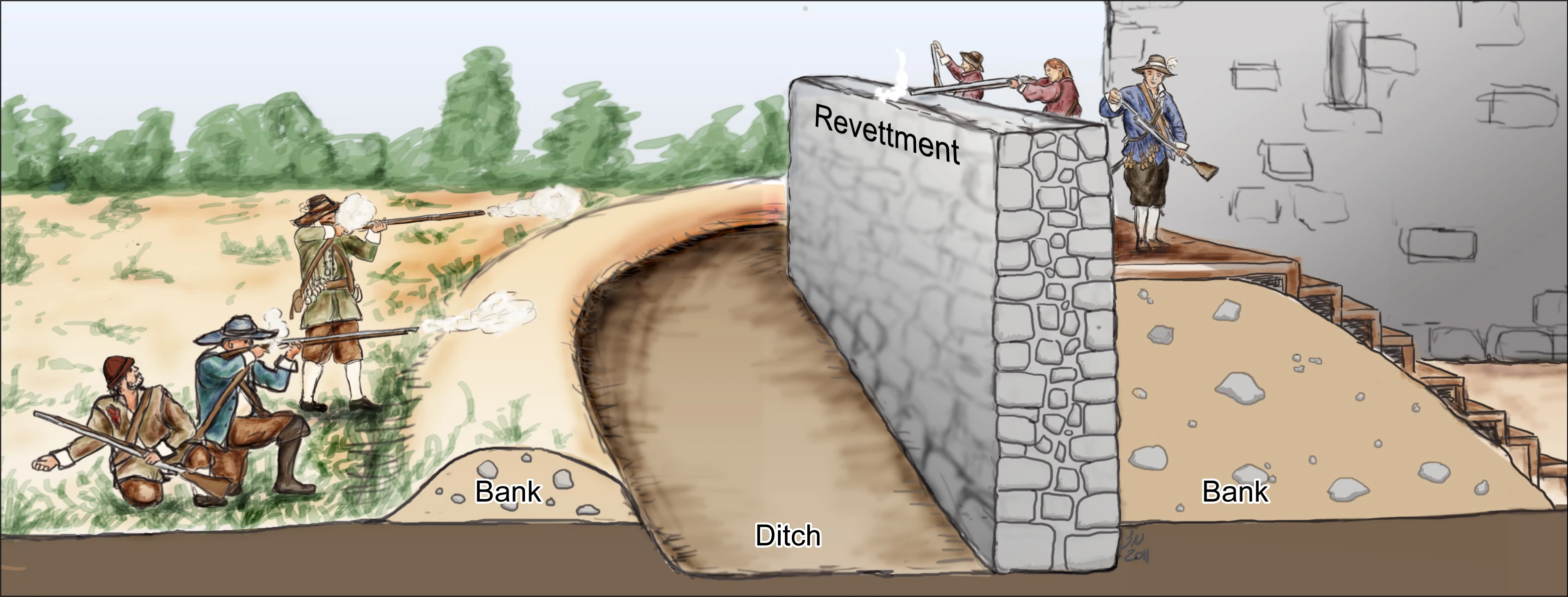
How the moat and wall or revetment may have been used in the 17th century before it went out of use (Sara Nylund)
Three sections were excavated across the moat, with further work planned to recover more evidence about the people who occupied the castle.