
During archaeological excavations undertaken by Rubicon Heritage Services in advance of the N22 Tralee Bypass, many fascinating sites were identified. By far the most enigmatic was a possible ritual avenue uncovered at Ballingowan, just east of Tralee.
The features discovered at Ballingowan
Two parallel alignments of pits formed an avenue aligned about 8 degrees south of east-west. The distance between the rows varied from about 5.1 m to 9 m. Within the excavation area the avenue was 30 m long, but geophysical survey suggested both alignments continued beyond the road corridor. The pits were spaced roughly one metre apart and several contained evidence for post-packing and post-pipes, indicating upright timber posts.
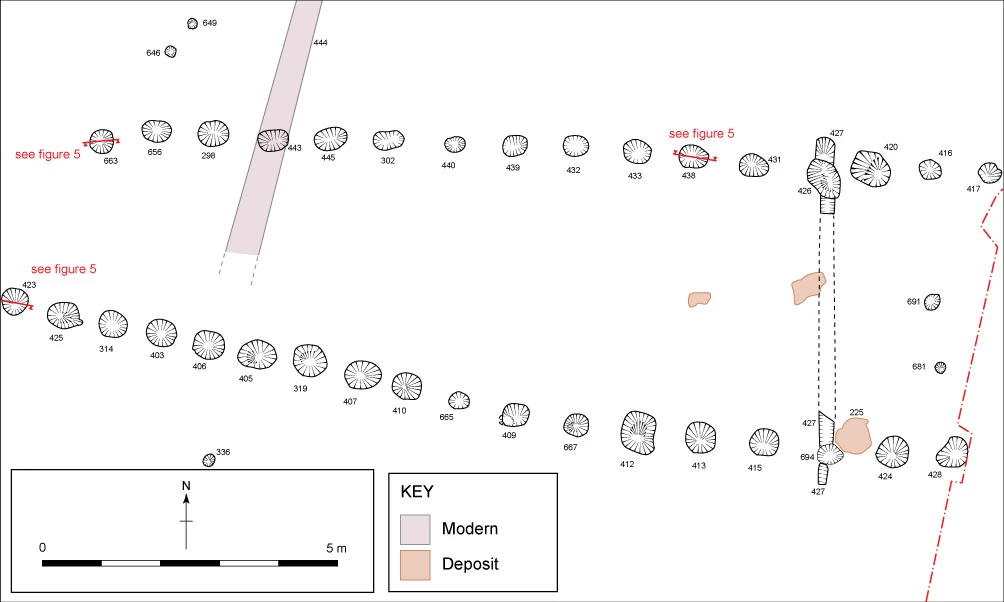
The post-pit alignment as it appears in plan
A small oval arrangement of six post-holes was located about 10 m north of the avenue. Its enclosed area, roughly 4 m by 1 m, was not practical for a domestic structure.
What is it?
No datable artefacts or radiocarbon samples were recovered, making interpretation difficult. Irish parallels are limited, though post alignments occur in complex Late Neolithic and Bronze Age ritual monuments. The Ballingowan feature is unusual because it appears to stand alone.
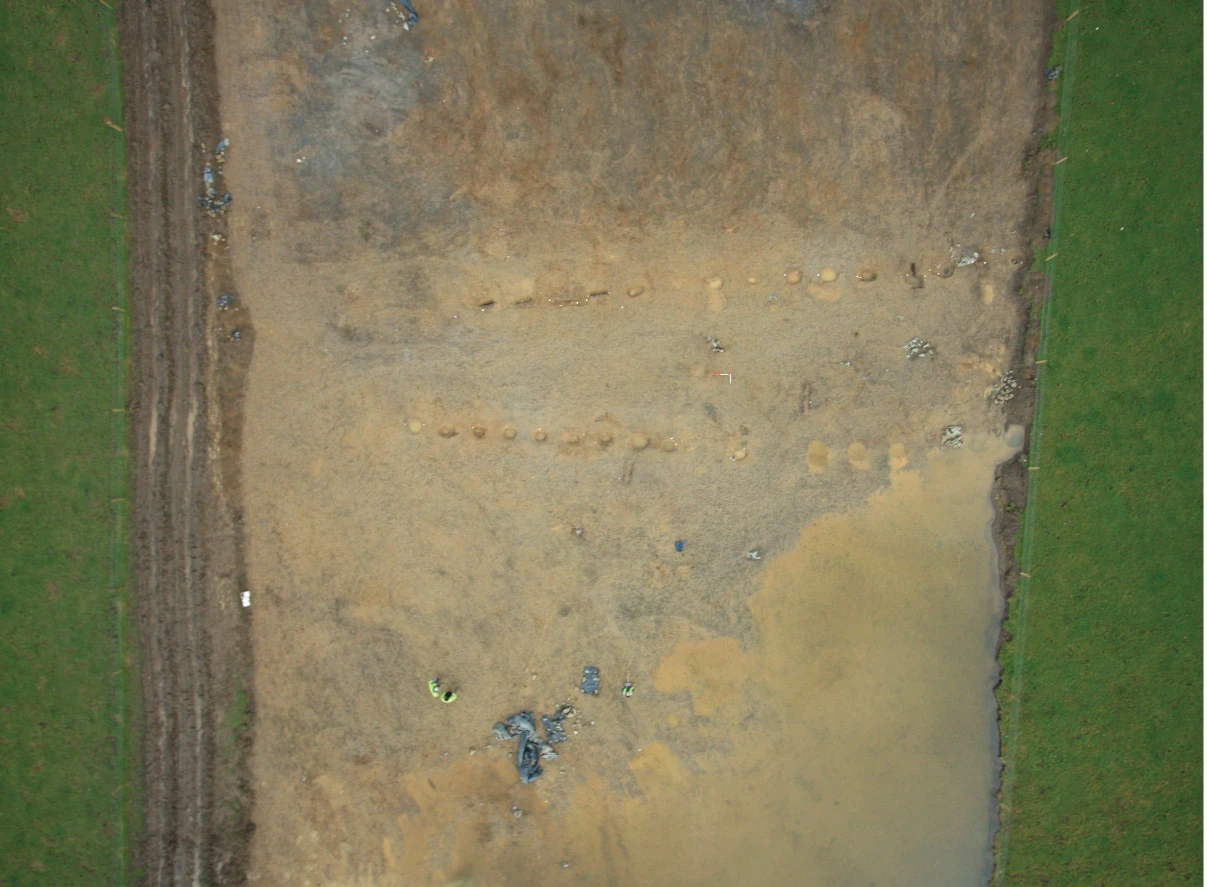
An aerial view of the Ballingowan post-pit alignment
Closer comparisons exist in Britain. A double pit alignment at Thornborough in North Yorkshire consisted of upright timbers in two parallel rows and dated to the Early Bronze Age. Such avenues may have been associated with processions or large gatherings in ceremonial landscapes.
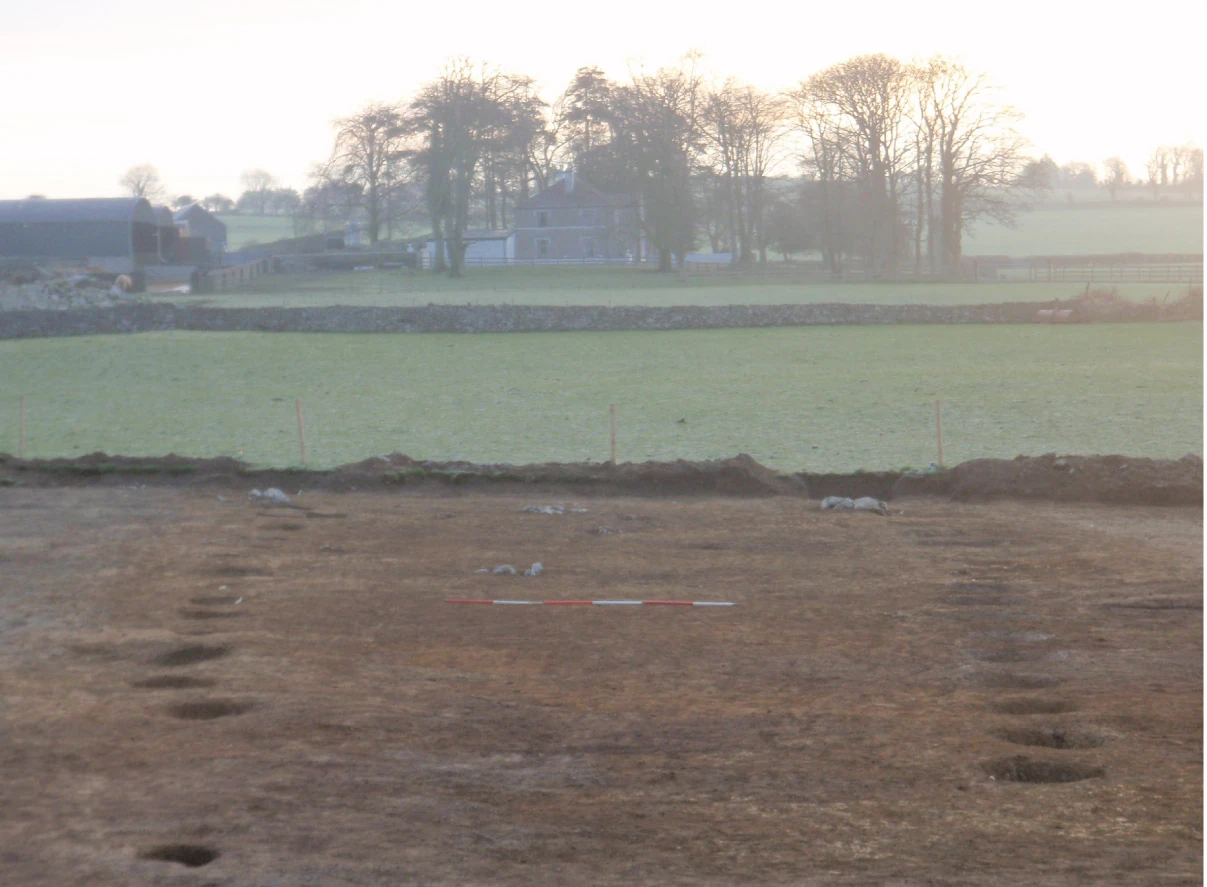
Oblique view of the Ballingowan post-pit alignment
Another possibility is astronomical alignment. At certain times of year the sun, moon or planets rise close to the avenue's centre line. The beginning of November was also significant in the pastoral calendar, marking the end of grazing and the seasonal gathering and slaughter of livestock.
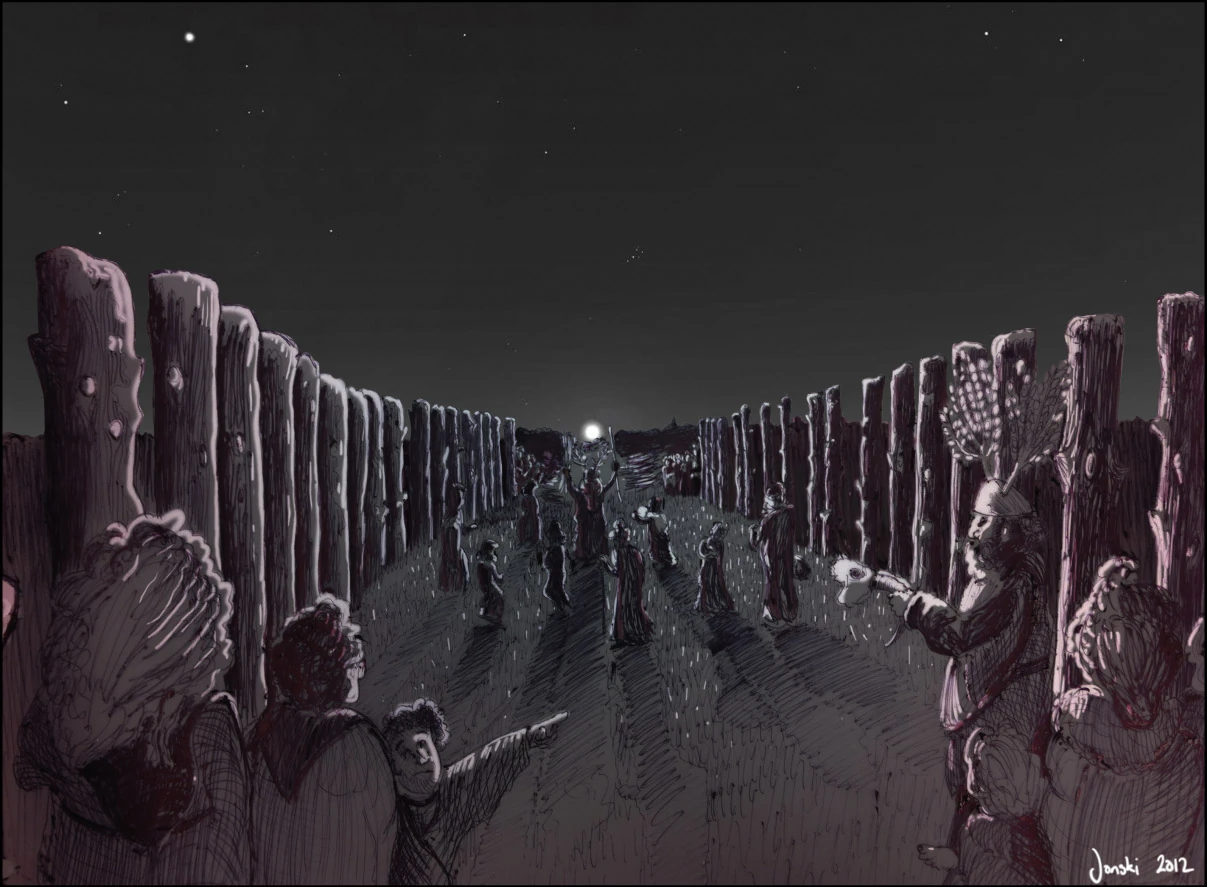
Ballingowan – a possible interpretation? (Jonathan Millar)
Taken together, the morphology resembles Early Bronze Age British examples and raises the possibility that a previously unrecognised prehistoric sacred landscape survives east of Tralee.