
Rubicon Geophysics teamed up with Stirling Council on a community research project exploring two church sites: St. Ninian's United Free Church and Logie Old Kirk. The aim was to investigate whether either site preserved evidence for earlier religious activity.
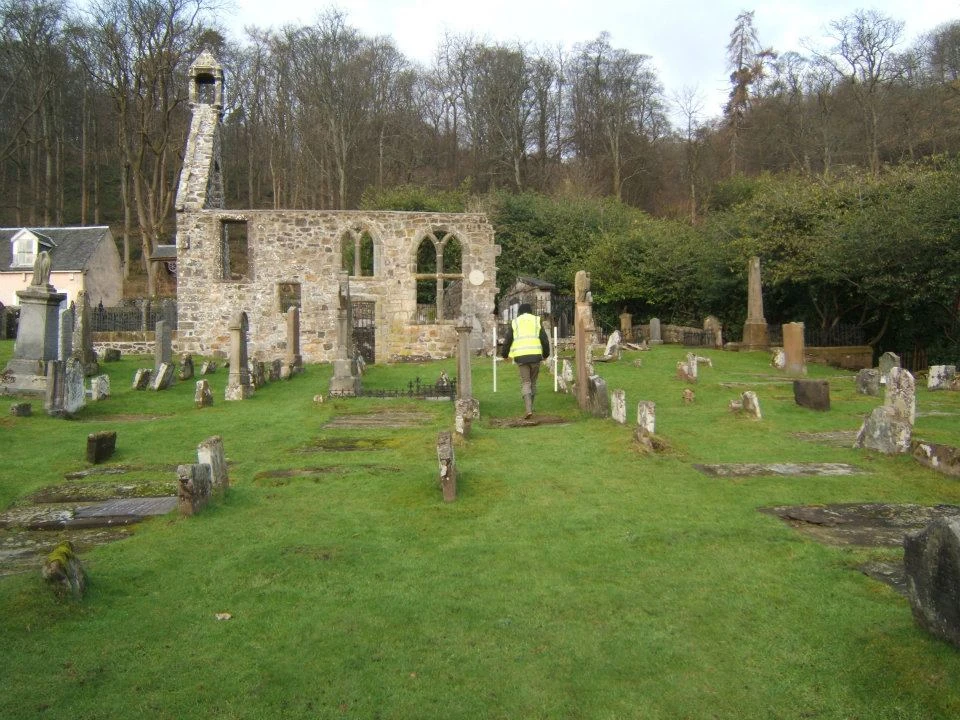
The beautiful site of Logie Old Kirk, Stirling, Scotland – Scott is in the process of carrying out the survey
Possible clues included oval graveyards, two Norse hogback stones at Logie and place-name evidence. St. Ninian's was formerly known as Eggles, from the Latin ecclesia or church, while Logie may derive from locus, or place.
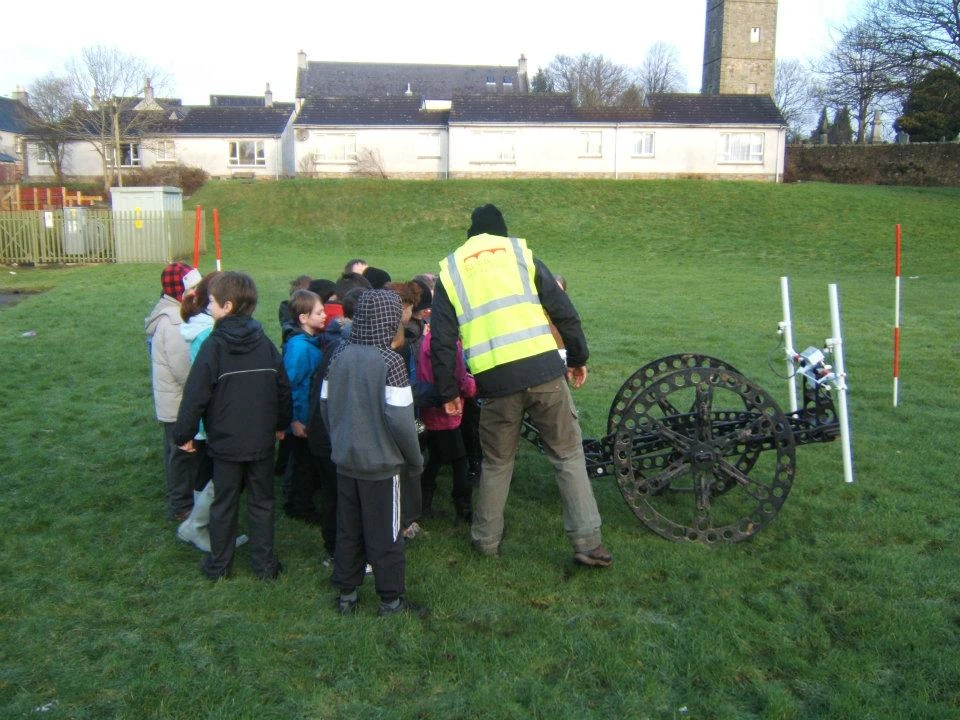
The pupils of St. Ninian's Primary School are shown how the Rubicon geophysics cart operates
Modern disturbance limited the archaeological results at St. Ninian's, but the project provided an excellent opportunity to demonstrate geophysical survey to local primary pupils.
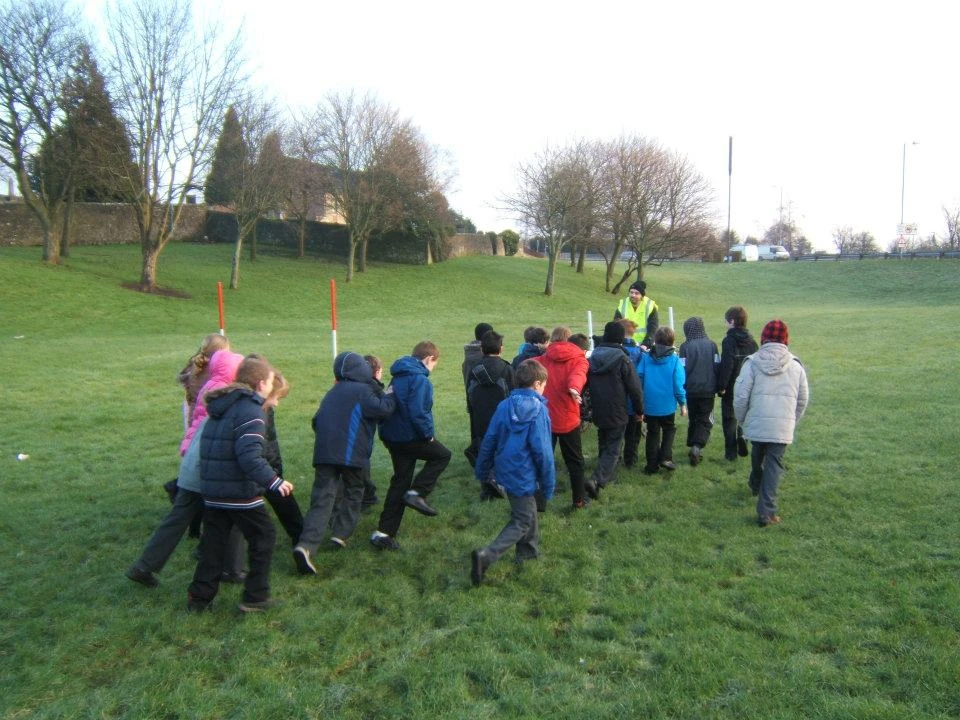
The pupils of St. Ninian's Primary School show their enthusiasm as budding archaeological geophysicists
At Logie, the team worked with the Logie Old Graveyard Group, threading survey lines between gravestones in search of an enclosing ditch that might indicate an early ecclesiastical site.
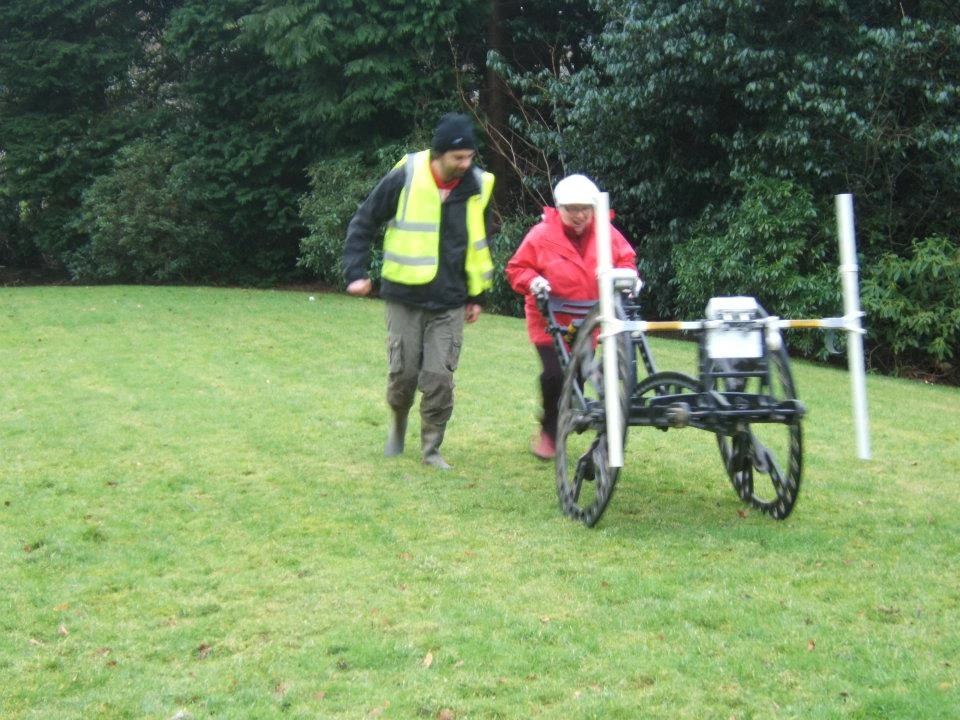
One of the Logie Old Graveyard Group trying out the Rubicon Geophysics Cart
Community members helped with the fieldwork and tried the survey equipment themselves. Initial processing identified a possible circular arrangement of targets deserving further investigation.
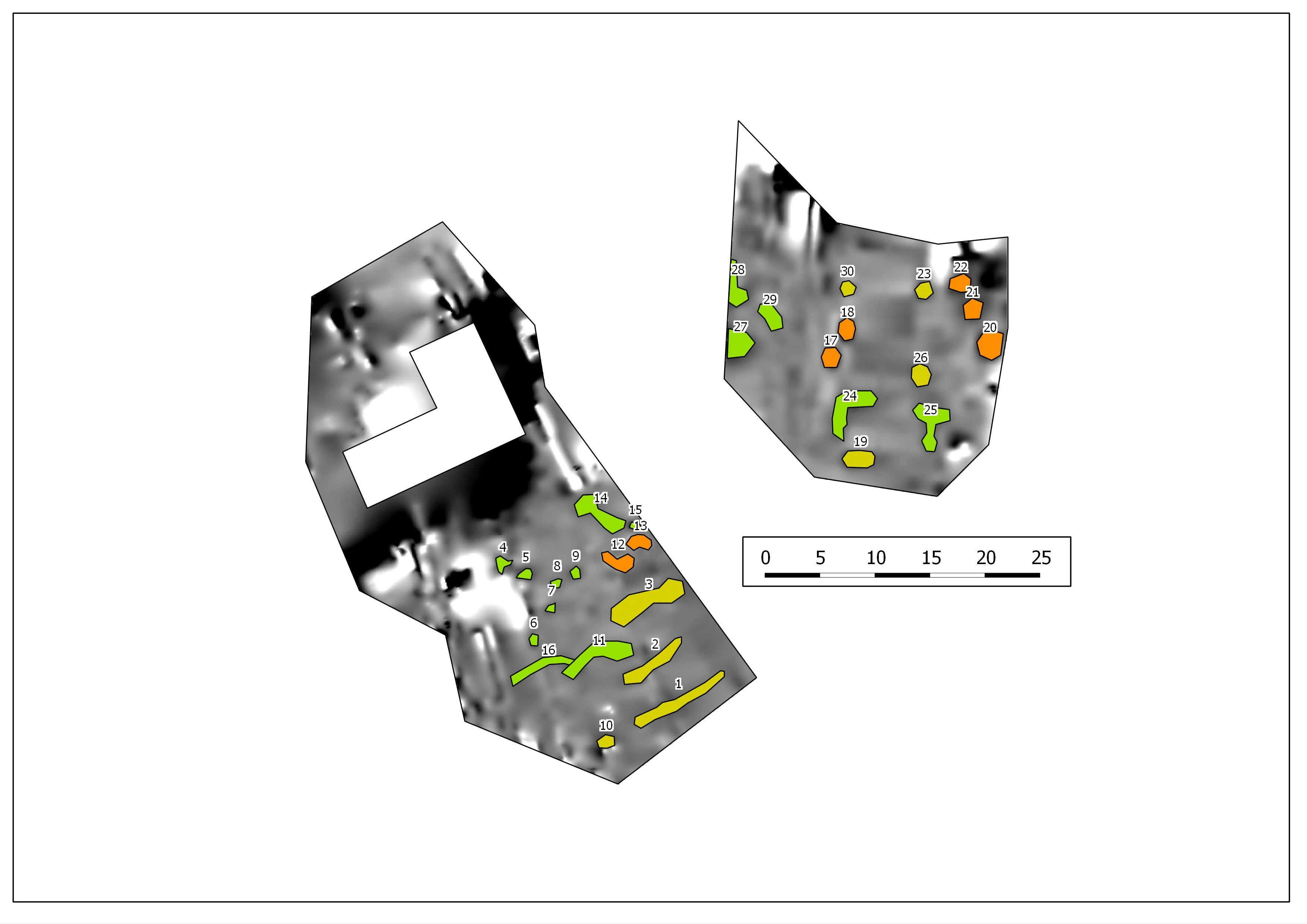
Rubicon's initial survey data from Logie Old Church