
Dunbrody Abbey lies about 12 kilometres south of New Ross, Co. Wexford and is one of Ireland's most picturesque religious houses. The Cistercian abbey was founded by Hervey de Montmorency in the late twelfth century and remained in religious use for more than three hundred years before being suppressed by the Crown in 1537.
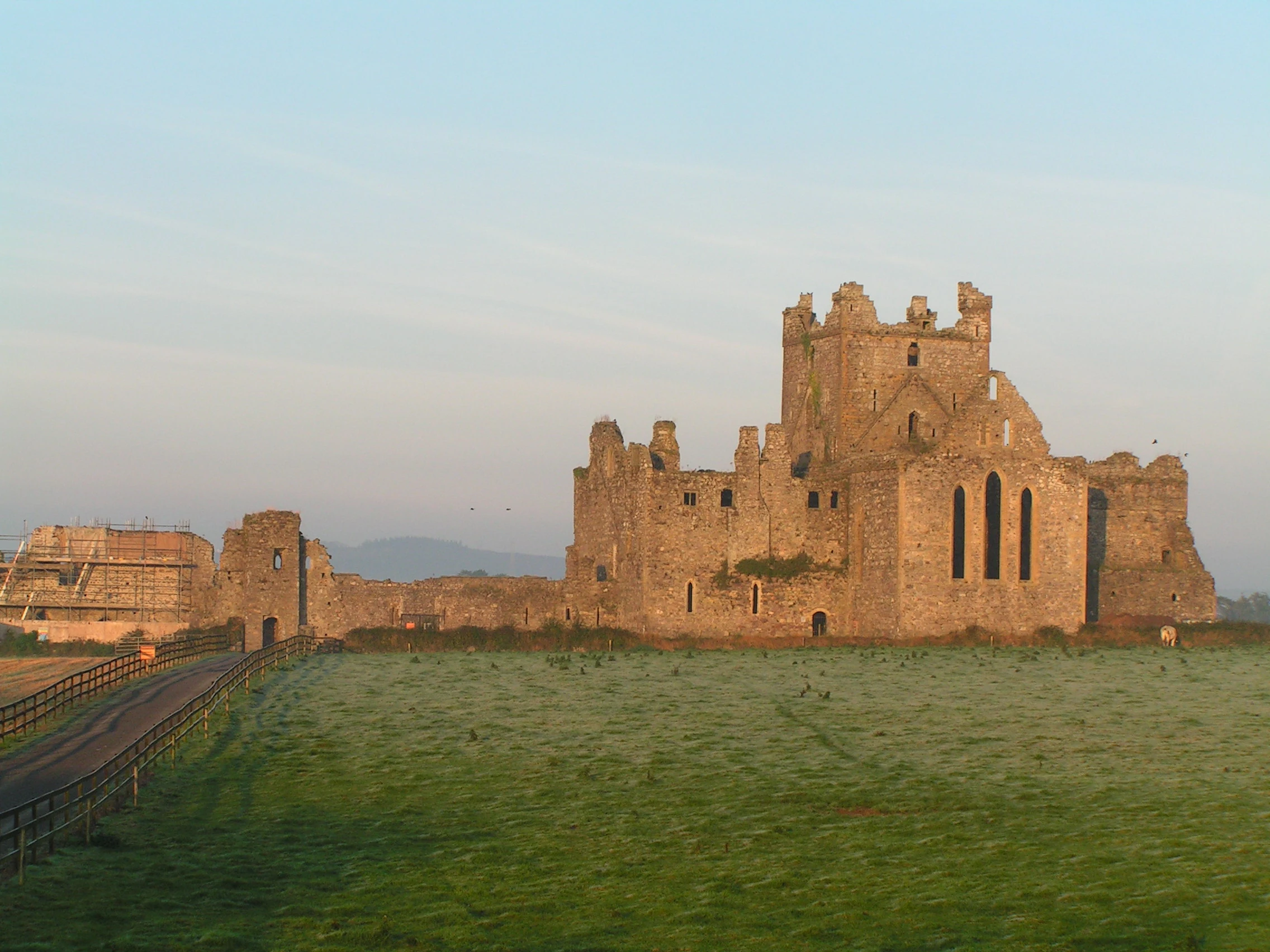
The remains of Dunbrody Abbey, Co. Wexford
Rubicon carried out exploratory excavations in 2007 centred on the cloister, east claustral range and kitchen.
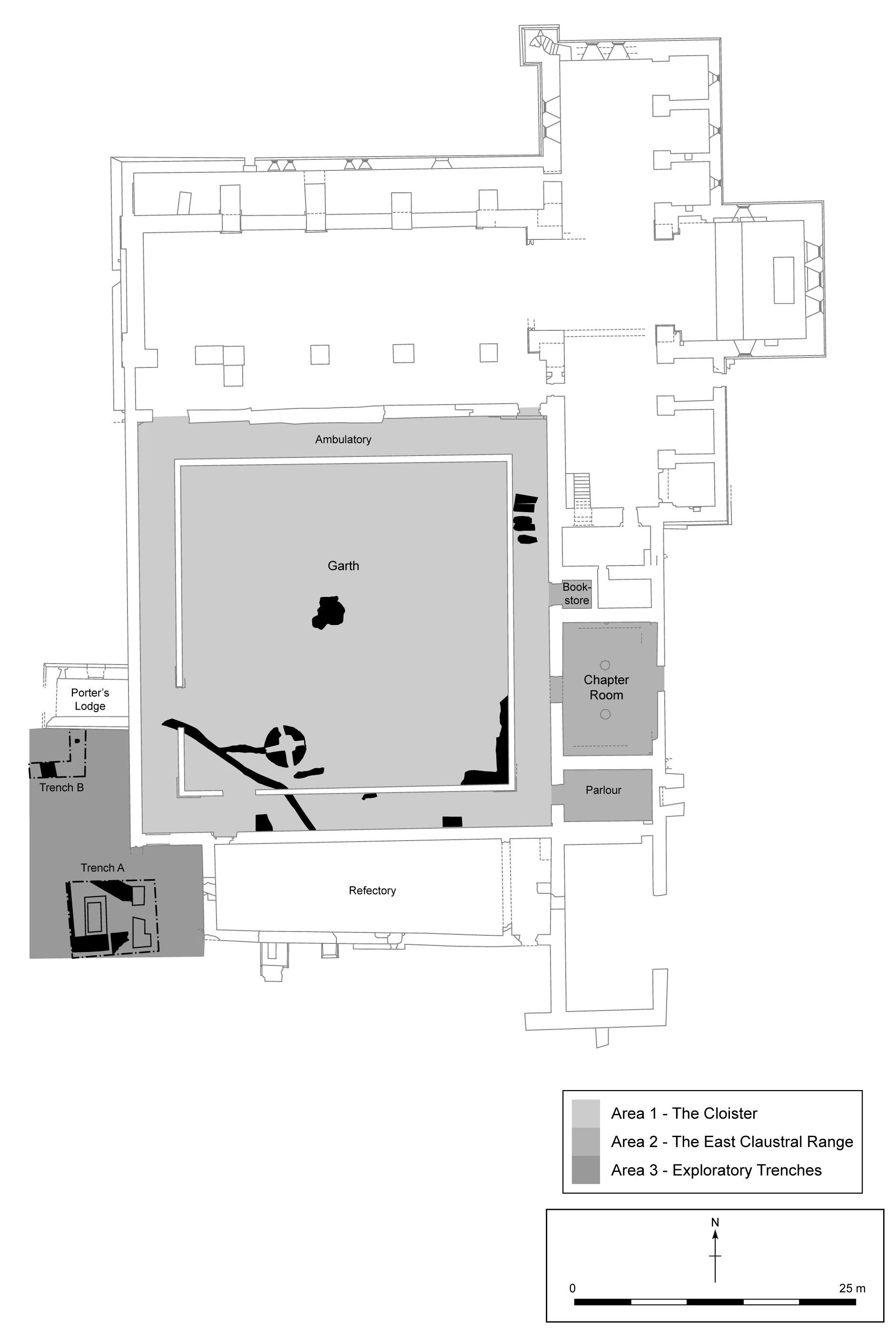
Areas of excavation at Dunbrody Abbey
A circular stone structure in the cloister garth beside the refectory doorway was identified as a lavabo, a communal ritual washing place. Before meals the monks washed there, while the lavabo also played a role in ritual acts such as the mandatum or ceremonial washing of feet.
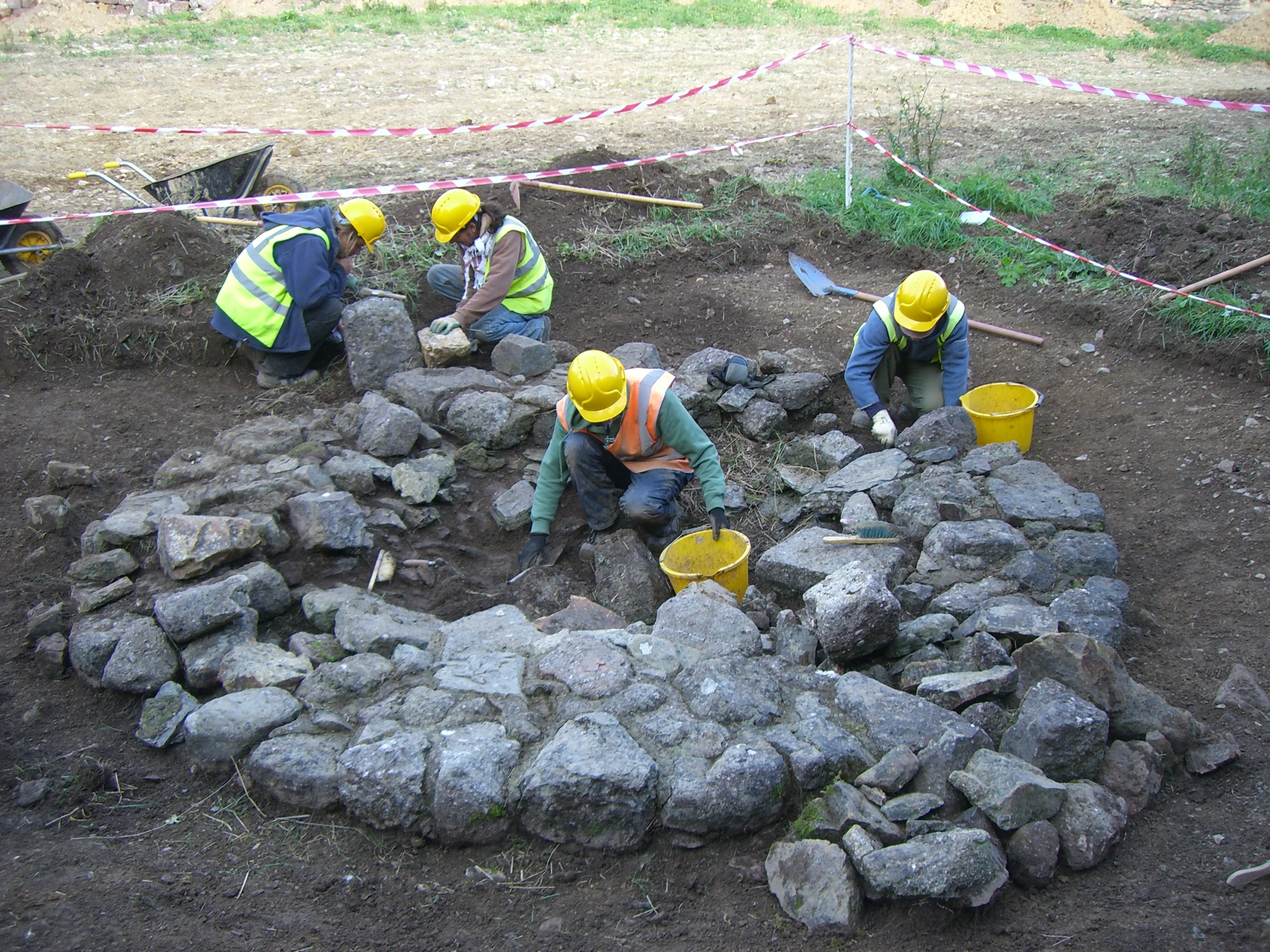
The lavabo under excavation
Only fragmentary foundations survived, but comparison with European examples and the excavated evidence allowed a possible reconstruction. The structure had four stone-lined channels, one feeding into a box drain, and two lengths of lead pipe were recovered nearby. A two-basin arrangement with a fountain and gravity-fed water supply is plausible.
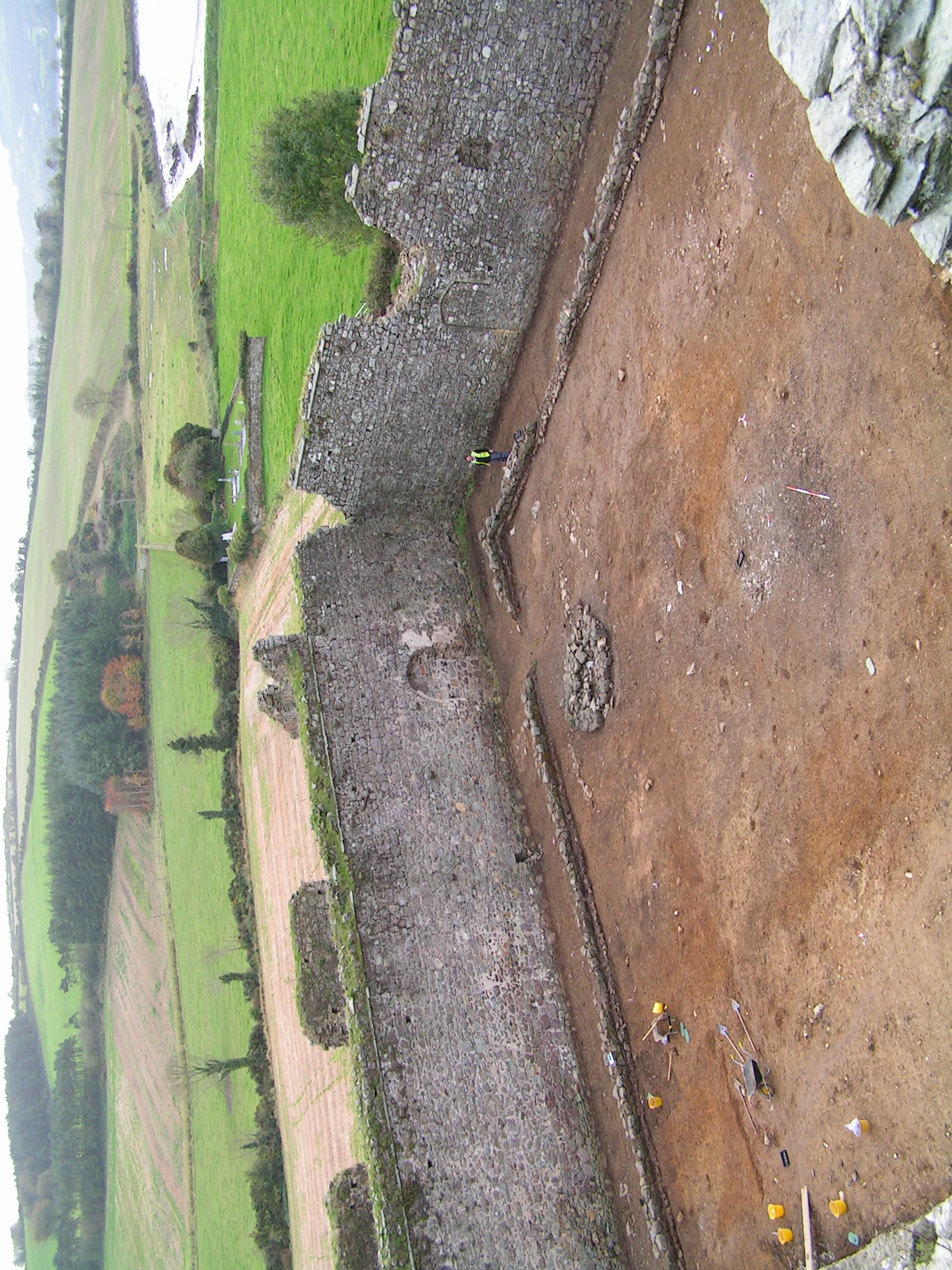
The cloister garth under excavation; the circular lavabo can be seen beside the walkway
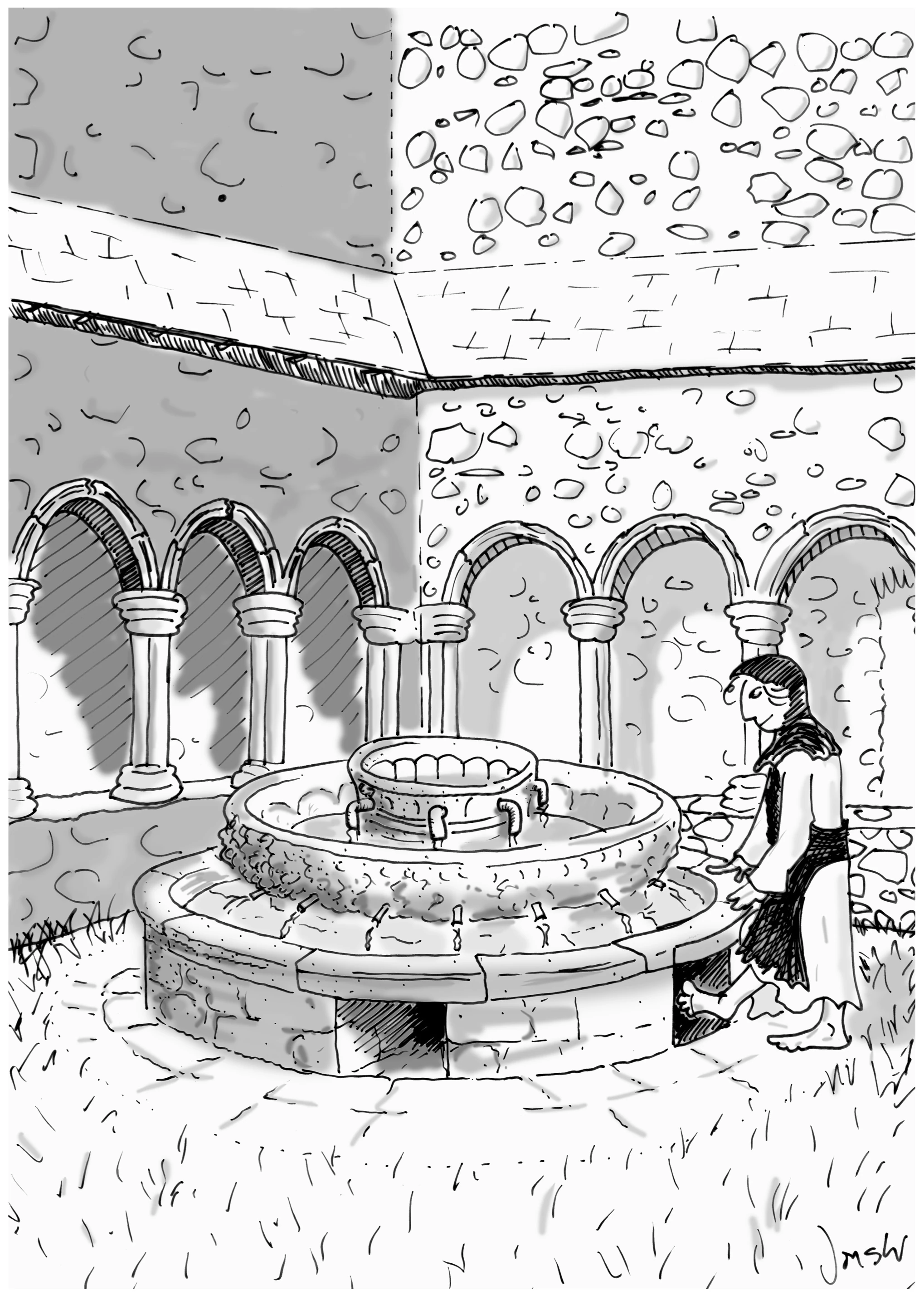
Reconstruction of how the lavabo may have functioned
The basin and fountain may have been built in stone and supplied by lead pipes from a reservoir at a higher level in the complex. The system demonstrates the sophistication of medieval monastic water management.
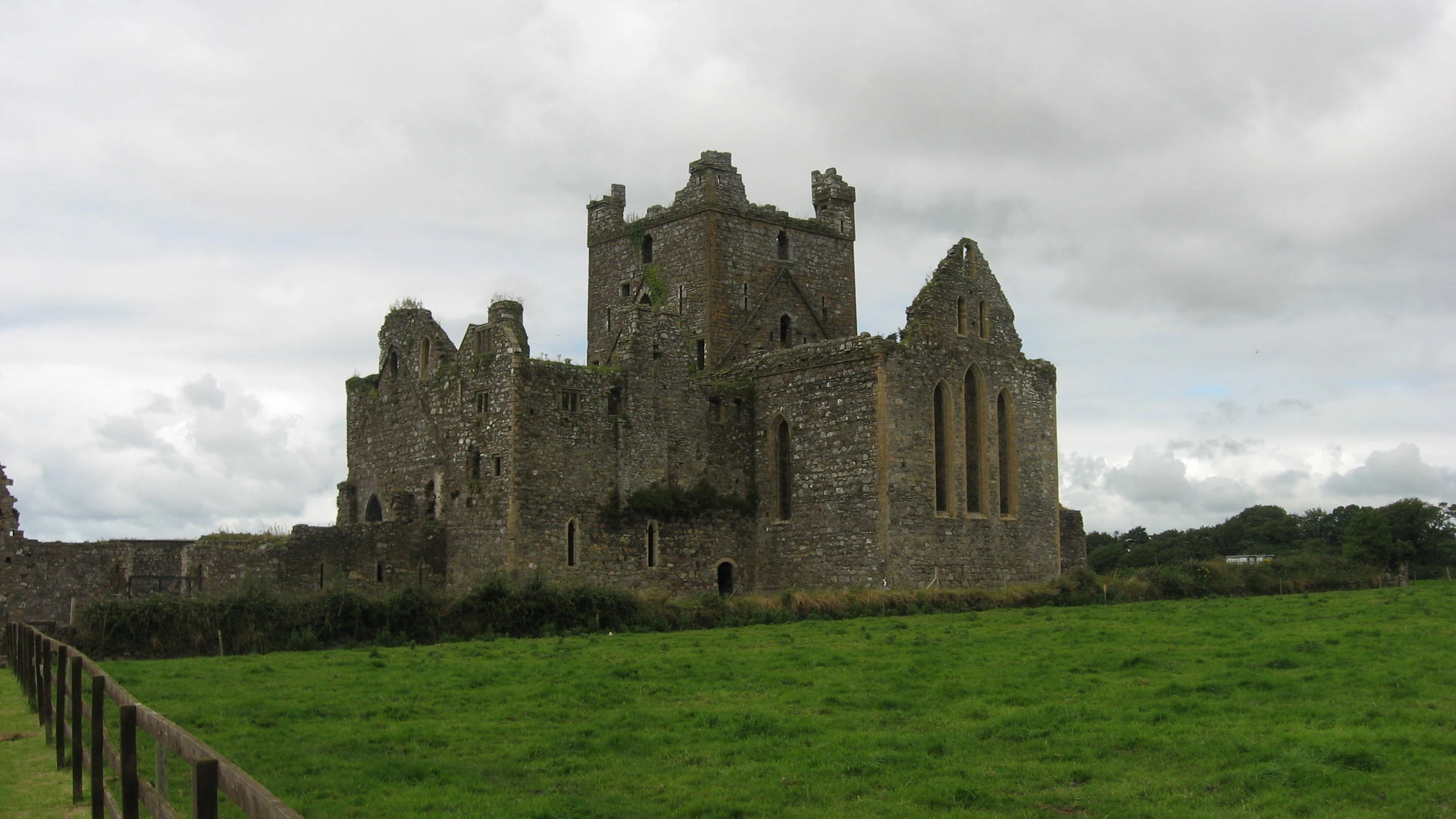
Dunbrody Abbey, Co. Wexford